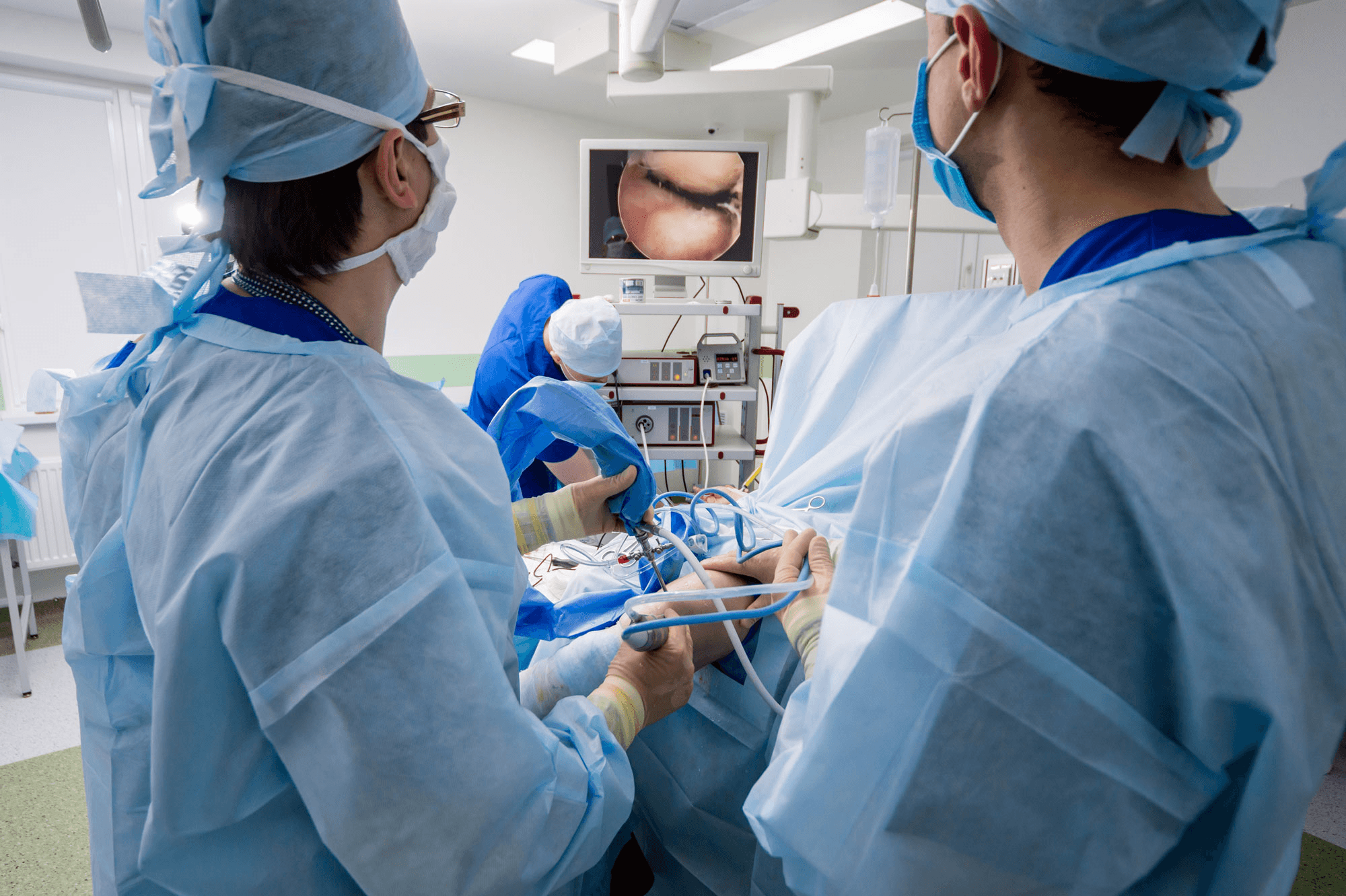

ChondroFiller as a Minimally Invasive Solution for Cartilage Repair
Why Cartilage Damage Needs Better Solutions
Cartilage is a specialised tissue that cushions our joints and helps them move smoothly without pain. It’s essential for keeping our joints healthy and mobile. The problem is cartilage doesn’t have its own blood supply, so if it gets damaged—whether through sport, ageing, or injury—it struggles to heal naturally. Traditional treatments tend to focus on reducing pain and improving how the joint works but don’t usually repair the cartilage itself. Because of this, joint issues can linger and worsen over time, sometimes leading to osteoarthritis. Research has shown that a liquid collagen matrix like ChondroFiller is designed to address these gaps. For example, one study focusing on small cartilage defects found it was important to “evaluate the tolerability and results of treatment with a cell-free liquid collagen matrix (Chondrofiller Liquid)” (Breil-Wirth et al., 2016). This highlights the ongoing search for more effective, regenerative treatments.
What Sets ChondroFiller Apart?
ChondroFiller is unique because it comes as a liquid gel that can be injected in a minimally invasive, one-step procedure. Unlike older methods that require multiple surgeries or harvesting cells from the patient, ChondroFiller simplifies the process. The gel fills the damaged area and creates a scaffold that encourages the body to regenerate cartilage naturally. This means shorter surgery and recovery times, less discomfort, and a focus on true healing rather than just masking pain. For instance, in one follow-up study, “about 80% of the patients indicated good or very good results and would have the operation done again” (Breil-Wirth et al., 2016). More recent research supports this, noting that ChondroFiller “is a safe technique that shows good clinical and radiological outcomes in a 2-year follow-up” (De Lucas Villarrubi et al., 2021). In addition, studies on hand osteoarthritis describe ChondroFiller Liquid as “a resorbable filler based on type I collagen…used to form a protective layer around the cartilage defect while stimulating growth of chondrocytes and cartilage regeneration” (Corain et al., 2023). These factors combined make ChondroFiller a patient-friendly and forward-thinking treatment option.
How ChondroFiller Compares with Traditional Treatments
Compared to well-established cartilage repair techniques, ChondroFiller offers a simpler, less invasive alternative. Traditional methods include microfracture surgery, which involves creating tiny fractures in the bone to stimulate cartilage growth, or autologous chondrocyte implantation, where cartilage cells are harvested, grown in a lab, and then implanted back—both of which can be complex and demanding. Rather than replacing these options, ChondroFiller adds to the treatment landscape, especially for patients who benefit from a less invasive solution. As one study concluded, “Chondrofiller Liquid is shown to be a safe procedure which was able to provide satisfactory results” (Breil-Wirth et al., 2016). Additional studies reported “significant improvements in all assessed parameters, focusing on characteristics of the generated tissue in the MRI” (De Lucas Villarrubi et al., 2021). For hand osteoarthritis, patients experienced “improvements in pain symptoms and increased strength in grip and pinch movements” (Corain et al., 2023). Together, these findings show ChondroFiller to be a compelling part of a tailored approach to cartilage repair.
Next steps
Where to go from here
These routes are selected from the topic and purpose of this article. They are guidance, not a diagnosis or treatment recommendation.
Recovery route
Explore recovery guidance
Talk to the team
Book a free discovery call
The Expertise Behind Modern Cartilage Care
The success of advanced treatments like ChondroFiller relies on expert clinicians and professional care environments. Professor Paul Lee, a highly experienced cartilage specialist and advisor to respected bodies such as the Royal College of Surgeons of Edinburgh, exemplifies this expertise. While ChondroFiller itself was not developed by MSK Doctors, this professional setting offers crucial specialist guidance and patient care. Skilled teams in centres of excellence ensure innovative treatments are used safely and effectively, offering patients the best chance of a positive outcome when considering cutting-edge options such as ChondroFiller.
Looking Ahead: The Future of Cartilage Repair
ChondroFiller and similar innovations are shaping the future of cartilage healing by emphasising tissue regeneration and minimally invasive techniques. Supported by research and clinical experience, these treatments invite patients and clinicians to consider fresh options while always involving expert assessment. Importantly, one study found “there were no complications. No patient indicated any worsening” (Breil-Wirth et al., 2016), underlining safety. Another reported that “95% of patients met the minimal clinically important difference, and 100% reached an acceptable symptomatic state, with patient satisfaction at 86.6%” (De Lucas Villarrubi et al., 2021). In hand osteoarthritis cases, MRI scans also showed positive changes, like “reduction of bone oedema and periarticular effusion” (Corain et al., 2023). These results are promising, though not all patients will be suitable candidates. Ultimately, ChondroFiller represents a significant step forward, offering hope for more effective cartilage repair within a responsible, expert-led framework.
References
- Breil-Wirth, A., von Engelhardt, L., Lobner, S., & Jerosch, J. (2016). Retrospective study of cell-free collagen matrix for cartilage repair. Orthopädische und Unfallchirurgische Praxis, 51(5), 515-520. https://doi.org/10.3238/oup.2016.0515-0520
- De Lucas Villarrubi, J. C., Méndez Alonso, M. Á., Sanz Pérez, M. I., Trell Lesmes, F., & Panadero Tapia, A. (2021). Acellular matrix-induced chondrogenesis technique improves the results of chondral lesions associated with femoroacetabular impingement. Arthroscopy, 37(12), 3793-3804. https://doi.org/10.1016/j.arthro.2021.08.022
- Corain, M., Zanotti, F., Giardini, M., Gasperotti, L., Invernizzi, E., Biasi, V., & Lavagnolo, U. (2023). The use of an acellular collagen matrix ChondroFiller® Liquid for trapeziometacarpal osteoarthritis. Journal of Cellular and Tissue Research. https://doi.org/10.1177/19476035251354926
Frequently Asked Questions
- ChondroFiller is a liquid gel injected in a minimally invasive, one-step procedure. Unlike traditional methods, it simplifies cartilage repair and promotes natural regeneration. MSK Doctors, led by Prof Paul Lee, offers expert guidance for achieving optimal patient outcomes with this advanced technique.
- Professor Paul Lee is a Cartilage Expert and Regional Surgical Ambassador, holding advisory roles with the Royal College of Surgeons of Edinburgh. At MSK Doctors, his experience ensures patients access advanced treatments and receive personalised care from a well-respected leader in regenerative medicine.
- MSK Doctors provides a professional, specialist-led setting where innovative treatments are administered responsibly. Under Prof Paul Lee’s supervision, patients benefit from advanced facilities and multidisciplinary expertise, helping them consider the safest and most suitable options for cartilage repair and joint care.
- Clinical studies have shown positive patient feedback, including high satisfaction rates and improved joint function. Research cited satisfaction at nearly 87%. While individual responses may vary, MSK Doctors’ expert assessment helps ensure that only appropriate candidates receive this innovative treatment.
- Not every patient or injury will be suitable for ChondroFiller. MSK Doctors and Prof Paul Lee provide individual assessment to determine the most effective therapies, ensuring patients are offered treatments best suited to their specific joint condition and personal health profile.
Next steps
Where to go from here
These routes are selected from the topic and purpose of this article. They are guidance, not a diagnosis or treatment recommendation.
Recovery route
Explore recovery guidance
Continue with practical recovery and patient-journey information.
Talk to the team
Book a free discovery call
A non-medical call with the team to understand services and choose the right booking route.
Legal & Medical Disclaimer
This article is published by Liquid Cartilage for general information and education only. It does not constitute medical advice, diagnosis, or treatment.
Always seek personalised advice from a qualified healthcare professional before making decisions about your health. Liquid Cartilage accepts no responsibility for errors, omissions, third-party content, or any loss, damage, or injury arising from reliance on this material.
If you believe this article contains inaccurate or infringing content, please contact us at [email protected].