ChondroFiller® at the Liquid Cartilage
Injectable, Structural Regenerative Implant for Cartilage Care
Protect • Repair • Regenerate
Don’t Let Cartilage Damage Limit Your Life
Cartilage injuries can turn simple movement into a challenge. Without timely treatment, damage may progress and increase the risk of arthritis or future joint replacement.
At Liquid Cartilage, our goal is joint preservation and regeneration—not replacement. With ChondroFiller®, we deliver advanced, evidence-led care on Harley Street.
Why Healthy Cartilage Matters
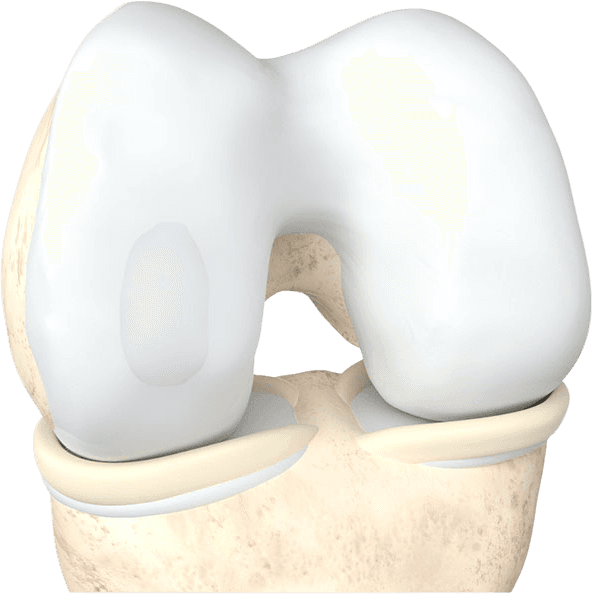
Cartilage provides the smooth, low-friction surface that lets your joints move comfortably. It doesn’t readily self-repair, but with the right scaffold and biological cues, regeneration is possible.
Act early to preserve more of what you have.
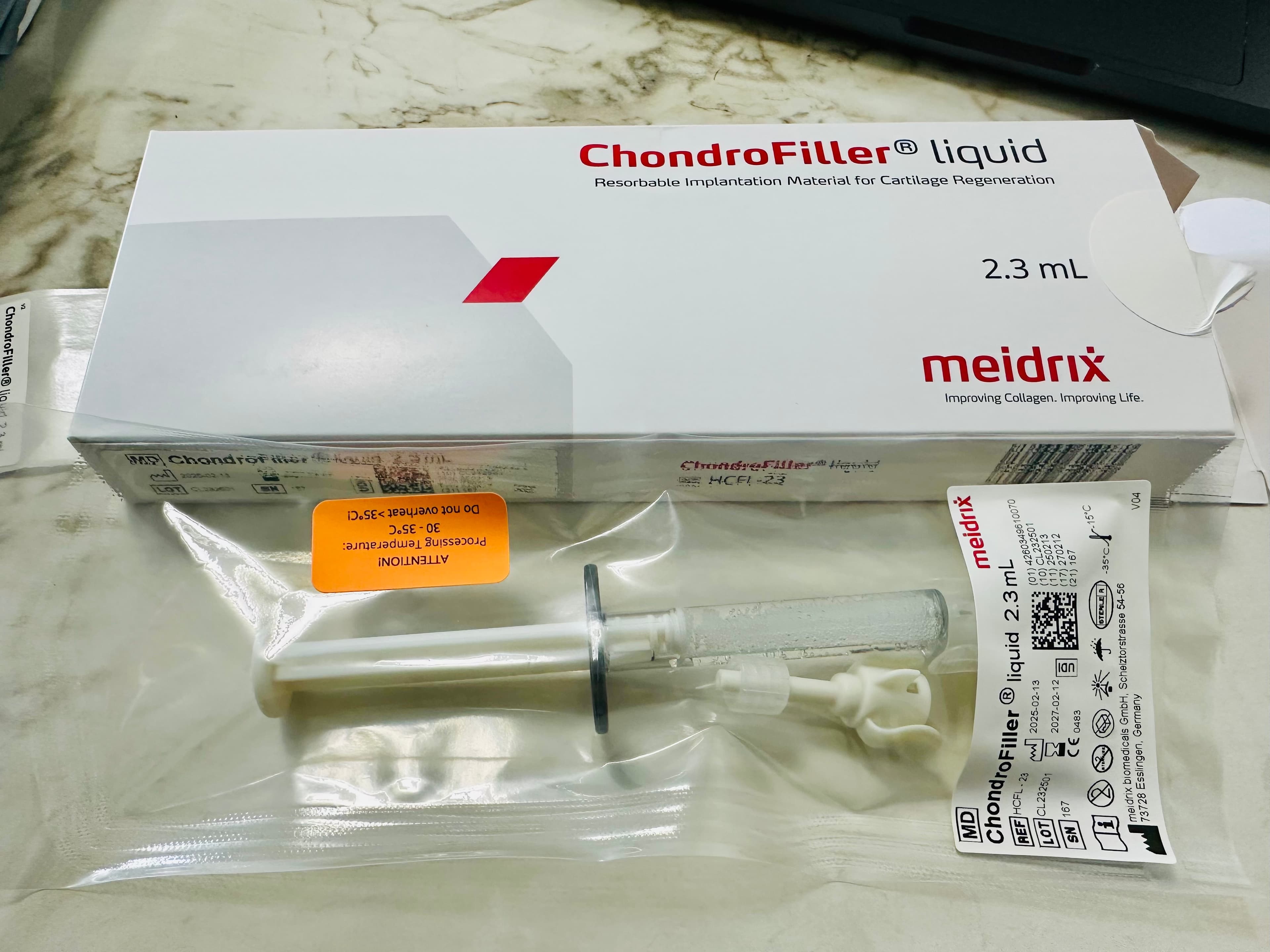
What Is ChondroFiller®?
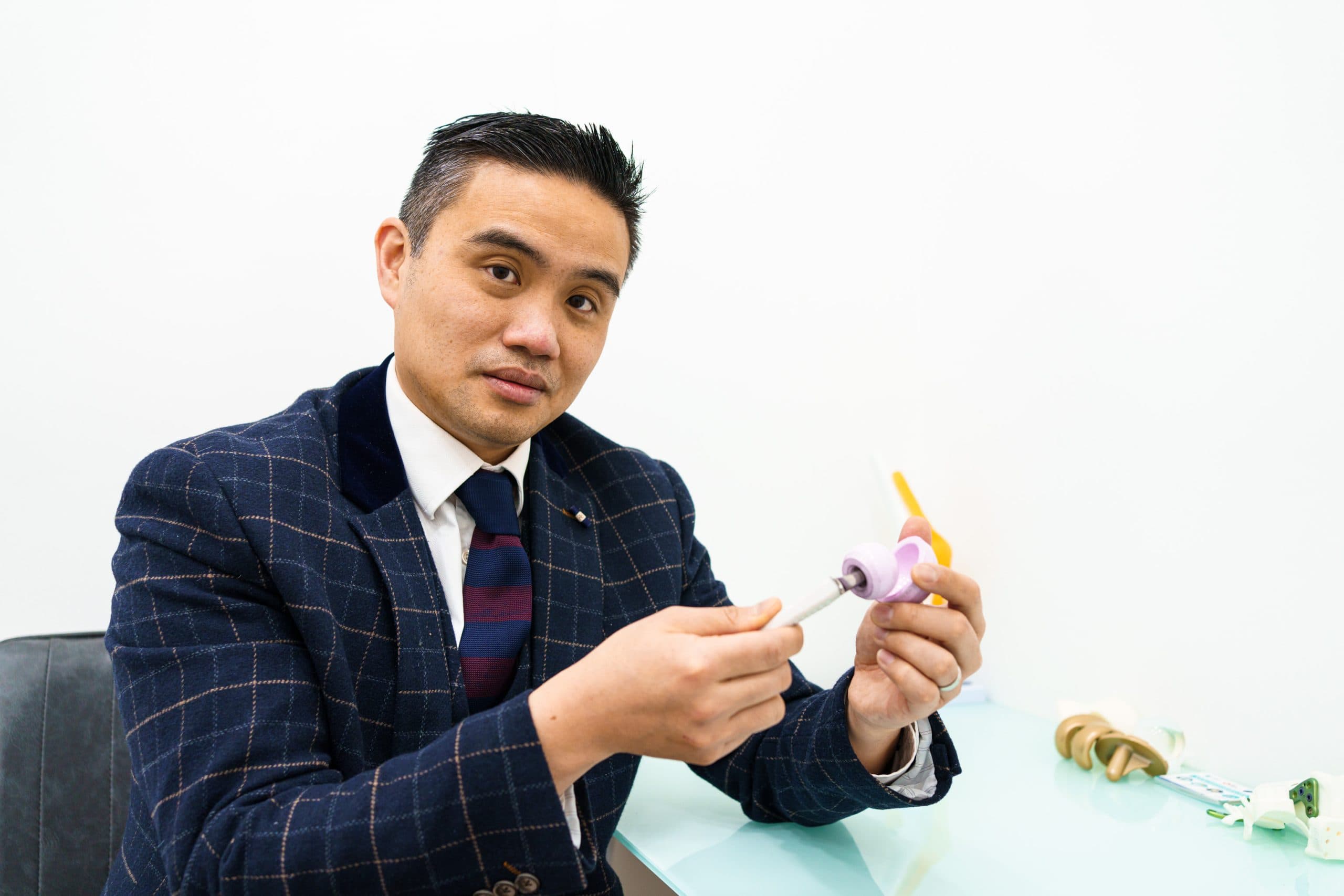
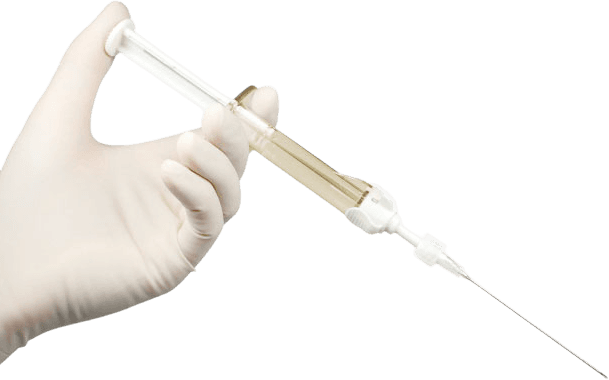
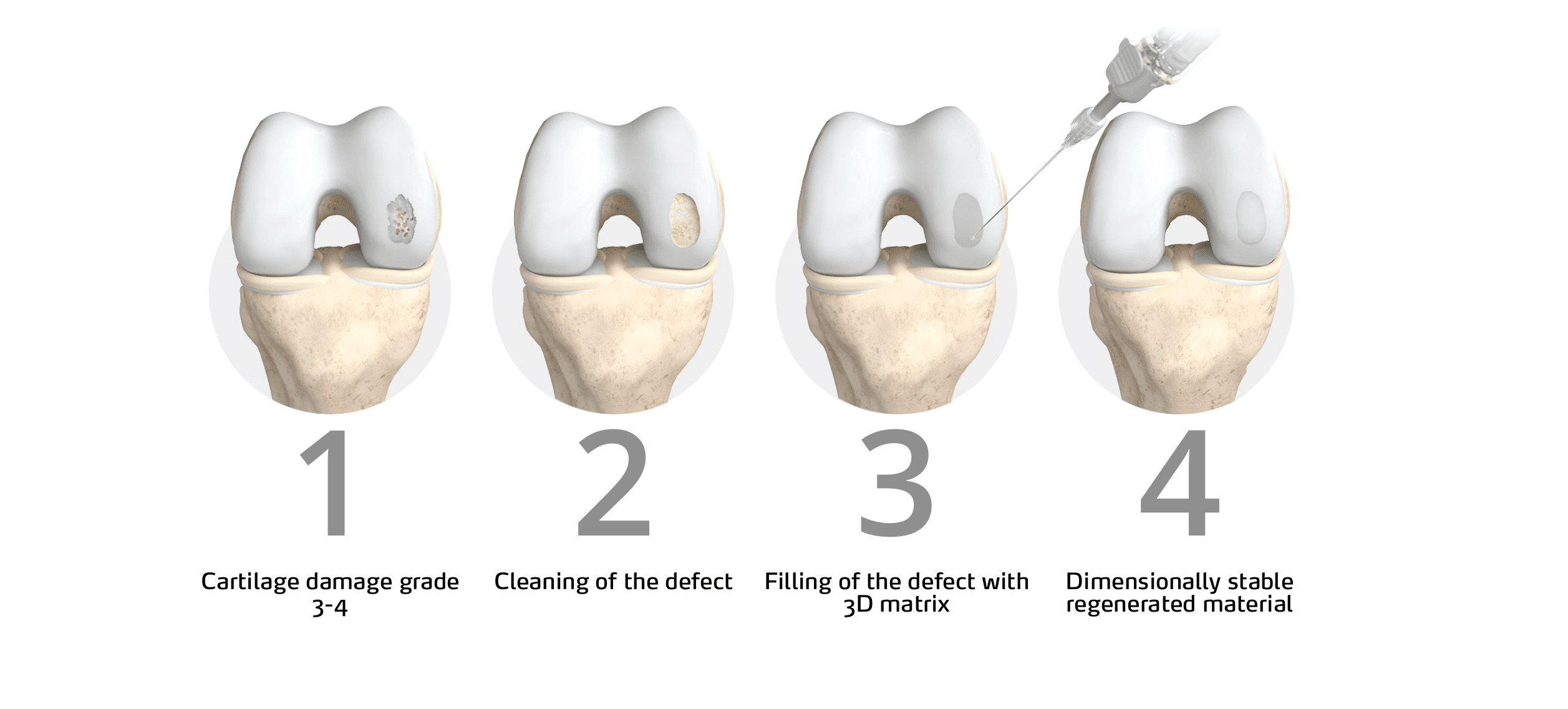
ChondroFiller® is an acellular, biologic collagen scaffold delivered in liquid form. Once placed, it gels within minutes, filling the defect and providing a framework that invites your cells to rebuild cartilage.
Think of it like “epoxy” for cartilage—without the plastic.
- Shields the damaged zone from further wear
- Attracts native cells into a 3D scaffold
- Supports hyaline-like regeneration (not just fibrous scar)
One treatment. One step. A chance to keep your joint for the long term.
The Evidence
How Does It Compare?
ChondroFiller® sits in a different class— structural regenerative implant.
| Treatment | What it Does | Limitation |
|---|---|---|
| HA (Hyaluronic Acid) | Improves lubrication for short-term comfort | Temporary; does not regenerate tissue |
| Arthrosamid® | Acts on the synovium to reduce pain signalling | Not regenerative; treats symptoms rather than the cartilage defect |
| ChondroFiller® | Collagen scaffold placed into the worn area to support cartilage repair; published evidence is for surgical placement | Published outcomes are for keyhole placement into a contained defect. The injection route (CFI) is Professor Lee's own method; its results are the clinic's own records, not yet published |
Treatment Options at Liquid Cartilage
ChondroFiller®: our structural, regenerative approach to focal cartilage defects.

Small joints: thumb, fingers, elbow, AC joint, toes, TMJ…
- No incisions; minimal downtime
- 1 ml of ChondroFiller
- In-clinic procedure
From £2,100
Large joints: knee, hip, shoulder, ankle
- In-clinic procedure
- 2.3 ml of ChondroFiller
- No incisions; minimal downtime
From £2,800

Best for knee, hip, shoulder
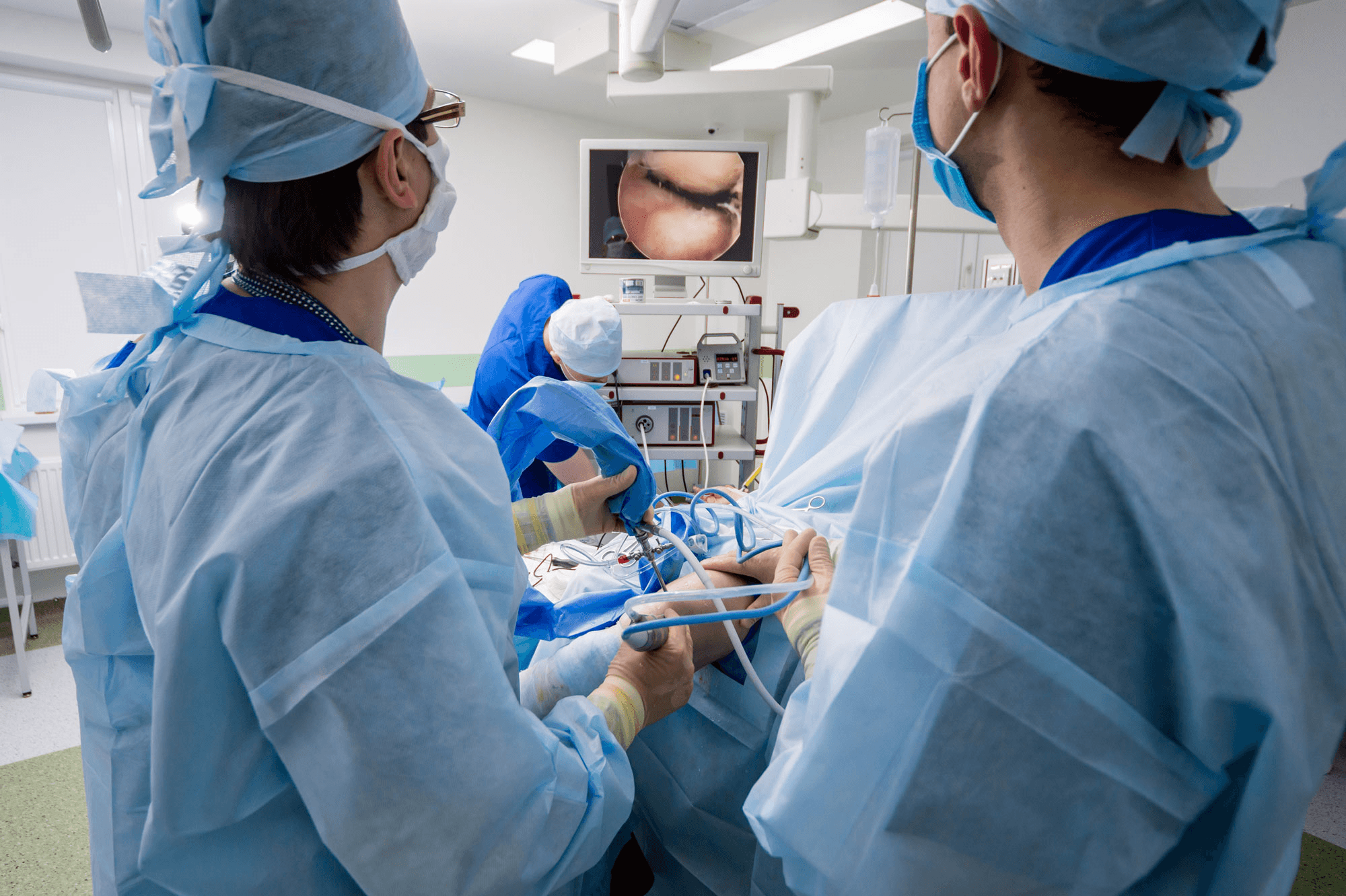
- Arthroscopic debridement
- Direct ChondroFiller placement under vision
- Ideal for larger/complex defects
- ACIC (autologous collagen-induced chondrogenesis)
- AMIC (autologous matrix-induced chondrogenesis)
From £6,500 (knee), £9,500 (hip/shoulder)
Our proprietary MSC Co-Delivery Technique
- Combines ChondroFiller® with MSC (medicinal signalling cells) from marrow, fat, or PRF
- Inspired by ACI / MACI principles—delivered in a single procedure
- Designed for larger or more complex defects
- ACIC with cells
- AMIC with cells
Keyhole: from £9,500 – Liquid Cartilage™
Your Journey with Us
Introductory offer: your consultation fee is credited toward treatment if you proceed.
Step 1

Discovery Call
Quick, no-obligation chat
Step 2

Consultation + MRI
Comprehensive assessment with Prof. Paul Lee
Step 3

Treatment Plan
Injection, Keyhole, or Liquid Cartilage™
Step 4

One-Day Procedure
Precise and minimally invasive
Step 5

Specialist Rehab & Follow-Up
Why Liquid Cartilage?
- Prof. Paul Lee — Consultant Orthopaedic Surgeon & Honorary Professor of Sports Medicine; international leader in cartilage regeneration
- Harley Street facilities with motion capture and AI-supported diagnostics
- Recognised as the UK ICRS Teaching Centre of Excellence
- Regeneration-first philosophy: preserve joints whenever possible


Take the Next Step
Cartilage damage won’t reverse on its own—yet with the right plan it can be protected, repaired, and regenerated.
At Liquid Cartilage, you access world-leading science and a joint-preservation vision on Harley Street.
- Start with a Discovery Call.
- Or book your Consultation with Prof. Lee today.
(Consultation fee credited towards treatment if you proceed.)


Frequently Asked Questions
Everything you want to know about ChondroFiller® at Liquid Cartilage.
What is ChondroFiller® and how does it support natural repair?
ChondroFiller® is an acellular collagen gel that fills cartilage defects and forms a scaffold for your own cells to regenerate healthy tissue. Unlike temporary injections, it supports hyaline-like restoration for smoother motion and protection long-term.
How does it compare with other injections or joint replacement?
HA or Arthrosamid® may give short-term pain relief, while ChondroFiller® aims to rebuild cartilage. Compared with replacement, it preserves your natural joint and avoids prosthesis risks. Our approach is regenerate-first.
What outcomes have been reported?
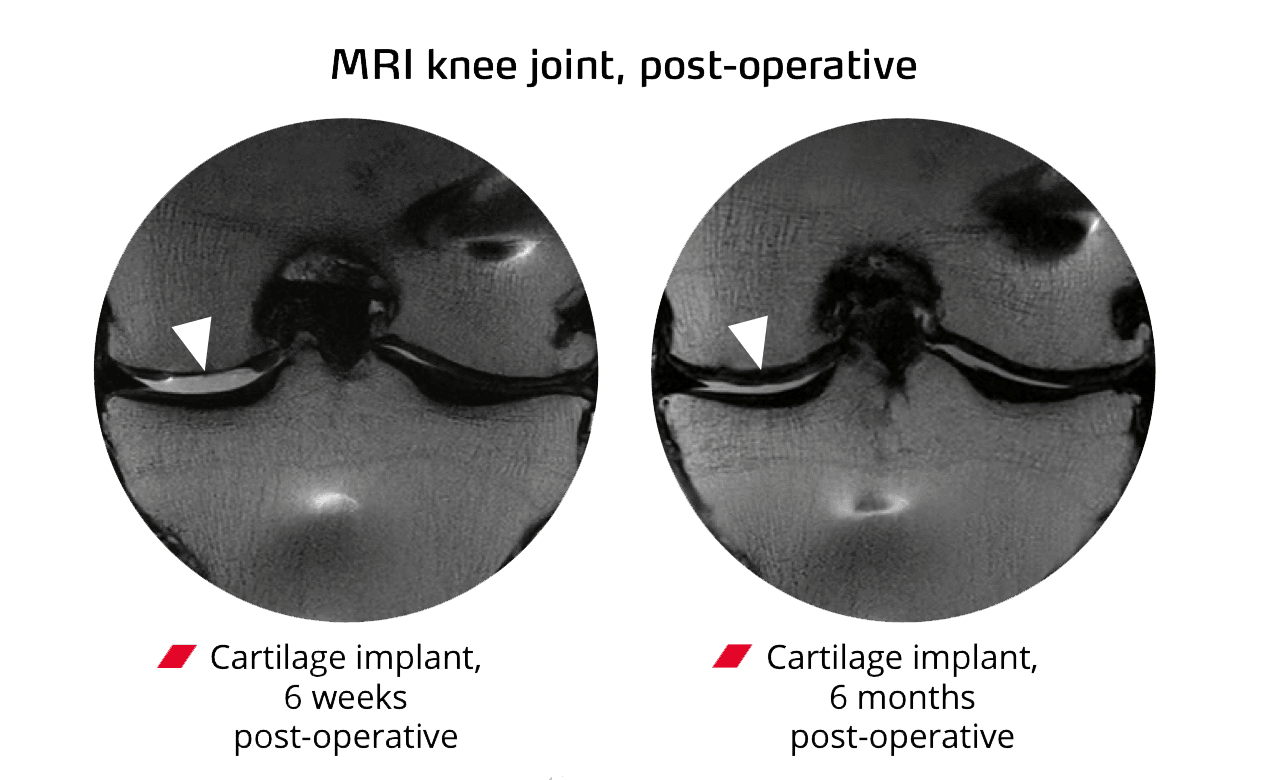
Studies show +30 IKDC in knees, +33 Harris Hip Score in hips, and improved ankle metrics. MRI (MOCART) typically reads 70–87. Globally, >19,000 cases support safety and function.
Who is a good candidate?
Best for focal defects up to 6 cm² in knees, hips, ankles, or small joints. Active younger patients often benefit, but older patients may qualify if surrounding cartilage is stable.
What is the procedure and recovery like?
Delivered via precise injection or keyhole surgery. The gel sets in minutes. Expect partial weight-bearing ~6 weeks, steady return to cycling/swimming, and most sports around ~12 months alongside specialist rehab.
Why choose us?
Harley Street location; UK ICRS Centre of Excellence. Led by Prof. Paul Lee, with advanced options like Liquid Cartilage™ (ChondroFiller® + cells) to prioritise preservation.
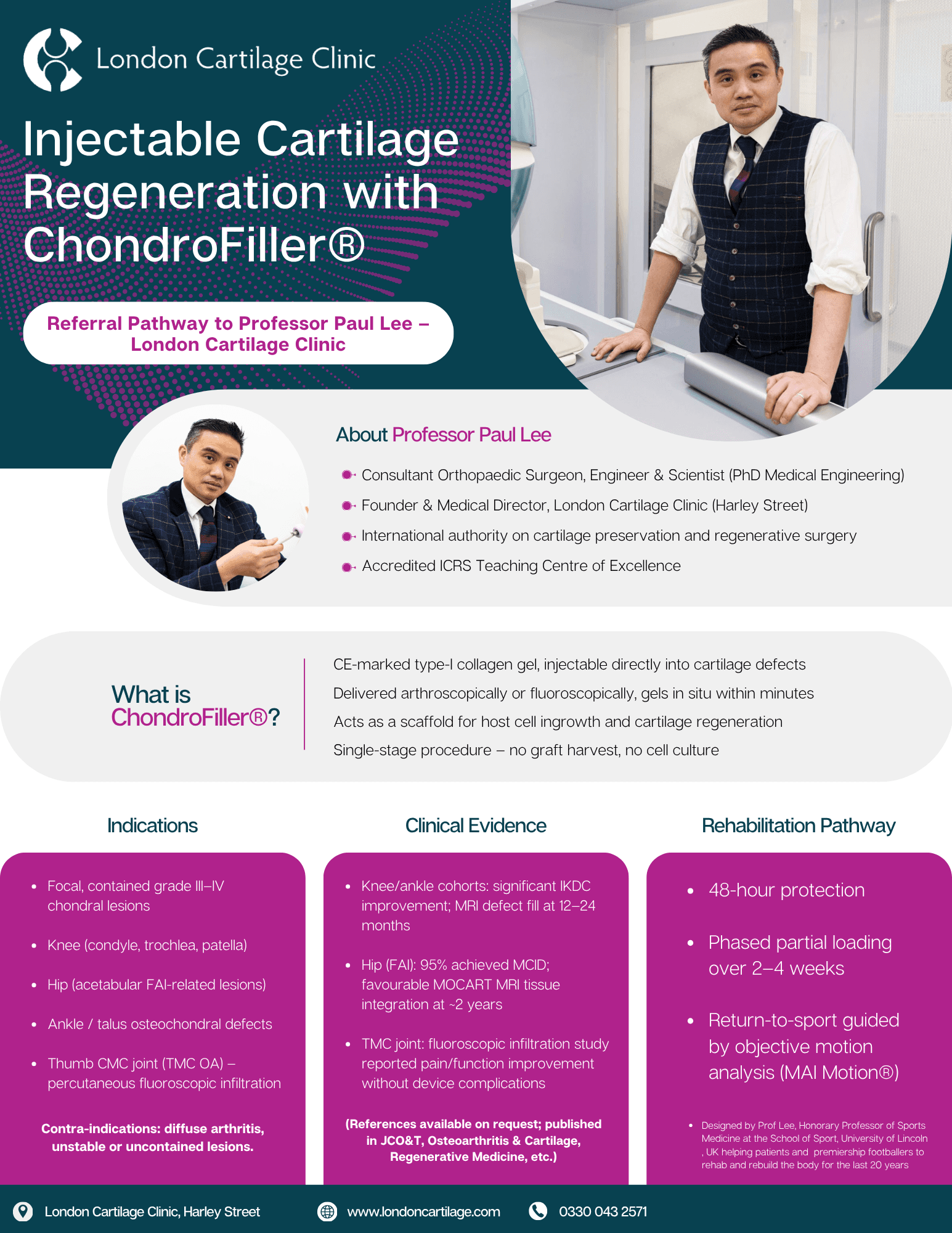
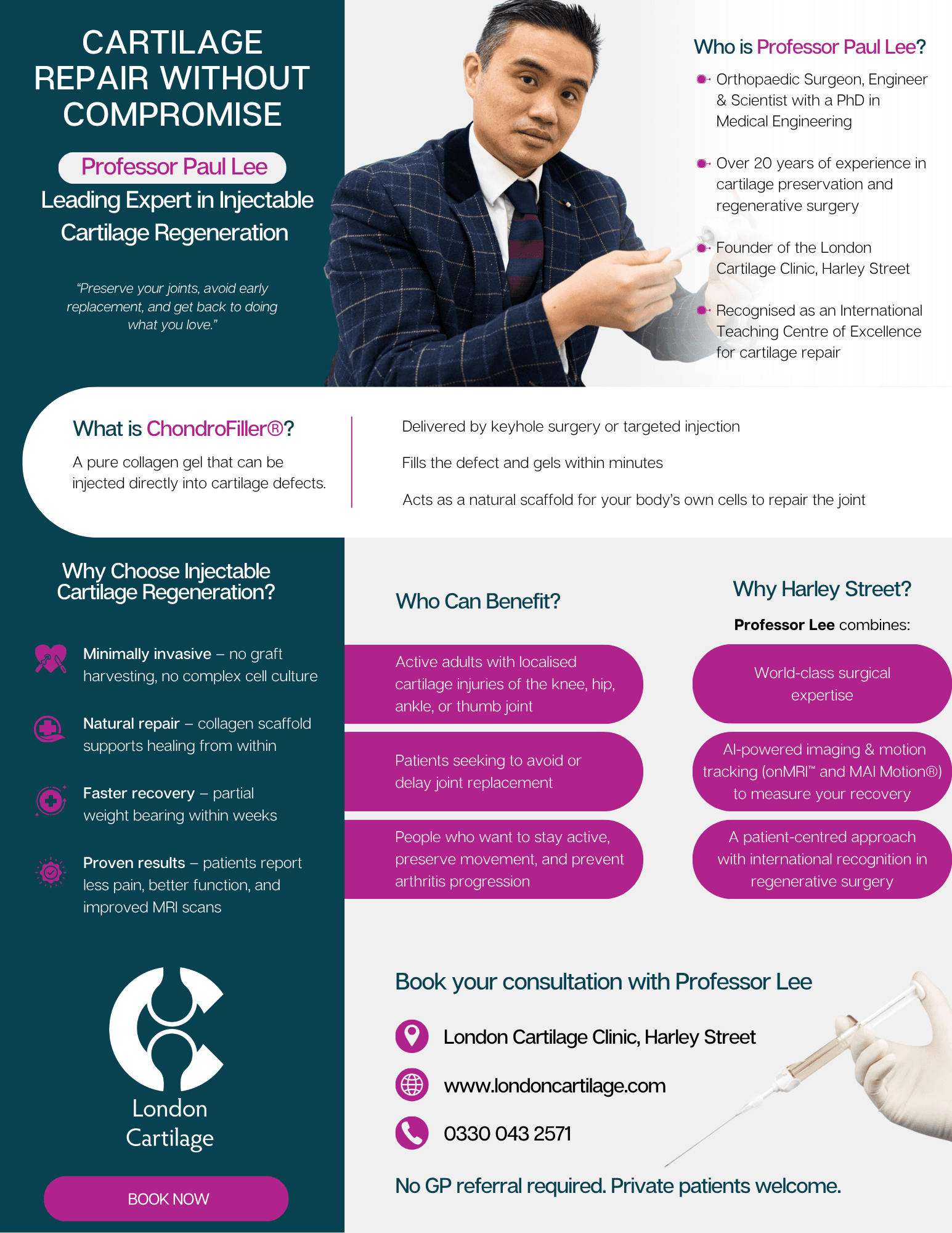
Download our Leaflet
Download the ChondroFiller® leaflet.
Latest Blog
View all →
ChondroFiller injection for ankle cartilage lesions
ChondroFiller is a collagen scaffold injected into ankle cartilage defects to create a biological matrix that triggers the body's own repair cells to migrate and remodel the tissue. The procedure is single-stage and outpatient, typically lasting 30 to 45 minutes.

Knee cartilage damage after ACL injury
An ACL rupture instantly compresses cartilage and bone where the tibia meets the femur as the tibia rotates and shifts forward forcefully. This structural damage occurs independently of the mechanical instability that follows; progressive cartilage degradation subsequently unfolds over months as the joint loses restraint.

ChondroFiller injection vs hip replacement surgery
For patients with Grade III or IV hip osteoarthritis, ChondroFiller injection—an outpatient ultrasound-guided treatment using a collagen scaffold—offers an alternative to replacement by preserving the native joint and triggering the body's own cartilage regeneration.

When to act on a talar osteochondral defect
Lesion size determines treatment success in talar osteochondral defects: bone marrow stimulation succeeds in nearly all cases below 15 mm average diameter, but only 3% of lesions at or above that threshold.

ChondroFiller injection for ankle osteochondral lesions
For focal osteochondral lesions of the talus larger than 15 mm, bone marrow stimulation alone succeeds only 3% of the time; ChondroFiller, an injectable collagen scaffold placed under ultrasound guidance, offers a non-surgical pathway using the patient's own repair cells—no general anaesthetic or surgical incision.

Chondromalacia Patellae and Cartilage Preservation
Anterior knee pain does not reliably indicate cartilage damage; symptoms correlate only loosely with structural grade, requiring imaging and functional testing for accurate diagnosis.