
ChondroFiller injection or OATS for focal cartilage defects
Which patients are suitable for each treatment
Whether either of these treatments is right for you depends less on which sounds more appealing and more on the specific characteristics of your cartilage damage — its size, depth, and the overall condition of the joint around it.
Both ChondroFiller injection and OATS address the same underlying problem: a discrete, symptomatic focal cartilage defect in an otherwise structurally sound joint. Neither is intended for diffuse or end-stage osteoarthritis, where the damage extends across the joint surface broadly.
ChondroFiller injection — who qualifies
ChondroFiller injection is suitable for focal defects up to 6 cm², which covers a wide range of lesion sizes. Because it is an acellular scaffold that works by recruiting the patient's own progenitor cells, there is no donor tissue to harvest and no upper age or BMI threshold specific to the procedure. This gives it broader eligibility across age groups and body types than OATS, and it may be considered even where other cartilage repair options are not appropriate.
OATS — who qualifies
OATS is typically best suited to active, younger patients with symptomatic defects of roughly 1–4 cm² who have already tried and not responded to conservative management. Relative contraindications significantly narrow the eligible group: a BMI above 40, age above 50, Kellgren-Lawrence grade 2+ osteoarthritis, or a history of inflammatory arthritis all reduce suitability.
Patients who fall outside these OATS criteria may still be candidates for ChondroFiller injection — a clinically important distinction worth raising at a specialist assessment, which remains the definitive step for confirming suitability.
How a ChondroFiller injection works
The ChondroFiller injection places a ready-made collagen scaffold directly into the cartilage defect — no theatre admission, no general anaesthetic, and no harvesting of tissue from elsewhere in the body.
What the procedure involves
At the London Cartilage Clinic on Harley Street, the treatment is delivered as an outpatient procedure under ultrasound guidance. The collagen solution is injected precisely into the defect, where it gels in place within 3–5 minutes, forming a stable three-dimensional mesh.
How the body takes over
ChondroFiller injection is acellular — it contains no live cells. The scaffold instead acts as a biological framework: within days to weeks, the patient's own progenitor cells migrate into the matrix, differentiate into chondrocytes, and begin producing new cartilage tissue. Over 12 months the defect fills with hyaline-like cartilage; the scaffold itself is fully resorbed by 12–24 months as the new tissue matures. This process — matrix-induced chondrogenesis — means the repair is driven by the patient's own biology rather than transplanted or artificial material.
Device status and joint coverage
ChondroFiller is a CE-marked Class III medical device, the highest implantable-device regulatory category in Europe. It is applicable across multiple joints — knee, hip, ankle, shoulder, elbow, and smaller hand and wrist joints — offering the same mechanism wherever focal defects arise. In manufacturer-reported knee data, IKDC scores improved by approximately 30 points from baseline, with a reoperation rate of 3–8%; independent long-term trials remain ongoing.
Free non-medical discussion
Not sure what to do next?
Information only · No medical advice or diagnosis.
How OATS works
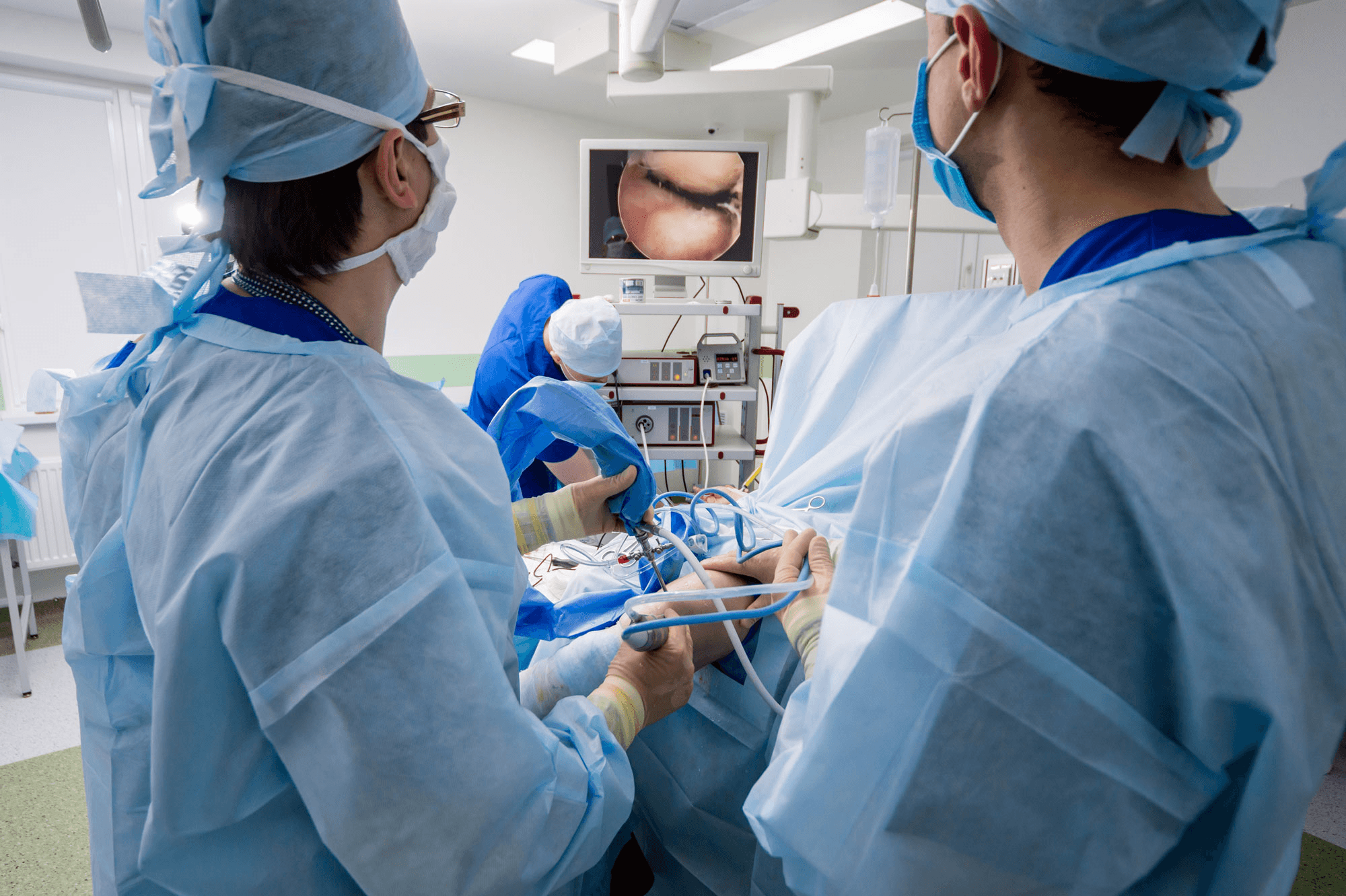
OATS — osteochondral autograft transfer — is a hospital-based surgical procedure performed arthroscopically under anaesthesia. A surgeon harvests one or more small cylindrical plugs of healthy cartilage and underlying bone from a low-load-bearing zone of the same joint, typically the peripheral femoral condyle, and press-fits them into the prepared defect site.
Because each plug carries both the cartilage surface and its supporting subchondral bone intact, OATS delivers true hyaline cartilage at the repair site — structurally the same tissue as the original joint surface, and the highest-quality repair material available from autologous sources. Bone-to-bone integration at the recipient site means the graft becomes part of the joint rather than sitting on top of it.
Mosaicplasty and its limitations
Where the defect is too large for a single plug, the mosaicplasty variant uses multiple smaller plugs arranged side by side. This can cover defects of up to around 4 cm², but the gaps between plugs tend to fill with fibrocartilage rather than hyaline tissue, which is mechanically inferior and may affect the durability of the repair in larger defects.
Donor-site morbidity
Harvesting plugs from within the same joint creates a secondary wound. Most patients tolerate this well, but donor-site pain, stiffness, or, in a minority of cases, some cartilage loss at the harvest area are recognised surgical considerations that do not arise with an injectable scaffold approach.

Four decision axes: size, bone depth, eligibility, and donor site
Four clinical factors tend to separate the two treatments in practice. Considered together, they map most patients to one pathway fairly reliably.
Defect size
ChondroFiller injection is indicated for defects up to 6 cm², making it the more practical option when damage extends to or beyond 4 cm². OATS is well-suited to defects in the 1–4 cm² range in appropriately selected patients; beyond that, the mosaicplasty variant requires multiple plugs, and the interplug gaps become a progressively larger share of the repair surface.
Bone involvement and tissue quality
OATS transfers both cartilage and subchondral bone as a single construct, delivering true hyaline cartilage — structurally identical to the original joint surface. ChondroFiller injection targets the chondral layer alone, producing hyaline-like tissue through matrix-induced chondrogenesis. In plain terms: OATS transplants the real thing; ChondroFiller guides the body to rebuild something close to it. For defects that are purely cartilage-deep, this distinction may not be decisive; where bone loss is also present, OATS's full-thickness construct is the stronger structural solution.
Patient eligibility
OATS eligibility narrows significantly outside a specific patient profile. Relative contraindications include age above 50, BMI above 40, and Kellgren–Lawrence osteoarthritis grade above 2, along with any history of inflammatory arthritis. ChondroFiller injection does not carry the same thresholds, giving it broader applicability across older or heavier patients and those with early background OA.
Donor site
As discussed in the previous section, OATS requires harvesting plugs from within the same joint, with recognised risks of donor-site pain and stiffness. ChondroFiller injection involves no harvest wound — removing that variable from the recovery picture entirely.
What recovery looks like after each treatment
Recovery from focal cartilage repair — by either pathway — runs to months rather than weeks. That is worth stating plainly before the timelines.
ChondroFiller injection
Following the outpatient procedure, the protocol is structured in two phases: four to six weeks of limited weight-bearing to protect the gelling scaffold as early cell migration begins, followed by four to six weeks of guided physiotherapy to rebuild strength and joint control. Full tissue maturation — the point at which the scaffold has been progressively replaced by the patient's own cartilage — takes up to 12 months. MRI using MOCART scoring is the standard way to monitor this process at follow-up appointments.
Because ChondroFiller injection is delivered as an outpatient procedure, there is no surgical admission, no anaesthetic recovery period, and none of the post-operative theatre-related restrictions that follow an operation. For patients weighing the practical disruption involved, that distinction is real.
OATS
OATS follows a broadly similar phased structure — protected weight-bearing, then progressive rehabilitation — but recovery carries one additional variable that ChondroFiller injection does not: the donor site. Healing at the harvest area runs in parallel with graft integration at the repair site, and how quickly a patient moves through rehabilitation can depend on how both sites respond. Published guidance does not offer a single fixed timeline; individual variation is meaningful, and the donor-site recovery burden should be factored into planning.
Physiotherapy is central to both pathways. Neither should be approached as a route to rapid return to sport or high-load activity.
Getting an assessment at the London Cartilage Clinic
Deciding between ChondroFiller injection, OATS, or another cartilage-repair pathway is not something that can be resolved from a symptom description alone. It requires a current MRI, defect measurement, and a clinical assessment that takes in the full picture — joint condition, patient history, and lifestyle expectations.
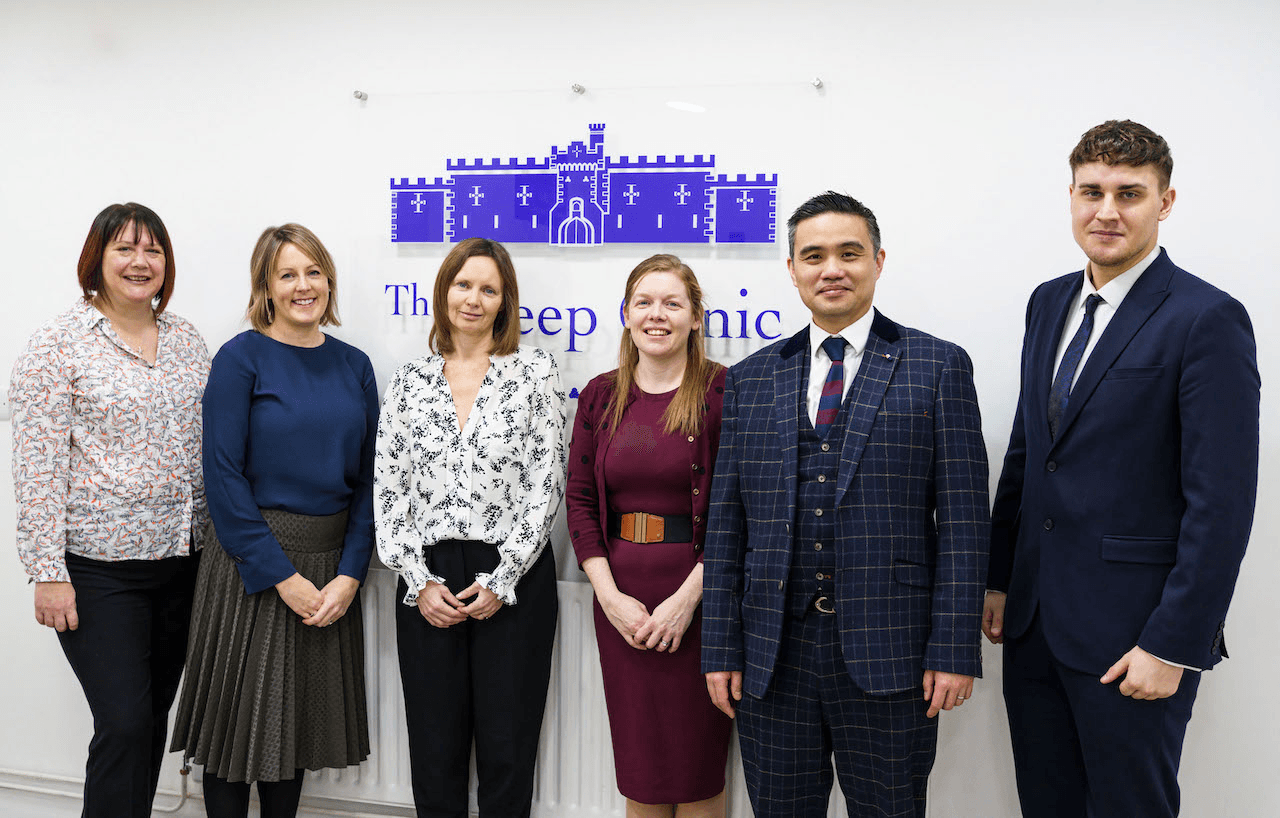
In the UK, ChondroFiller injection is delivered through the London Cartilage Clinic on Harley Street, which holds certified delivery status for the treatment. The service is led by Professor Paul Y. F. Lee, whose specialist focus on image-guided cartilage repair is relevant here: scaffold placement is a technique-sensitive procedure, and the quality of application affects how well the collagen matrix integrates and matures.
A consultation at LCC will clarify which pathway — ChondroFiller injection, OATS, or something else in the cartilage-repair spectrum — best fits the defect size, bone status, and eligibility profile. That conversation is a starting point, not a commitment.
Assessments can be booked at londoncartilage.com.
- [1] Articular Cartilage Repair — Wikipedia. https://en.wikipedia.org/wiki/Articular_cartilage_repair https://en.wikipedia.org/wiki/Articular_cartilage_repair
Frequently Asked Questions
- Patients with focal defects up to 6 cm² are suitable. Unlike OATS, there are no upper age or BMI thresholds, making it broadly eligible across age groups and body types.
- Recovery runs in two phases: four to six weeks of limited weight-bearing, followed by four to six weeks of guided physiotherapy. Full tissue maturation takes up to 12 months.
- ChondroFiller is a collagen scaffold injected as an outpatient procedure that guides the body to rebuild cartilage. OATS harvests healthy cartilage and bone plugs from within the same joint, delivering true hyaline cartilage but requiring surgery.
- OATS works well for defects of 1–4 cm². Larger defects require mosaicplasty using multiple plugs, but gaps between plugs tend to fill with fibrocartilage, which is mechanically inferior to hyaline tissue.
- Harvesting plugs from within the joint creates a secondary wound. Donor-site pain, stiffness, or cartilage loss at the harvest area are recognised surgical considerations not present with injectable scaffold approaches.
Legal & Medical Disclaimer
This article is written by an independent contributor and reflects their own views and experience, not necessarily those of Liquid Cartilage. It is provided for general information and education only and does not constitute medical advice, diagnosis, or treatment.
Always seek personalised advice from a qualified healthcare professional before making decisions about your health. Liquid Cartilage accepts no responsibility for errors, omissions, third-party content, or any loss, damage, or injury arising from reliance on this material.
If you believe this article contains inaccurate or infringing content, please contact us at [email protected].