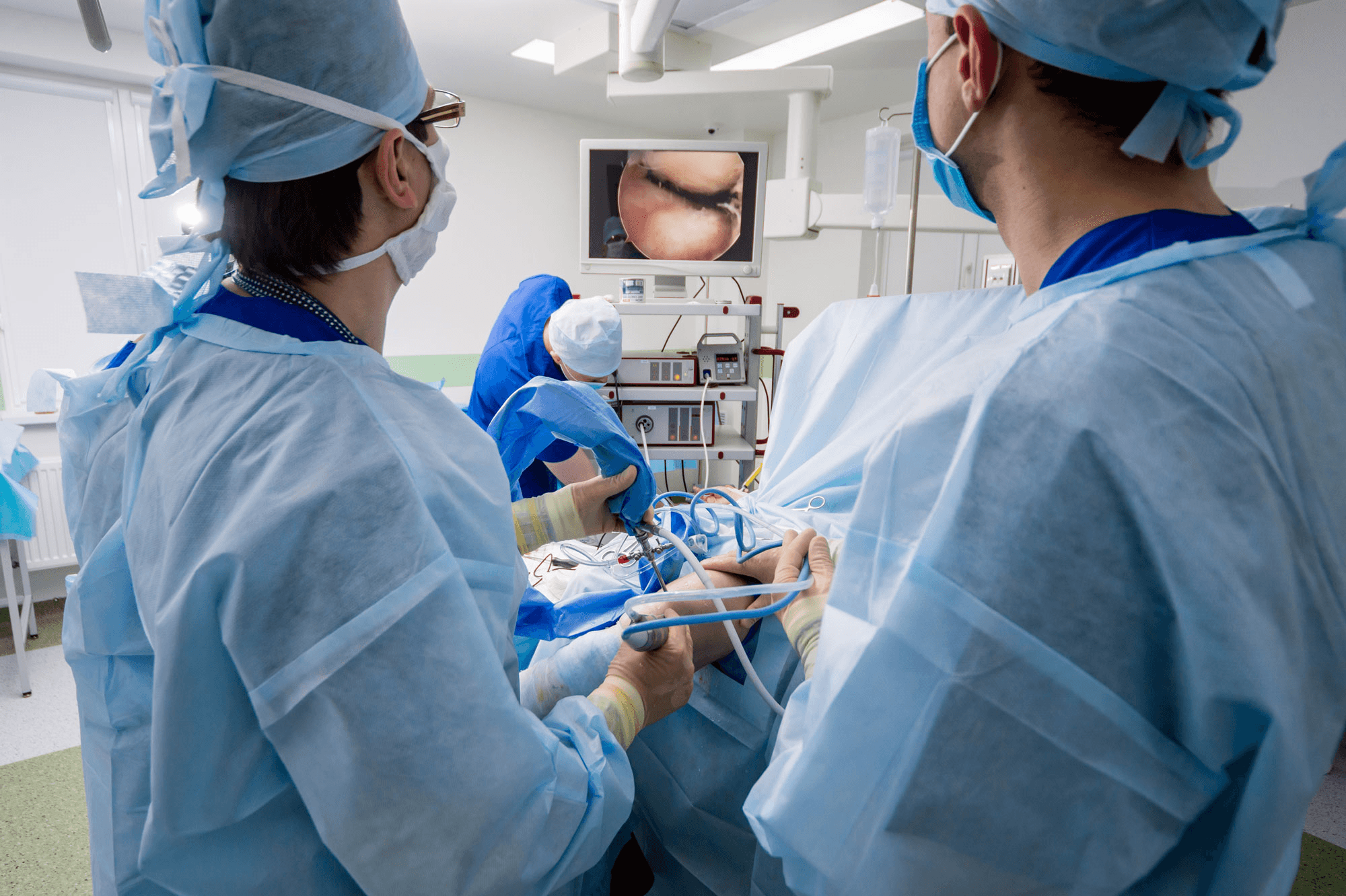

What cartilage defect grade and size mean for treatment
What ICRS grade actually tells you
Your MRI or post-arthroscopy report may carry a grade alongside the description of your cartilage damage. That grade comes from the ICRS (International Cartilage Repair Society) classification system, and it tells your clinician how deeply into the cartilage layer the damage reaches.
The scale runs from 0 to 4:
- Grade 0 — structurally normal cartilage.
- Grade 1 — the surface feels abnormally soft to probing, or shows very shallow cracks, but no significant depth of tissue is lost.
- Grade 2 — damage extends less than 50% of the way through the cartilage thickness. The deeper layers are still intact.
- Grade 3 — damage extends beyond 50% of the cartilage depth. This grade is subdivided into four types (A through D) reflecting how close the lesion comes to the underlying subchondral bone — the bony plate beneath the cartilage. Grade 3D, the most severe subtype, involves surface blistering over a deep lesion that has nearly reached the bone.
- Grade 4 — a complete breach through the cartilage and into the subchondral bone itself.
Grades 0 and 1 typically sit below the threshold where restorative repair is offered — symptoms can still be present, but the structural damage does not yet meet criteria for regenerative procedures. Grade 2 usually points toward conservative care or surface smoothing as a first step. Grades 3 and 4 mark the zone where restorative intervention becomes the active discussion.
Grade alone, however, only tells half the story. The surface area of the defect is equally decisive in determining which options remain on the table — and that is where the next section picks up.
Why your MRI grade may not be the final verdict
Imaging reports carry authority — but a cartilage grade from an MRI scan is better read as a working estimate than a definitive classification.
MRI resolution has limits when it comes to measuring cartilage depth precisely. Comparing MRI-based grading with direct arthroscopic probing — where a clinician physically tests the tissue with a probe during keyhole surgery — consistently shows that scanning tends to underestimate depth loss. A lesion that reads as Grade 2 on imaging may be confirmed as Grade 3 once examined intraoperatively; the reverse can also occur. Either shift can change the treatment conversation meaningfully.
This is not a shortcoming unique to any scanner or reporting radiologist. It reflects the inherent complexity of interpreting cartilage signal and the resolution ceiling of current MRI technology.
It is one of several reasons a specialist consultation goes well beyond reviewing a scan. History, symptom pattern, and physical examination findings combine with imaging to form the clinical picture on which a treatment plan is built. The grade on a report opens the conversation — a complete assessment is what determines what comes next.
Free non-medical discussion
Not sure what to do next?
Information only · No medical advice or diagnosis.
How defect size shifts what is surgically possible
Grade describes depth; size describes area. Both measurements sit on a surgeon's assessment before any repair decision is made.
Cartilage defects are routinely mapped in square centimetres, and that figure matters because every repair technique has a practical size ceiling. Below roughly 2–4 cm², the majority of restorative options remain technically available. Once a defect exceeds approximately 3 cm², some first-line techniques can no longer reliably cover the damaged surface — which pushes the decision toward procedures designed specifically for larger lesions. At the far end of the size spectrum, very large or complex posttraumatic defects may require tissue-sourced solutions supported by long-term follow-up data rather than the smaller-defect toolkit.
These thresholds — 2 cm², 4 cm², 3 cm² — appear in clinical literature as approximate reference points, not as fixed cut-offs. Surgeon judgement, defect shape, the condition of the surrounding tissue, and technique-specific considerations all influence where the practical boundary falls for an individual patient.
The reason size matters is less about prognosis and more about geometry: a repair material or procedure that works well over a small, well-contained lesion may simply be unable to achieve adequate coverage when the defect is significantly wider. Matching the technique to the territory is the core logic, and the next section maps how grade and size together point toward specific repair pathways.

The treatment map by grade and size
The grade–size combination determines which techniques are technically possible and which carry the strongest evidence.
Grade 1–2 — any defect size
Restorative surgery is not typically indicated at these depths. Conservative management — physiotherapy, load modification, and activity pacing — is the standard pathway. Where mechanical symptoms such as catching or locking are present, chondroplasty (smoothing and stabilisation of the cartilage margins) may be offered as a standalone procedure or as preparation before a more complex repair if one is eventually warranted.
Grade 3–4 — small defect (roughly < 3 cm²)
For smaller full-thickness lesions, two first-line surgical options are well established:
- Microfracture drills through subchondral bone to recruit marrow-derived cells into the defect. It is technically straightforward and widely available.
- Mosaicplasty (osteochondral autograft transfer) transplants cylindrical bone-cartilage plugs from a low-load region of the same joint into the defect. Long-term clinical scores favour mosaicplasty over microfracture, though donor-site availability and defect geometry set practical limits on when it is feasible.
Grade 3–4 — larger defect (≥ 3 cm²)
The SUMMIT randomised controlled trial found that MACI (matrix-induced autologous chondrocyte implantation) produced superior KOOS pain and function scores at 2- and 5-year follow-up versus microfracture in patients with lesions of 3 cm² or greater. Longer-term outcome series confirm the durability of those results, establishing MACI as the preferred cell-based option at this size range.
Very large or complex posttraumatic defects
Fresh osteochondral allograft transplantation offers a tissue-based solution for defects that exceed the practical ceiling for cell-based techniques, supported by long-term follow-up data at both femoral condyle and patellofemoral sites.
Injectable acellular scaffold — where ChondroFiller injection fits
ChondroFiller injection is an ultrasound-guided, outpatient-delivered collagen scaffold positioned at the Grade 2–3 range for contained defects where arthroscopic or theatre-based surgery has not yet been indicated or is not the preferred route. The scaffold provides a matrix for the patient's own progenitor cells to migrate into, a mechanism termed matrix-induced chondrogenesis. The evidence base for injectable acellular scaffolds in this indication is still developing relative to the established surgical procedures described above, and the precise patient selection criteria — defect containment, subchondral bone status, symptom profile — require specialist assessment rather than grade or size alone.
What else the surgeon weighs beyond grade and size
Patients often hear "it depends" when they ask about treatment options, and that phrase, frustrating as it sounds, reflects a genuine clinical reality: grade and size together narrow the field, but several other factors determine which option within that field actually fits.
Defect containment. A lesion surrounded by stable, healthy cartilage margins — a contained defect — is generally more amenable to restorative repair than one with crumbling or absent edges. When margins are unsupported, retaining a graft, scaffold, or cell preparation in position becomes mechanically difficult.
Subchondral bone integrity. Grade 3D and Grade 4 lesions breach or approach the subchondral plate. Where underlying bone is compromised, a chondral-only repair may be insufficient, and osteochondral techniques that address both bone and cartilage layers are often required instead.
Mechanism of injury. Acute traumatic defects in younger, active patients tend to respond better to restorative procedures than chronic degenerative lesions, where the surrounding tissue environment is less favourable for healing.
Surrounding cartilage health. A Grade 3–4 lesion confined to one compartment looks very different from the same grade finding accompanied by softening in the surrounding cartilage or involvement across two compartments. The latter picture typically meets structural criteria for early osteoarthritis — a different clinical category that shifts the focus toward joint-preservation strategies rather than focal repair.
Patient activity goals. A competitive athlete and a patient with moderate functional demands may present with an identical lesion but require different approaches. Technique selection accounts for the biomechanical loading the repair will face once the patient returns to activity.
Age and BMI are also standard considerations in this assessment, though specific thresholds depend on the individual clinical picture and the technique under discussion. No single modifier overrides the others; it is the pattern across all of them that guides the recommendation.
Getting a specialist assessment at the London Cartilage Clinic
A specialist assessment for a focal cartilage lesion is more comprehensive than a standard outpatient review. The clinician takes a detailed history — onset, mechanism, symptom pattern, and functional impact — before examining the joint for range of motion, effusion, and mechanical signs. The MRI is then reviewed in clinical context: beyond the imaging report's grade and morphology description, the specialist evaluates defect dimensions, margin containment, surrounding cartilage health, and subchondral bone status. Weighed against the patient's activity goals, those findings are what turn grade and size from abstract labels into a plan.
Not every patient with a significant grade finding needs surgery. For many, the assessment confirms that structured conservative care — physiotherapy, load management, and progressive rehabilitation — is the right next step, either as a primary pathway or as a preparatory phase before further intervention.
For patients with a contained Grade 2–3 focal lesion where an outpatient approach is clinically appropriate, the London Cartilage Clinic offers ChondroFiller injection: an ultrasound-guided, single-stage outpatient option. The assessment information that determines surgical candidacy — grade, defect size, containment, subchondral bone status, and symptom profile — is precisely the same information used to identify patients suited to this route rather than a theatre-based procedure.
The London Cartilage Clinic on Harley Street is the UK certified delivery centre for Liquid Cartilage™ / ChondroFiller injection. Assessment bookings can be made at londoncartilage.com.
- [1] Spheroids of human autologous matrix-associated chondrocytes (Spherox) — Wikipedia. https://en.wikipedia.org/?curid=64415908 https://en.wikipedia.org/?curid=64415908
- [2] Articular cartilage repair — Wikipedia. https://en.wikipedia.org/?curid=19042351 https://en.wikipedia.org/?curid=19042351
Frequently Asked Questions
- ICRS grade measures damage depth from 0 (normal) to 4 (through bone). Grades 0–1 typically don't need restorative repair. Grades 3–4 mark where intervention becomes appropriate.
- Yes. MRI underestimates depth compared to direct arthroscopic probing. A Grade 2 on imaging may prove to be Grade 3 during surgery, shifting treatment options.
- Size measured in cm². Below 2–4 cm², most repair options work. Above 3 cm², some first-line techniques fail, requiring procedures designed for larger lesions.
- Microfracture or mosaicplasty for defects under roughly 3 cm². Mosaicplasty shows better long-term scores, though donor-site availability and geometry limit when it's feasible.
- Defect containment, subchondral bone status, injury mechanism, surrounding cartilage health, and your activity goals all influence which technique fits your lesion.
Legal & Medical Disclaimer
This article is written by an independent contributor and reflects their own views and experience, not necessarily those of Liquid Cartilage. It is provided for general information and education only and does not constitute medical advice, diagnosis, or treatment.
Always seek personalised advice from a qualified healthcare professional before making decisions about your health. Liquid Cartilage accepts no responsibility for errors, omissions, third-party content, or any loss, damage, or injury arising from reliance on this material.
If you believe this article contains inaccurate or infringing content, please contact us at [email protected].