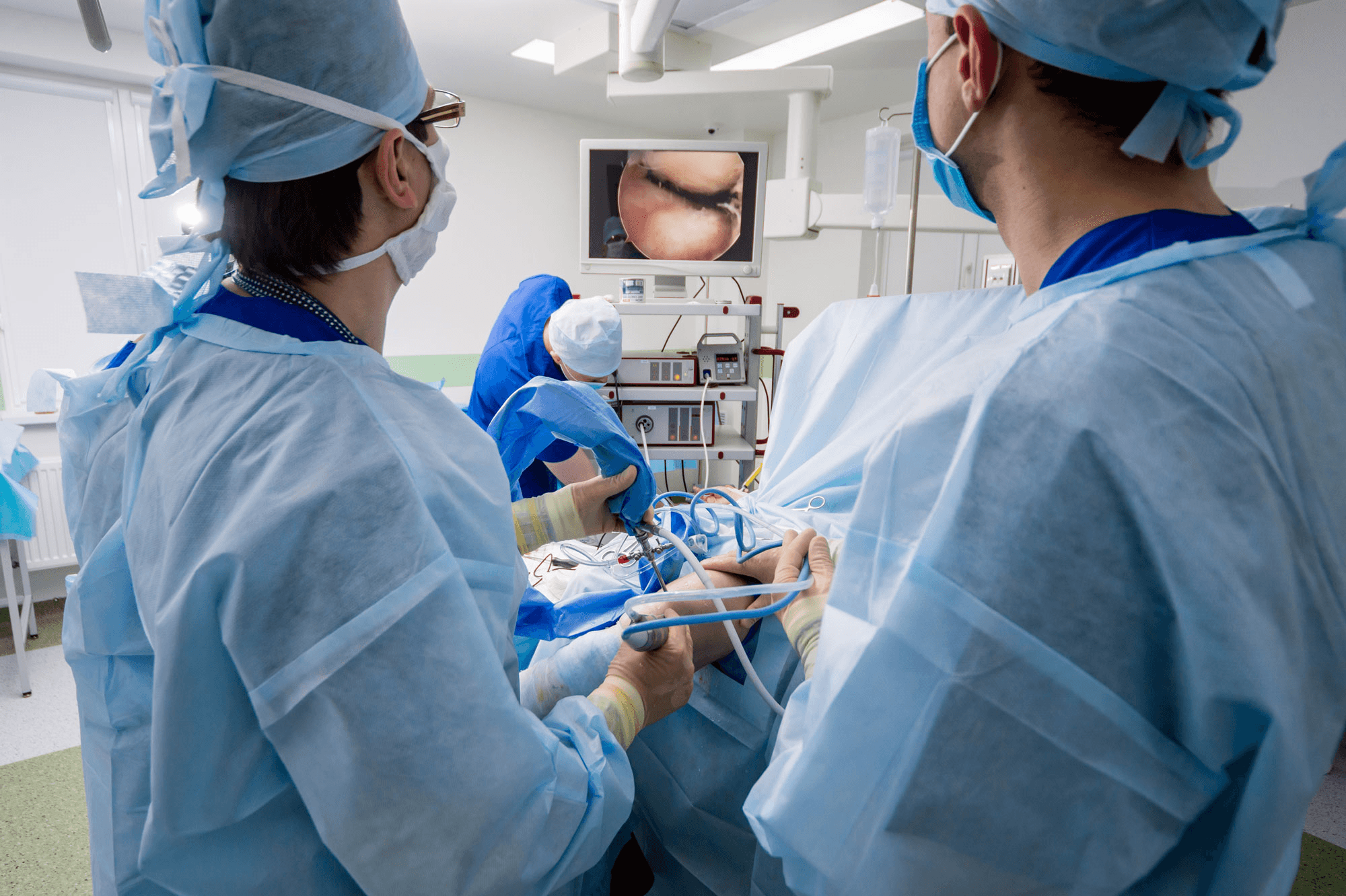

Treating thumb cartilage damage with ChondroFiller injection
Can a ChondroFiller injection treat thumb or finger joint cartilage damage?
For many patients with thumb or finger joint cartilage damage, the immediate question is whether anything can be done without surgery. The short answer, for suitable candidates, is yes.
ChondroFiller injection is an ultrasound-guided outpatient treatment that places an injectable collagen scaffold directly into the damaged joint. Once positioned, the gel-like scaffold coats degenerated cartilage surfaces and creates a structural matrix that recruits the patient's own repair cells to begin rebuilding tissue. There are no cells harvested, cultured, or implanted — the product is acellular, and the body does the regenerative work.
The treatment is available for cartilage damage at the basal thumb (trapeziometacarpal) joint and, where anatomy permits, other small hand joints. It is most appropriate where cartilage loss is focal or where osteoarthritis is present but joint replacement is not yet indicated. The procedure is conducted under local anaesthesia in an outpatient setting — not in an operating theatre, and not under arthroscopic or general anaesthesia. In the UK, London Cartilage Clinic on Harley Street offers ChondroFiller injection as an image-guided outpatient service for hand and thumb cartilage damage.
Why thumb and finger joints are so hard to treat
Thumb base osteoarthritis — affecting the trapeziometacarpal (CMC) joint where the thumb meets the wrist — is among the most common forms of hand OA, with women over 50 disproportionately affected. The characteristic symptoms are pinch pain and grip weakness: the kind that makes turning a key, opening a jar, or pinching a pen progressively harder.
The treatment options available at most hand clinics are limited at both ends. Corticosteroid and hyaluronic acid injections can ease pain in the short term, but neither addresses the underlying cartilage loss; structural decline continues regardless of symptomatic improvement. At the surgical end, trapeziectomy — removal of the trapezium bone at the thumb base — is a well-established operation that reliably reduces pain, but it is an irreversible anatomical change with a recovery measured in months.
Standard cartilage repair techniques used in larger joints — microfracture, OATS, MACI — are poorly suited to the thumb CMC. The joint space is too small, the accessible cartilage surfaces too narrow, and the mechanical loading pattern too different for these theatre-based procedures to transfer readily to this anatomy. The same constraint applies across most finger joints.
Eaton-Littler staging (grades I to IV) is the clinical system used to classify how far CMC joint deterioration has progressed. Patients in the earlier grades retain more cartilage to preserve; those at grade III or IV have progressively fewer options that stop short of surgery. It is at these intermediate and advanced stages that a scaffold-based injectable approach becomes most relevant to the treatment pathway.
Free non-medical discussion
Not sure what to do next?
Information only · No medical advice or diagnosis.
How ChondroFiller injection works in a small joint
The defining principle of ChondroFiller injection is additive rather than subtractive treatment. Surgical approaches to cartilage damage — whether debridement or more involved restorative procedures — typically begin by clearing damaged tissue, working on a clean joint bed. ChondroFiller instead enters the joint as it is: a liquid collagen formulation injected into the fluid-filled joint space, where it sets into a stable, viscoelastic matrix that conforms to and coats whatever cartilage surface remains. Nothing is removed; structure is added.
Once that matrix is in place, it acts as a three-dimensional framework for matrix-induced chondrogenesis. The patient's own progenitor cells — drawn in by the scaffold's chemotactic properties — migrate into the collagen structure and begin producing new cartilage tissue over the following weeks and months. The process is endogenous: the body supplies the biology, the scaffold supplies the architecture.
In a small joint such as the thumb CMC, accurate placement matters considerably more than in a larger joint cavity. Real-time ultrasound imaging allows the clinician to confirm the needle position within the joint space before the product is delivered — precision that is harder to achieve by landmark technique alone. Getting this right requires experience with both the anatomy and the material itself, which is why the result is sensitive to operator skill.
The session takes place under local anaesthesia in an outpatient setting. IV antibiotic cover is included as a precautionary measure, and a follow-up appointment is scheduled at six weeks.

What the clinical evidence shows for thumb and hand joints
Published clinical data for the basal thumb joint centres on Corain et al. (2023), a prospective study in which 43 patients with trapeziometacarpal osteoarthritis each received a single ChondroFiller infiltration at the thumb base. Participants were stratified by Eaton-Littler staging — Group A covering early disease (grades I–II) and Group B advanced disease (grades III–IV) — allowing outcomes to be compared across the full disease spectrum.
Both groups achieved highly significant reductions in NRS pain scores and DASH functional disability scores at 30 days, with those improvements maintained at six months. Alongside pain relief, grip and pinch strength — measured by Jamar dynamometer and pinch test — increased significantly in both cohorts. MRI confirmed that these functional gains were accompanied by structural changes: reduced bone marrow oedema, diminished periarticular effusion, and visible widening of the joint space.
That result sits within a larger scaffold evidence base. More than 19,000 ChondroFiller cases have been performed across multiple joints, with published headline outcomes including IKDC improvements of approximately +30 points in knee studies and MOCART MRI regeneration scores of 70–87. These figures reflect the scaffold's regenerative capacity across joints, but they are drawn predominantly from knee and hip populations and do not substitute for small-joint–specific data.
Corain 2023 is currently the sole dedicated study at this scale for thumb CMC disease, with follow-up extending only to six months — durability beyond that point remains unestablished in the published literature. No independent head-to-head trial against corticosteroid or hyaluronic acid injection for thumb osteoarthritis exists yet. A six-month controlled dataset showing structural MRI change is clinically meaningful, but longer follow-up and independent comparator data are still to come.
What to expect from the procedure and recovery
The appointment takes place at the London Cartilage Clinic on Harley Street, typically within a single session lasting under an hour. Patients remain fully awake throughout; the local anaesthesia and antibiotic cover described in the preceding section mean there is no general anaesthetic, no theatre, and no overnight stay to arrange.
The more practical question for most patients is what happens afterwards. Some soreness and mild swelling around the thumb base in the first 24–48 hours is common and expected — the collagen scaffold is settling into the joint environment. A few days of reduced hand loading (avoiding heavy gripping, pinching, or repetitive tasks) allows the material to stabilise without mechanical disruption. Most patients do not require a formal splint, though a clinician may advise temporary support depending on individual activity demands.
Noticeable improvements in pain and grip — consistent with findings in the Corain 2023 study — tend to emerge within the first month as matrix-induced chondrogenesis gets under way, continuing over the subsequent months as progenitor cells remodel the scaffold.
A structured review at six weeks checks early response and addresses any concerns. Beyond that, MRI monitoring at appropriate intervals tracks scaffold integration and changes in the joint's structural profile. This turns what might otherwise be a one-off injection into a managed, longitudinal preservation programme — systematic follow-through rather than injection and discharge.
Advanced disease, combination options, and booking an assessment
Not every thumb affected by cartilage damage presents the same picture, and the treatment options reflect that variation.
For more advanced joint involvement, a dual-injection protocol combines ChondroFiller on the bone-end cartilage surfaces with Arthrosamid — a polyacrylamide hydrogel — on the synovial lining. These address two distinct problems: the collagen scaffold targets structural cartilage deficit, while Arthrosamid cushions an inflamed synovium. Neither replaces the other, and in advanced disease, both components may need attention. Where biological support needs to go further still, a tri-active protocol adds autologous mesenchymal stem cells for extreme cases — escalating the regenerative stimulus without changing the outpatient setting.
Patient selection is central to realistic outcomes. ChondroFiller injection is most appropriate where some cartilage architecture remains — the scaffold needs a structural platform on which to work. Where OA has reached end-stage, with bone-on-bone contact and negligible remaining tissue, surgical assessment including trapeziectomy or joint fusion may be the more appropriate referral. A scaffold cannot rebuild what is no longer there.
Assessment at the London Cartilage Clinic on Harley Street — the first UK centre offering this as an ultrasound-guided injection, led by Professor Paul Y.F. Lee — determines suitability through imaging review and joint staging (londoncartilage.com). What the clinical evidence reviewed in this article supports is a specific and credible claim: for selected patients with thumb CMC cartilage damage, an injectable collagen scaffold placed under image guidance offers a regenerative pathway that until recently required an operating theatre to access. The question for any individual patient is whether enough joint structure remains for that pathway to be worthwhile — and that is a determination the scaffold itself cannot make.
Frequently Asked Questions
- ChondroFiller is an injectable collagen scaffold placed directly into the damaged joint under ultrasound guidance during an outpatient procedure under local anaesthesia, without general anaesthetic or surgery.
- The gel-like scaffold coats degenerated cartilage, creating a structural matrix that recruits the patient's own progenitor cells to rebuild tissue through matrix-induced chondrogenesis.
- The study of 43 patients showed significant reductions in pain and disability at 30 days, maintained at six months. Grip and pinch strength increased, with MRI confirming structural improvements.
- Mild soreness and swelling in the first 24–48 hours are normal. Reduced hand loading for a few days allows stabilisation. Noticeable improvements typically emerge within the first month.
- Patients with focal cartilage loss or osteoarthritis where some cartilage architecture remains and joint replacement is not yet indicated. End-stage bone-on-bone contact is contraindicated.
Legal & Medical Disclaimer
This article is written by an independent contributor and reflects their own views and experience, not necessarily those of Liquid Cartilage. It is provided for general information and education only and does not constitute medical advice, diagnosis, or treatment.
Always seek personalised advice from a qualified healthcare professional before making decisions about your health. Liquid Cartilage accepts no responsibility for errors, omissions, third-party content, or any loss, damage, or injury arising from reliance on this material.
If you believe this article contains inaccurate or infringing content, please contact us at [email protected].