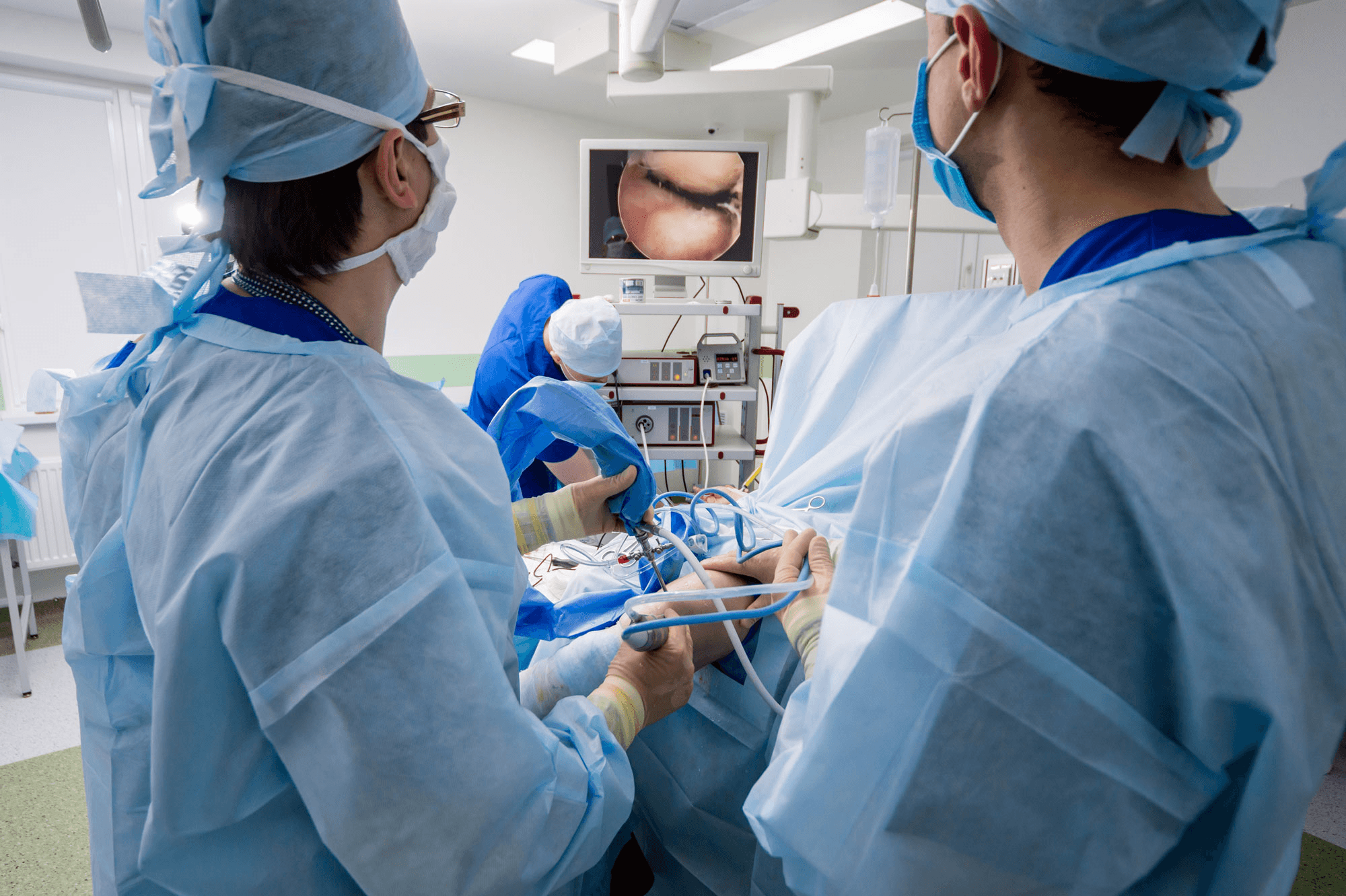

ChondroFiller injection for TMJ cartilage damage
Can a jaw joint cartilage problem be treated without surgery?
For many patients with jaw joint cartilage wear, the answer is yes — surgery is not the only route. ChondroFiller injection is a CE-marked Class III medical device that can be placed directly into the temporomandibular joint as an ultrasound-guided outpatient procedure, carried out under local anaesthesia or mild sedation with no general anaesthetic and no operating theatre.
The injectable form targets diffuse or advanced condylar surface degeneration rather than isolated, surgically containable defects — making it relevant to the kind of progressive joint wear that TMJ patients commonly present with by the time they seek specialist advice.
It is worth being clear about what this treatment is not. Hyaluronic acid and steroid injections have an established role in the TMJ for pain control and lubrication, but neither addresses the underlying loss of cartilage. ChondroFiller injection works through a different mechanism: the collagen scaffold gels in situ and creates a structural matrix that supports the body's own repair processes — acellular matrix-induced chondrogenesis rather than symptom masking. That distinction matters when deciding which treatment fits which stage of joint degeneration.
Why TMJ cartilage breaks down and struggles to recover
Temporomandibular joint disorders are far more common than many patients realise, affecting an estimated 10–40% of the population at some point in their lives. Yet the condylar cartilage that cushions the joint is among the most biologically disadvantaged tissues in the body when it comes to healing.
The core problem is a lack of blood supply. Articular cartilage is avascular, aneuric, and alymphatic — it has no vessels to carry oxygen, no nerve fibres to signal early damage, and no lymphatic drainage to support an inflammatory repair response. When bone or muscle is injured, blood flow surges to the area and delivers progenitor cells capable of patching the damage. Cartilage cannot do this. Minor wear accumulates rather than resolves, and by the time a patient notices consistent jaw pain or restricted opening, the structural changes may already be significant.
Animal models illuminate a critical timing point: when condylar overloading was removed within five days, cartilage nearly returned to normal; beyond a certain threshold, the same degree of degeneration could not self-repair regardless of load reduction. This suggests there is a window during which intervention can meaningfully alter the trajectory — and that waiting for symptoms to become severe risks passing it.
This is the same biological constraint that has driven the development of injectable scaffolds across multiple joints. A lubricant or an anti-inflammatory can reduce pain and improve short-term function — as the evidence base for hyaluronic acid and PRP in the TMJ confirms — but neither introduces a structural substrate for the body's own progenitor cells to work with. That is the gap a collagen scaffold addresses.
Free non-medical discussion
Not sure what to do next?
Information only · No medical advice or diagnosis.
How ChondroFiller injection works in the jaw joint
The material itself is the starting point. ChondroFiller is composed of acid-extracted Type I collagen — the structural protein that forms the backbone of native cartilage — prepared to a viscosity that permits injection through a standard cannula. It contains no donor cells, no growth factors, and no synthetic compounds: only a purified collagen matrix.
Once it enters the joint cavity, the liquid undergoes rapid in-situ polymerisation, gelling into a three-dimensional scaffold that sits over the worn articular surface as a mechanical cushion. This is not a filler that simply occupies space and stays there unchanged.
The scaffold acts as a chemotactic structure, attracting the patient's own progenitor cells from the surrounding synovium and from the subchondral bone beneath the cartilage surface. Those cells migrate into the matrix, differentiate, and begin producing repair tissue. The technical term is acellular matrix-induced chondrogenesis — 'acellular' because no donor cells are delivered with the injection; 'chondrogenesis' because new cartilage matrix formation is the goal, driven by the patient's own biology rather than by anything introduced from outside. The scaffold supports the body's own repair processes; it does not regrow cartilage independently.
This places ChondroFiller in a different category from both hyaluronic acid and polyacrylamide hydrogels. Hyaluronic acid is a viscosupplement that lubricates and may reduce pain signals but provides no structural substrate for repair. Polyacrylamide hydrogel is a permanent, non-biodegradable filler that remains in the joint unchanged — there is no cell recruitment and no regenerative process. ChondroFiller is designed to be progressively remodelled as repair tissue forms within it: the scaffold provides the architecture while the patient's own cells do the building.

What the injection appointment involves
Attending for a ChondroFiller injection at the jaw joint takes place entirely in an outpatient clinic — there is no operating theatre, no general anaesthetic, and no overnight stay. The appointment follows a single-stage sequence: preparation, guided placement, and a short period of post-procedure observation, all within the same visit.
Before the scaffold is delivered, ultrasound imaging is used to confirm accurate needle positioning within the temporomandibular joint. The TMJ sits in a compact anatomical space, and ultrasound guidance is the standard for intra-articular placement — not an optional extra. Local anaesthesia is applied to the skin and surrounding tissue; mild sedation may be offered depending on patient preference, but neither is the level of anaesthesia required for theatre-based procedures.
Once placement is confirmed, the collagen scaffold is injected into the joint cavity, where it begins to gel in situ over the worn articular surface. The whole procedure is typically brief. Same-day discharge is the standard expectation, and most patients leave the clinic without an escort requirement.
Precision matters at every step. The same product can produce meaningfully different outcomes depending on how it is positioned and delivered — which is why the experience and technique of the treating clinician are a genuine factor in patient selection and expected results.
The evidence behind ChondroFiller injection — and where TMJ data stands
Four prospective studies of ChondroFiller® injection across knee and other joints provide the strongest available outcome data. Mean IKDC scores — the standard patient-reported measure of joint function — improved by approximately 30 points over twelve months, a margin that comfortably exceeds the 16.7-point minimum clinically important difference (MCID) established for that scale. In Jerosch et al.'s post-market clinical follow-up study, the mean gain reached 32.4 points and was sustained at three-year follow-up, with patients reaching a functional score of 80 — a result that represents a meaningful return of joint capacity rather than a marginal statistical shift.
Imaging data add further detail. MOCART scores — a validated MRI measure of cartilage repair-tissue quality — progressed from 65.3 at four weeks to 81.6 at one year, indicating that repair tissue matures progressively after injection rather than peaking immediately. A score above 80 corresponds to greater than 80% defect filling and good integration with the surrounding native cartilage. In non-knee joints, post-injection MRI has confirmed related structural signals: reduction in bone marrow oedema, diminished periarticular effusion, and visible widening of the joint space.
The safety profile is notable. The reported complication rate is approximately 0%, and reoperation rates sit between 3% and 8% across published series. For context, microfracture — one of the most common surgical cartilage procedures — carries reoperation rates of up to 41%, and ACI/MACI procedures have reported complication rates of up to 17% with a two-stage surgical requirement.
Where the TMJ evidence stands
No published clinical trials or case series specifically evaluating ChondroFiller injection in the temporomandibular joint have been identified as of mid-2025. That gap is worth stating plainly. The rationale for TMJ application rests on two distinct foundations: first, the manufacturer's general injectable protocol — outpatient, image-guided, fluid-environment delivery — is anatomically applicable to the TMJ in the same way it has been extended to wrist, shoulder, and other small joints; second, in-vitro and animal-model research in injectable hydrogel scaffolds has shown that in-situ matrices can support condylar cartilage matrix expression in osteoarthritis models. That is mechanistic plausibility, not clinical proof. Independent TMJ-specific trials remain the missing piece, and no extrapolation from knee or wrist data can substitute for them. Patients considering this option for jaw joint cartilage damage should treat the multi-joint evidence base as informative context, and weigh it alongside a specialist assessment of their individual anatomy and disease stage.
Getting assessed for ChondroFiller injection in London
The absence of TMJ-specific trial data makes individual clinical assessment the decisive factor — not a standardised protocol extrapolated from knee or wrist outcomes. The pattern of condylar degeneration, disease staging, and what conservative measures have already been tried all feed into whether ChondroFiller injection is appropriate, and when.
In practical terms, the injectable pathway suits patients with diffuse condylar surface wear rather than isolated defects requiring surgical containment, and those whose joint has not yet passed the threshold beyond which a structural scaffold can meaningfully contribute. Patients who have worked through first-line options — physiotherapy, hyaluronic acid, or anti-inflammatory injections — without sustained benefit represent the typical assessment group.
Liquid Cartilage™ / ChondroFiller injection is delivered in the UK at the London Cartilage Clinic on Harley Street. Professor Paul Y. F. Lee, who leads ChondroFiller delivery in the UK, applies the patient-selection rigour and technique precision the procedure demands. A formal clinical assessment is the step that determines individual suitability.
Book an assessment at londoncartilage.com.
- [1] Clinical effectiveness of polynucleotide TMJ injection compared with physiotherapy: a 3-month randomised clinical trial. (2024). https://doi.org/10.1016/j.bjoms.2024.07.002 https://doi.org/10.1016/j.bjoms.2024.07.002
- [2] Update on Evidence and Directions in Temporomandibular Joint Injection Techniques: A Rapid Review of Primary Research. (2024). https://doi.org/10.3390/jcm13144022 https://doi.org/10.3390/jcm13144022
- [3] Are Stem Cells Useful in the Regeneration and Repair of Cartilage Defects in the TMJ Condyle? An In Vivo Study. (2021). https://doi.org/10.26420/JDENTORALDISORD.2021.1159 https://doi.org/10.26420/JDENTORALDISORD.2021.1159
- [4] Mesenchymal Stem Cells for Cartilage Regeneration of TMJ Osteoarthritis. (2017). https://doi.org/10.1155/2017/5979741 https://doi.org/10.1155/2017/5979741
- [5] Overloading stress–induced progressive degeneration and self‐repair in condylar cartilage. (2021). https://doi.org/10.1111/nyas.14606 https://doi.org/10.1111/nyas.14606
- [6] Intra-articular injection of platelet-rich plasma vs hyaluronic acid as an adjunct to TMJ arthrocentesis: A systematic review and meta-analysis. (2023). https://doi.org/10.1016/j.jormas.2023.101676 https://doi.org/10.1016/j.jormas.2023.101676
Frequently Asked Questions
- ChondroFiller is a CE-marked Class III medical device made of purified Type I collagen injected into the TMJ. It gels into a 3D scaffold, attracting the body's own progenitor cells to stimulate cartilage repair through acellular matrix-induced chondrogenesis.
- Articular cartilage lacks blood supply, nerves, and lymphatic drainage. Without blood vessels delivering progenitor cells, minor wear accumulates. Animal models show a critical window exists; waiting risks passing the point of effective intervention.
- Hyaluronic acid lubricates and reduces pain but provides no structural substrate for repair. ChondroFiller creates a collagen matrix that the body remodels with its own repair tissue, targeting underlying cartilage loss rather than masking symptoms.
- No. The procedure is outpatient under local anaesthesia with optional mild sedation. Ultrasound guidance confirms needle placement, collagen gels in situ, and patients typically go home same day without needing an escort.
- No TMJ-specific trials exist as of mid-2025. The rationale rests on multi-joint evidence from knees and other joints, plus in-vitro research showing collagen scaffolds support condylar cartilage repair. Individual clinical assessment is decisive.
Legal & Medical Disclaimer
This article is written by an independent contributor and reflects their own views and experience, not necessarily those of Liquid Cartilage. It is provided for general information and education only and does not constitute medical advice, diagnosis, or treatment.
Always seek personalised advice from a qualified healthcare professional before making decisions about your health. Liquid Cartilage accepts no responsibility for errors, omissions, third-party content, or any loss, damage, or injury arising from reliance on this material.
If you believe this article contains inaccurate or infringing content, please contact us at [email protected].