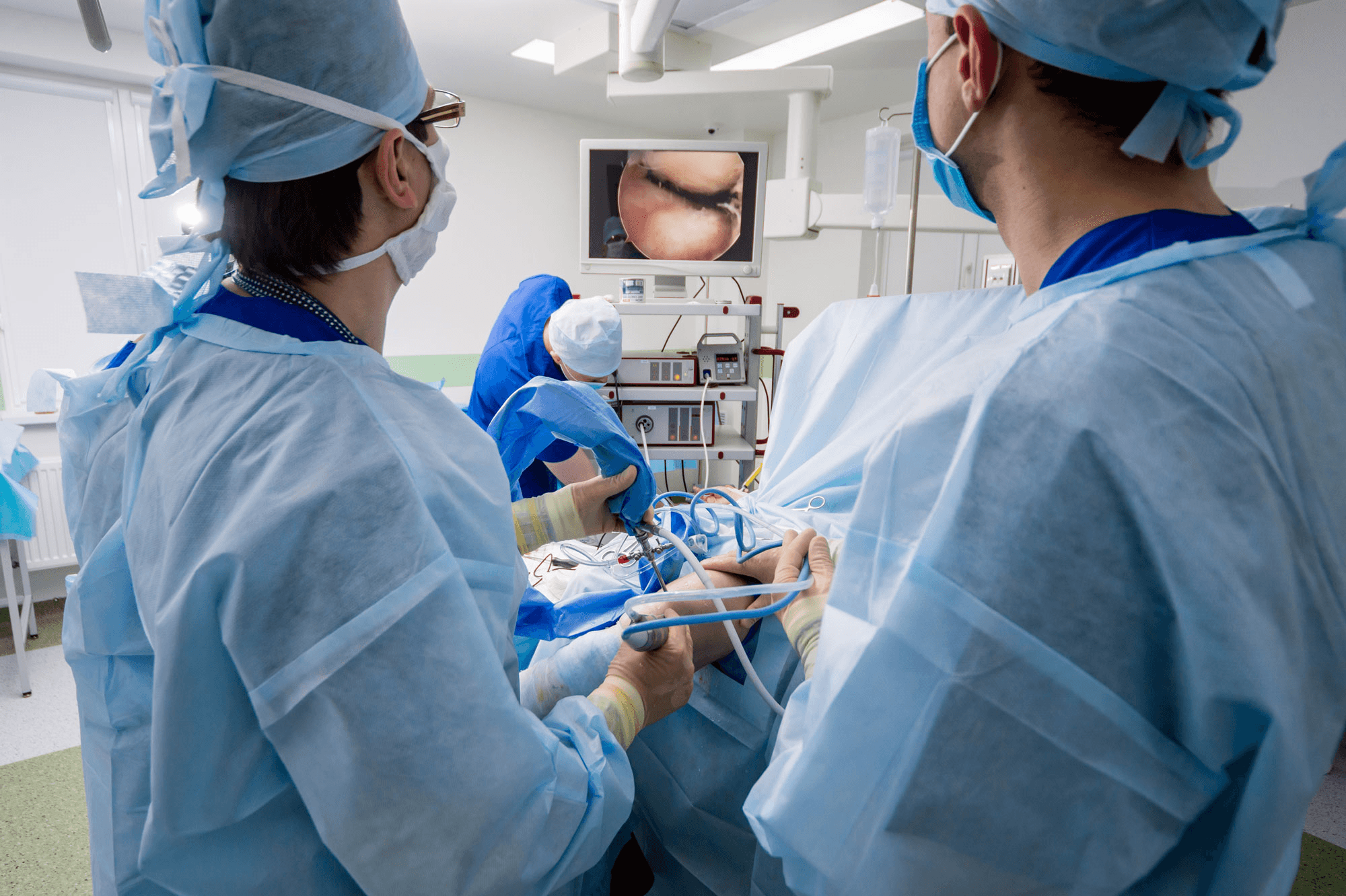

ChondroFiller injection for elbow cartilage damage
Is ChondroFiller injection suitable for elbow cartilage damage?
Surgery is not always the starting point for elbow cartilage damage. For patients with a focal defect — a discrete area of Grade III or IV cartilage loss with intact surrounding borders — ChondroFiller injection offers a CE-marked, ultrasound-guided outpatient alternative that does not require a theatre booking or a general anaesthetic.
The elbow is an explicitly listed treatment site at the London Cartilage Clinic on Harley Street, alongside the knee, hip, ankle, shoulder, and wrist. The clinical indication in this joint is a focal sports injury or post-traumatic cartilage lesion where the damage is contained rather than diffuse. Patients with widespread, end-stage arthritis affecting the whole joint surface fall outside this indication; the procedure is designed around defects where healthy cartilage at the margins can anchor the scaffold in place.
What makes this option distinct is its mechanism: ChondroFiller is an injectable collagen scaffold that gels within the defect and recruits the body's own progenitor cells to rebuild cartilage tissue — without removing bone, harvesting grafts, or opening the joint. The sections below examine how that process works, what the clinical evidence shows across upper-limb applications, and who is likely to be a suitable candidate.
How the ChondroFiller collagen scaffold works
Once the ultrasound probe has confirmed the target site within the elbow joint, the collagen solution is delivered in liquid form directly into the cartilage defect through a fine needle. The transition from liquid to solid happens rapidly: on contact with the warmth of the joint environment and the surrounding fluid, the murine Type I collagen self-gels within minutes, filling the contours of the defect and bonding to the healthy cartilage walls at its margins. No clamps, sutures, or dry arthroscopic field are involved.
The gelled scaffold is not itself living tissue — it is acellular — but it functions as a three-dimensional chemotactic matrix: a structured framework that actively attracts the body's own progenitor cells from the adjacent tissue. Those cells migrate into the scaffold, settle within its collagen architecture, and begin to differentiate into chondrocytes, the specialised cells responsible for producing cartilage matrix. Over subsequent months, these chondrocytes deposit new collagen and proteoglycans — the building blocks of hyaline-like cartilage — gradually filling the defect from within.
As the new tissue matures, the original collagen scaffold biodegrades naturally. No second procedure is required to retrieve or dissolve it. Because the entire process relies on the patient's own repair biology — rather than harvested donor cells or an implanted device — the treatment is described as single-stage matrix-induced chondrogenesis: a one-visit, injection-based pathway that does not require a return to theatre.
Free non-medical discussion
Not sure what to do next?
Information only · No medical advice or diagnosis.
Which elbow conditions suit ChondroFiller injection
Three practical questions help determine whether a patient is likely to be in scope — and all three build on the defect type already described, adding the clinical detail that guides formal assessment.
Has conservative care been tried first? ChondroFiller injection fits the regenerative tier of the elbow treatment algorithm: it sits above viscosupplementation (hyaluronic acid, Arthrosamid) and below structural surgical repair. Most suitable candidates have already worked through a period of conservative management without adequate relief, and are seeking an option that avoids arthroscopy or theatre.
Is the defect size within the scaffold's validated range? The collagen matrix is designed for focal defects up to approximately 3 cm²; where the lesion is larger, additional product volume can extend coverage to around 6 cm². Elbow sports injuries — the primary clinical scenario in this joint — tend to produce discrete, contained lesions that fall comfortably within this range.
What is the goal: regeneration or cushioning? For focal defects with healthy surrounding borders, the aim is matrix-induced chondrogenesis and structural restoration. In joints with Kellgren-Lawrence Grade III or IV diffuse wear, the rationale shifts: the scaffold functions as a palliative cushion rather than a regenerative repair, and expectations should reflect that difference. Where cartilage loss is too extensive for any focal scaffold to address meaningfully, a different pathway — including joint replacement — warrants direct discussion at assessment.

What the evidence shows — and where it is still emerging
The clearest outcome data comes from the knee. Across multiple studies, IKDC scores improve by approximately 30 points over twelve months of follow-up, and MOCART cartilage fill scores consistently fall between 70 and 87 — figures that reflect both functional improvement and MRI-confirmed structural repair. The safety profile across all applications is notably low, with a complaint rate of around 0.06%.
For the elbow specifically, the most relevant published data comes from the wrist — a joint that shares several structural features: a small overall volume, confined intra-articular anatomy, and the kind of focal defects typically seen after sports injury. In a prospective feasibility study by Matta et al. evaluating ChondroFiller in patients with residual cartilage defects following distal radius fractures, outcomes included measurable reductions in both pain scores (NRS) and disability (DASH questionnaire), alongside gains in grip and pinch strength. Post-treatment MRI confirmed bone marrow oedema reduction, diminished periarticular effusion, and visible joint space widening.
These wrist findings represent the closest available mechanistic proxy for elbow application. No dedicated prospective case series or randomised controlled trial for ChondroFiller in the elbow has been published as of mid-2026, and the existing evidence base is predominantly manufacturer-supported. That gap is meaningful — but it does not leave elbow use without foundation. The wrist data establishes a biologically coherent precedent in an adjacent upper-limb joint, and elbow-specific trials remain the next step in a developing evidence picture.
The outpatient procedure: from consultation to six-week review
For most patients, the entire treatment takes place in a single outpatient visit — no theatre booking, no general anaesthesia, no overnight admission. The elbow joint is accessed under local anaesthesia or mild sedation, with continuous ultrasound guidance used to position the needle precisely within the focal defect. Because the collagen scaffold gels in a fluid joint environment, no dry arthroscopic field or surgical preparation is required; that is what makes a clinic setting feasible for this procedure.
The treatment package at the London Cartilage Clinic on Harley Street includes an initial assessment consultation, intra-procedure ultrasound imaging, the ChondroFiller product, the injection itself, intravenous antibiotic cover to minimise infection risk, and a six-week follow-up review — when the joint's early response is assessed and any concerns can be raised. The all-inclusive cost starts from £3,000 per treatment. The standard injection volume is 2.3 mL.
For patients with more advanced joint wear, a combination protocol is available within the same clinic visit: a ChondroFiller injection addresses the cartilage defect at the bone surface, while Arthrosamid — a non-degradable polyacrylamide hydrogel — is injected to cushion the synovium. These are two structurally distinct products doing different jobs in different parts of the joint; they are not interchangeable. The dual-injection protocol is priced at £6,000.
Beyond the initial treatment, a structured maintenance programme recommends a top-up injection every two years, alongside annual MRI monitoring. Individual suitability for this schedule is determined at clinical assessment.
Getting assessed at the London Cartilage Clinic
Whether ChondroFiller injection is the right tier of treatment for a given elbow depends on specifics that only a formal assessment can establish: defect grade, cartilage border integrity, and the overall anatomy of the joint. The scaffold approach suits certain presentations well — and is not suited to others — which is why the first clinical step is confirmation rather than commitment. No treatment decision should follow from a general description of the product alone.
At the London Cartilage Clinic on Harley Street, Professor Paul Y. F. Lee leads Liquid Cartilage™ delivery in the UK. An assessment consultation maps defect characteristics through imaging and clinical examination before any treatment path is agreed, ensuring that ChondroFiller injection — or, where appropriate, a different tier — is chosen on individual clinical grounds rather than on the assumption that it will always be the right fit. Appointments can be made at londoncartilage.com.
Frequently Asked Questions
- ChondroFiller is an injectable collagen scaffold that gels within the cartilage defect and recruits the body's own progenitor cells. These cells differentiate into chondrocytes and rebuild cartilage tissue without requiring bone removal or grafting.
- ChondroFiller suits focal defects—discrete areas of Grade III or IV cartilage loss with healthy surrounding borders. It is designed for sports injuries or post-traumatic lesions, not widespread end-stage arthritis affecting the whole joint surface.
- A single ChondroFiller injection starts from £3,000 and includes the assessment consultation, procedure, ultrasound guidance, antibiotics, and six-week follow-up. A dual-injection protocol combining ChondroFiller with Arthrosamid costs £6,000.
- The clearest data comes from the knee, showing 30-point IKDC improvements and 70–87% cartilage fill at twelve months. No dedicated elbow trial has been published, but wrist studies show pain reduction and functional gains—a relevant mechanistic proxy.
- ChondroFiller is an outpatient procedure under local anaesthesia or mild sedation. No general anaesthetic, theatre booking, or overnight admission is required. Ultrasound guidance ensures needle placement within the defect in a fluid joint environment.
Legal & Medical Disclaimer
This article is written by an independent contributor and reflects their own views and experience, not necessarily those of Liquid Cartilage. It is provided for general information and education only and does not constitute medical advice, diagnosis, or treatment.
Always seek personalised advice from a qualified healthcare professional before making decisions about your health. Liquid Cartilage accepts no responsibility for errors, omissions, third-party content, or any loss, damage, or injury arising from reliance on this material.
If you believe this article contains inaccurate or infringing content, please contact us at [email protected].