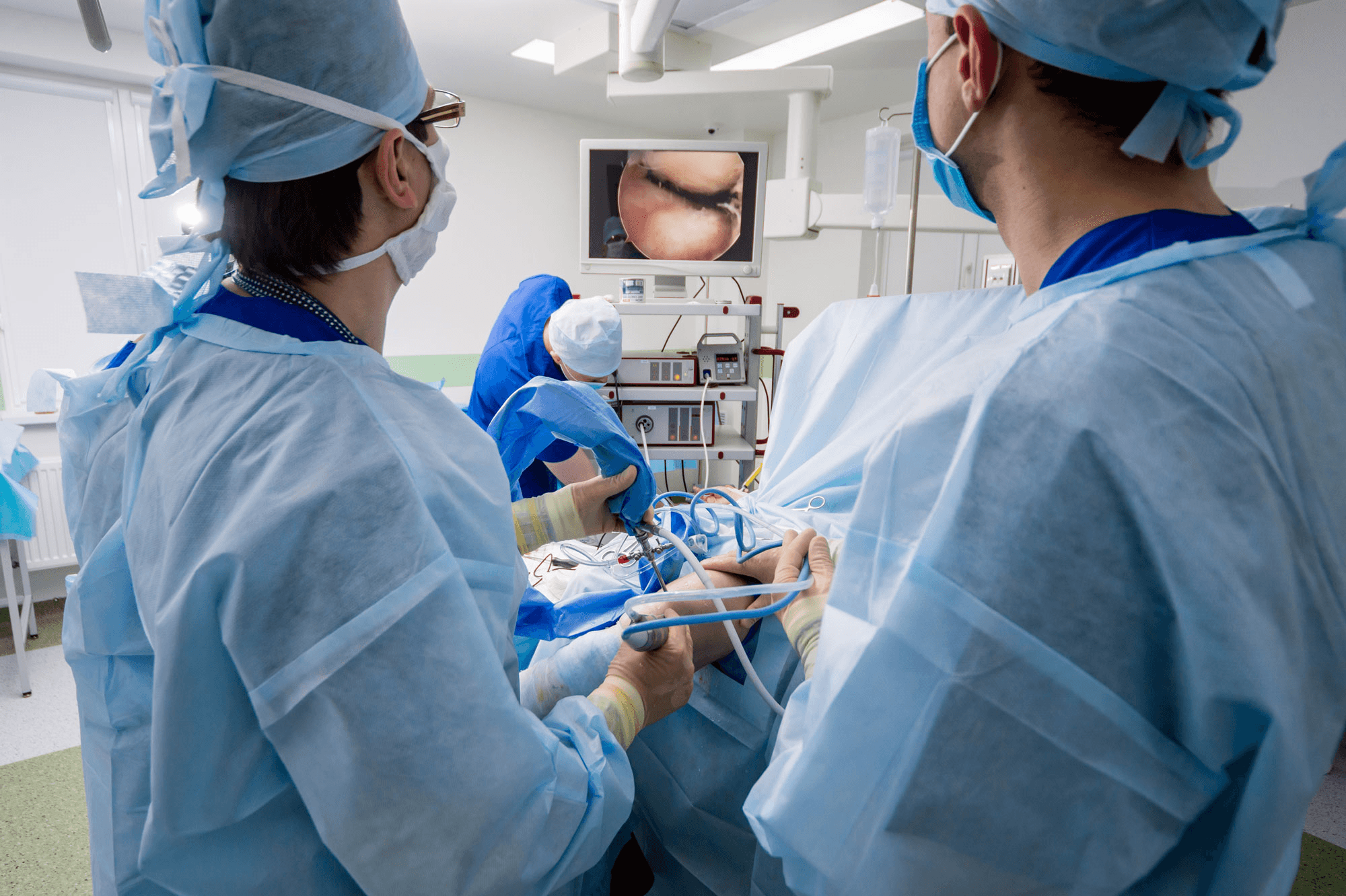

ChondroFiller injection for thumb base cartilage damage
Why the base of the thumb hurts
That sharp catch when you turn a key, the ache that follows gripping a jar lid, the dull soreness that lingers after pinching — pain at the base of the thumb is one of the most commonly reported hand complaints in adults over 50, and its source is nearly always the same joint: the trapeziometacarpal (TMC) joint, also known as the CMC-1.
Situated where the base of the first metacarpal meets the trapezium bone in the wrist, the TMC joint is shaped like two opposing saddles. That geometry is what makes the human thumb extraordinary — it allows the wide arc of opposition and pinch that distinguishes us from most other animals. The cost of that mobility is exposure. Unlike the hip or knee, which are deep ball-and-socket joints stabilised by dense surrounding musculature, the TMC joint relies heavily on cartilage congruence and ligamentous tension to stay aligned. Every pinch, grip, and turning movement loads it repeatedly throughout the day.
Over time — and especially when the cartilage surface starts to thin — that loading becomes destructive. As the smooth cartilage layer erodes, subchondral bone is exposed, synovial tissue becomes irritated, and the joint loses the congruence it depends on for painless movement. The result is the characteristic thumb-base pain that patients often describe as 'weakness', though true motor weakness is not actually part of the condition: the strength is still there, but using it hurts.
TMC osteoarthritis is the most prevalent arthritis of the upper limb, affecting approximately 66% of women over the age of 55. Three-dimensional motion studies show that as the TMC joint stiffens and its range of motion narrows, the metacarpophalangeal and interphalangeal joints develop compensatory hypermobility — a downstream pattern that compounds overall joint stress and can accelerate wear further along the thumb.
Caught at an early or intermediate stage, when damage remains focal rather than joint-wide, this is a joint where cartilage-level intervention can meaningfully alter the trajectory — potentially preserving function and deferring or avoiding the surgical options that become necessary when degeneration is advanced.
How ChondroFiller injection works in a small joint
Unlike cell-based procedures that require a laboratory culture step or a visit to theatre, the ChondroFiller injection works by placing a scaffold directly into the damaged area and letting the body's own repair cells do the rest.
ChondroFiller is a two-component collagen Type I hydrogel — acellular, meaning it contains no donor or laboratory-grown cells. Once delivered into a focal cartilage defect under ultrasound guidance, the two components react and the gel polymerises in situ, conforming to the shape of the defect and forming a biocompatible lattice within the joint. The scaffold itself is not new cartilage; it is the environment in which cartilage can form. Progenitor cells already present in the joint — including mesenchymal stem cells from the surrounding tissue — migrate into that lattice and begin laying down collagen and proteoglycans, the structural building blocks of healthy articular cartilage.
This process is known as matrix-induced chondrogenesis. A 2025 ex vivo osteochondral model provided direct molecular evidence of it: ChondroFiller-treated defects showed a 2.4-fold increase in DNA content by day 14 post-implantation, confirming active cell ingrowth, alongside measurable deposition of both collagen and glycosaminoglycans (GAGs) — the markers of genuine chondrogenic activity rather than simple scar filling.
For a small joint such as the TMC, the volume requirement is modest: the 2025 wrist study demonstrated that just 0.2–0.3 mL of the preparation per defect was sufficient, delivered through fine-gauge cannulas. That small-volume profile is precisely what makes outpatient, ultrasound-guided injection a practical delivery route at the thumb base — no incision, no general anaesthetic, and no overnight stay.
One technical point matters here. Overfilling a defect — applying more gel than the cartilage cavity requires — has been associated with fibrous tissue formation rather than true cartilage regeneration. Flush application, level with the surrounding cartilage surface, avoids this. Precise placement under real-time imaging guidance is therefore not a convenience; it is intrinsic to achieving the right biological outcome.
Free non-medical discussion
Not sure what to do next?
Information only · No medical advice or diagnosis.
Which patients are suitable — and which are not
Patient selection is where the clinical logic of ChondroFiller injection becomes most important — and most honest. The treatment is designed for focal cartilage defects: discrete, contained areas of damage within an otherwise viable joint. It is not a solution for end-stage thumb arthritis where cartilage loss is global and bone is rubbing on bone across the entire joint surface.
Outerbridge and ICRS grading offer the clearest structural frame. Partial-thickness wear (Outerbridge Grade II) and full-thickness focal erosions that stop short of widespread joint destruction (Grades III–IV, focal) sit within scope. Where Grade IV damage extends across the whole articular surface — no remaining cartilage buffer anywhere in the joint — the conditions for scaffold-supported regeneration no longer exist, and the appropriate conversation shifts toward joint preservation surgery or replacement.
Defect size is a secondary but relevant parameter. ChondroFiller is supported up to 3 cm² per defect, extendable to approximately 6 cm² with multiple applications. Given how small the TMC joint is, most focal lesions at the thumb base fall well within that range without needing to push the upper limit.
The hip cohort evidence makes the selection rule explicit: patients with focal defects achieved good or excellent outcomes in 17 of 21 cases; those with pre-existing generalised osteoarthritis — equivalent to Tönnis grade 2–3 — had poor results. Age and activity level matter, but they are secondary filters. The primary question is always whether the damage is focal and contained, or diffuse and degenerative.
An assessment with imaging will clarify which category applies. For many patients presenting with early-to-moderate thumb-base pain, that assessment is the right starting point — not an assumption either way.

The evidence for ChondroFiller at the thumb base
The published evidence for ChondroFiller accumulates in logical proximity to the thumb base, moving from the most robustly controlled trials toward the joints most closely analogous to the TMC.
The strongest controlled data come from a 2016 multicentre RCT in the knee, in which IKDC scores improved significantly from pre-operative baseline at 3, 6, and 12 months; MRI demonstrated progressive cartilage maturation, and no adverse events were recorded. A subsequent hip arthroscopy cohort, with follow-up ranging from 12 to 60 months, extended those findings to a mechanically loaded non-weight-bearing joint and confirmed the patient-selection boundary that governs all ChondroFiller use: focal defects respond well; generalised osteoarthritis does not.
The closest published analogue to thumb-base use is a 2025 prospective study of intra-articular distal radius fractures — a joint comparable in scale to the TMC. Patients treated with ChondroFiller achieved a median Outerbridge score of 1.5 versus 3.0 in controls (P=0.006), and an ICRS grade of 1 versus 3 (P=0.002) at follow-up arthroscopy. Each defect required only 0.2–0.3 mL, applied through fine-gauge cannulas — a volume and access profile that closely mirrors what the TMC joint demands.
The wrist is not identical to the thumb base: the TMC saddle joint is subject to pinch and opposition loading that differs from the predominantly axial forces acting on the distal radius. That anatomical distinction means the wrist data constitute a strong pointer rather than a direct proof. What closes the remaining inferential gap is formal manufacturer positioning: Meidrix Biomedicals GmbH produces a dedicated Rhizarthrosis application brochure for ChondroFiller, placing the TMC joint explicitly within the product's indicated use.
No published RCT or prospective cohort has yet studied ChondroFiller specifically at the thumb base. That gap is worth stating plainly. The practical implication is that treatment here rests on mechanistically coherent extrapolation from closely related joints, supported by manufacturer indication and early clinical experience at the London Cartilage Clinic — a narrower evidential footing than exists for the knee, but not an unusual starting position for a regenerative technique extending into small-joint practice.
What the injection involves and what to expect
The appointment itself takes around an hour at the London Cartilage Clinic on Harley Street — no theatre booking, no general anaesthetic, no overnight stay. Under Professor Paul Lee's direction, the defect within the TMC joint is mapped using real-time ultrasound before the injection is placed. That guidance is not procedural formality: the CMC-1 joint is small, and the collagen scaffold must sit flush within the cartilage lesion. Overfilling — even marginally — shifts tissue formation away from cartilage-type repair toward fibrous fill, an inferior functional result. Precise volume control is therefore a core technical discipline, not an afterthought.
The post-procedure phase requires more active management than most outpatient injections. Biomechanical data confirm that the collagen scaffold remains mechanically unstable in the early weeks after placement: until the gel achieves stable defect filling, the opposing cartilage surface is not protected against pinch and grip forces. This is the expected early biology of a scaffold being progressively colonised by the patient's own progenitor cells — not a sign that anything has gone wrong — but it means that genuinely limiting pinch, resistance grip, and opposition loading during that window is not optional. Reducing load slightly is not sufficient.
The specific length and structure of the return-to-activity protocol depends on defect size, hand-use demands, and the clinical findings established at assessment. It is agreed with the team before treatment begins, so patients arrive with a clear picture of what the recovery period requires.
Where ChondroFiller fits before surgery becomes the answer
For most patients, the path from first symptoms to surgical referral involves several years and multiple treatment layers. Splinting, NSAIDs, corticosteroid injections, and hyaluronic acid all have a role in managing load and pain — but none addresses the underlying cartilage defect. When those measures no longer hold, conventional practice moves to trapeziectomy with ligamentoplasty or, increasingly, total arthroplasty. Five-year comparative data show both operations produce similar functional outcomes at that horizon, with neither demonstrating clear superiority — which means the decision to escalate is ultimately about joint preservation capacity rather than a choice between two clearly differentiated surgical results.
ChondroFiller injection fits the stage between those two phases. Placed at the point where conservative management has stopped working but the joint architecture still retains capacity to respond to a scaffold, it offers a route to address the defect before irreversible structural change makes surgery unavoidable. Critically, an unsuccessful outcome at this stage does not close the surgical options: trapeziectomy and arthroplasty remain available. A successful one, conversely, preserves a joint that no reconstruction can replicate once the trapezium is removed.
The relevant clinical question — whether a given defect is focal enough, and the joint sufficiently congruent, to benefit from a regenerative scaffold — is one that imaging and structured examination can answer. At the London Cartilage Clinic on Harley Street, where Professor Paul Lee leads the ChondroFiller injection programme for hand and wrist pathology, assessment maps the defect grade, size, and surrounding joint status against the patient-selection criteria that the published evidence defines. That is the point at which the general case for early intervention becomes, or does not become, a case specific to the individual joint.
- [1] Osteoarthritis at the base of the thumb. https://en.wikipedia.org/?curid=40934678 https://en.wikipedia.org/?curid=40934678
- [2] Difference between thumb motions in carpal tunnel syndrome and trapeziometacarpal osteoarthritis. (2025). https://doi.org/10.1016/j.clinbiomech.2025.106447 https://doi.org/10.1016/j.clinbiomech.2025.106447
- [3] Arthroscopic utilization of ChondroFiller gel for the treatment of hip articular cartilage defects: a cohort study with 12- to 60-month follow-up. (2021). https://doi.org/10.1093/jhps/hnab002 https://doi.org/10.1093/jhps/hnab002
- [4] Development of an Ex Vivo Osteochondral Biomimetic Platform for Cartilage Regeneration. (2025). https://doi.org/10.3390/ijms262311759 https://doi.org/10.3390/ijms262311759
- [5] Cartilage reconstruction using Chondrofiller in intra-articular distal radius fractures. (2025). https://doi.org/10.1186/s42836-025-00333-y https://doi.org/10.1186/s42836-025-00333-y
- [6] Controlled, randomized multicenter study to compare compatibility and safety of ChondroFiller liquid with microfracturing for focal cartilage defects of the knee. (2016). https://doi.org/10.5348/VNP05-2016-1-OA-1 https://doi.org/10.5348/VNP05-2016-1-OA-1
- [7] Influence of cartilage defects and a collagen gel on integrity of corresponding intact cartilage: a biomechanical in-vitro study. (2024). https://doi.org/10.1007/s00402-024-05530-z https://doi.org/10.1007/s00402-024-05530-z
- [8] Total Arthroplasty Versus Trapeziectomy With Ligamentoplasty for Trapeziometacarpal Osteoarthritis: 5-year Outcomes. (2025). https://doi.org/10.1097/CORR.0000000000003404 https://doi.org/10.1097/CORR.0000000000003404
- [9] Intra-patient comparison of trapeziectomy with LRTI and dual mobility prosthesis for trapeziometacarpal osteoarthritis: a multicenter observational study. (2025). https://doi.org/10.1007/s00590-025-04441-y https://doi.org/10.1007/s00590-025-04441-y
- [10] The Effects of Motor Imagery on Trapeziometacarpal Osteoarthritis During Post-Surgical Immobilization. (2025). https://doi.org/10.3390/healthcare13091011 https://doi.org/10.3390/healthcare13091011
Frequently Asked Questions
- The TMC joint relies on cartilage and ligaments for stability. Over time, cartilage erodes, subchondral bone becomes exposed, and the joint loses alignment. This cartilage wear and joint irritation cause characteristic pain.
- ChondroFiller is a two-component collagen hydrogel that polymerises in situ, creating a scaffold. The body's own progenitor cells migrate into this lattice and lay down new cartilage through matrix-induced chondrogenesis.
- Patients with focal, contained cartilage defects benefit most—particularly Grade II–IV focal damage within viable joints. It is unsuitable for end-stage arthritis where cartilage loss is global and bone contacts bone.
- The procedure takes approximately one hour at the London Cartilage Clinic under ultrasound guidance. No theatre, anaesthetic, or overnight stay is required. The surgeon maps the defect and precisely injects the scaffold flush with the cartilage surface.
- ChondroFiller fits between conservative measures and surgery. It addresses focal defects before irreversible structural change makes surgery inevitable. If unsuccessful, surgical options remain available; if successful, it preserves a joint no reconstruction can replicate.
Legal & Medical Disclaimer
This article is written by an independent contributor and reflects their own views and experience, not necessarily those of Liquid Cartilage. It is provided for general information and education only and does not constitute medical advice, diagnosis, or treatment.
Always seek personalised advice from a qualified healthcare professional before making decisions about your health. Liquid Cartilage accepts no responsibility for errors, omissions, third-party content, or any loss, damage, or injury arising from reliance on this material.
If you believe this article contains inaccurate or infringing content, please contact us at [email protected].