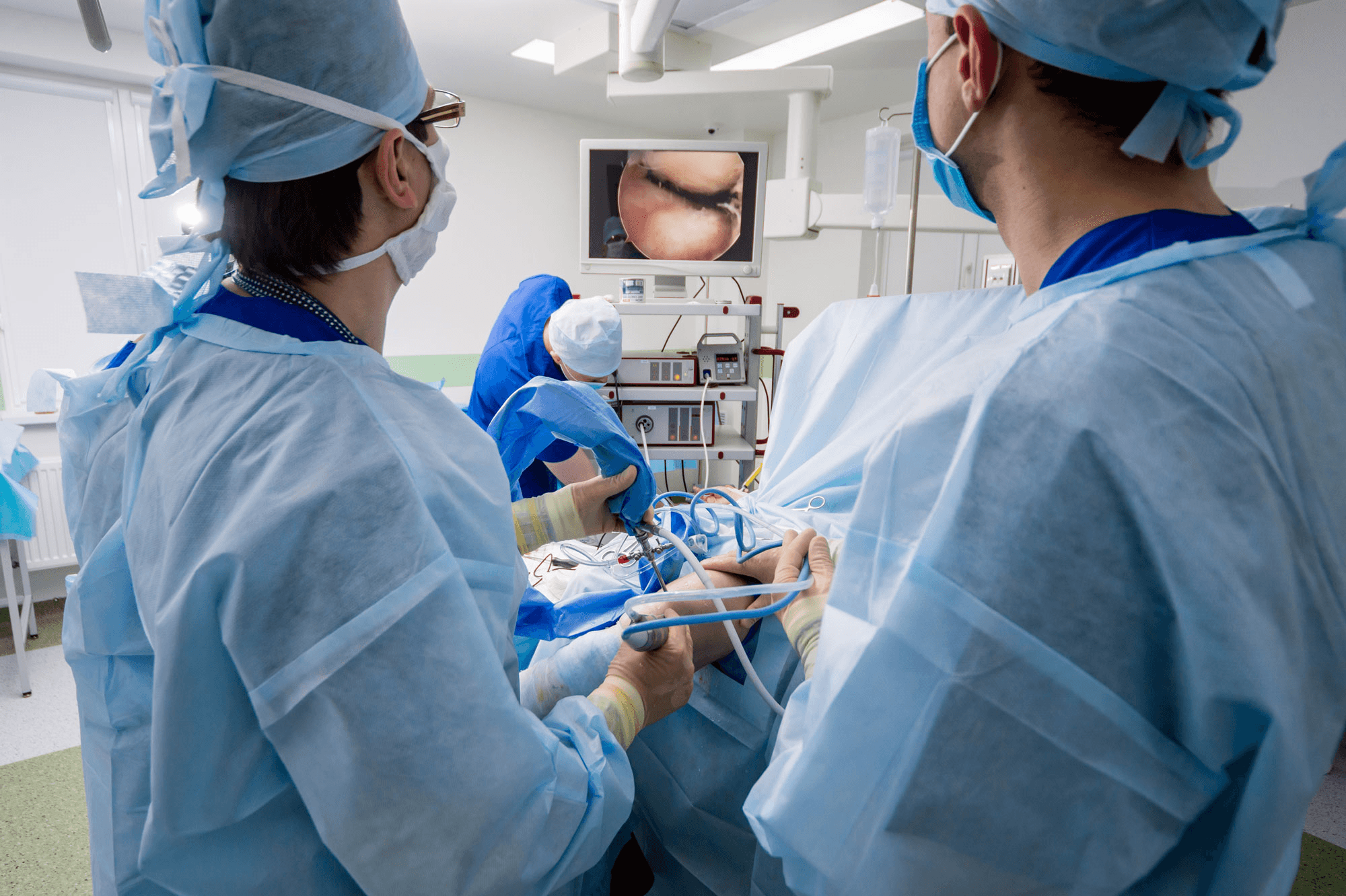

Cartilage damage after ACL reconstruction
Why the knee keeps hurting after a 'successful' reconstruction
The scan was clear. The surgeon was pleased. The graft had taken. And yet, months or years on, the knee still aches — on stairs, after a long day, first thing in the morning. For many patients this is deeply confusing: if the reconstruction worked, why does the pain persist?
The short answer is that ACL reconstruction restores the ligament. It does not restore the cartilage.
At the moment of ACL rupture, the violent tibiofemoral impact that tears the ligament also damages the joint surface — sometimes visibly, more often at a microscopic level that standard imaging misses entirely. That cartilage injury does not heal when the graft is placed. In fact, it often continues to evolve. Research tracking patients after reconstruction finds that post-traumatic osteoarthritis (PTOA) develops in approximately one in two people within a decade of the original knee injury, even when the reconstruction itself is technically sound.
Persistent pain after a 'successful' ACLR is therefore, in many cases, a cartilage signal — not evidence that the surgery failed, and not something that simply needs more time and physiotherapy to resolve on its own.
Understanding that distinction — ligament structurally sound, cartilage still compromised — is the framework that makes sense of everything that follows.
The cartilage damage that happens at the moment of injury
Tearing the ACL is not simply a ligament event. The mechanism — a rapid deceleration, a planted foot, a twisting body — drives the femoral condyle and tibial plateau together with considerable force before the ligament gives way. That tibiofemoral impact is the first cartilage injury, and it occurs before any decision about surgery has been made.
The evidence from MRI studies reflects this clearly. Bone marrow lesions — often called 'bone bruises' — are found in the subchondral bone of a substantial proportion of people scanned acutely after ACL rupture. They cluster where the impact is concentrated: the lateral tibial plateau (40.9% of cases) and the lateral femoral condyle (35.5%), with smaller proportions at the medial tibial plateau (14.9%) and medial femoral condyle (7.8%). These are not incidental findings. They mark the sites of acute articular cartilage microtrauma at the moment of injury.
What standard clinical MRI does not show is where the story becomes more clinically significant. Compositional MRI using T2 relaxation-time mapping can detect changes in the deep zone of cartilage — alterations in water content and collagen organisation — before any loss of cartilage thickness is visible on conventional sequences. These deep-zone T2 changes appear in the lateral femorotibial compartment early after ACL injury and precede the structural thinning that most clinicians are looking for. In practical terms, a post-injury MRI reported as 'normal' or 'no cartilage loss' does not rule out meaningful microtrauma that is already under way. The damage clock starts at the rupture, not at the point of reconstruction.
Free non-medical discussion
Not sure what to do next?
Information only · No medical advice or diagnosis.
How cartilage keeps deteriorating after reconstruction
Reconstruction addresses the ligament, but the joint environment it leaves behind is far from stable. Four overlapping processes continue to erode cartilage in the months and years after surgery, and none of them is switched off by a successful graft.
Mechanical loading shifts. After ACL reconstruction, the medial meniscus is placed under altered stress. MRI-based T1ρ and T2 mapping shows that medial meniscal extrusion — where the meniscus is pushed outward from its normal seat — is significantly greater on the reconstructed side than in the opposite knee, and the degree of extrusion independently predicts cartilage degeneration in the posterior medial femoral condyle at three years. A separate mechanical problem affects the front of the knee: patients who generate lower patellofemoral contact force during the first year after reconstruction tend to show worse trochlear cartilage structure between one and five years post-operatively — meaning that under-loading the patellofemoral joint can be as damaging as overloading it.
Biochemical depletion. Healthy cartilage holds its resilience partly through a natural electrical charge that keeps water locked within the tissue matrix. After ACL injury, excessive shear strain near damaged areas — combined with pro-inflammatory cytokines diffusing through the joint — gradually depletes that charge. Computational modelling suggests partial recovery is possible when inflammatory burden is reduced over time, positioning joint inflammation as a modifiable target rather than an irreversible process.
Cartilage-intrinsic inflammation. The inflammatory response does not stay in the synovium. Gene-expression studies show immune-activation pathways are more strongly upregulated within articular cartilage itself than in surrounding synovial tissue at mid-stage PTOA — and this occurs regardless of whether reconstruction or repair was performed.
Infrapatellar fat pad injury. Perhaps the most clinically overlooked driver is damage to the infrapatellar fat pad (IFP), the soft-tissue structure sitting immediately beneath the kneecap. IFP oedema at the time of the ACL tear correlates significantly with subsequent patellofemoral cartilage damage progression (r = 0.44), even in knees where the patellofemoral surface looked intact on the initial scan. This largely explains the anterior knee pain — the aching under or around the kneecap — that many patients report long after reconstruction and that is often left unattributed.
Each of these four pathways reinforces the others. Treating the ligament alone leaves all four active.

Why standard scans often miss the full picture
"The MRI looks fine" — that phrase leaves many people bewildered when pain persists well after reconstruction. The explanation lies in what standard imaging is built to measure, and what falls outside its reach.
Conventional MRI protocols assess cartilage thickness. Compositional sequences such as T1ρ mapping — which tracks changes in proteoglycan concentration — can detect biochemical deterioration before thinning appears, yet they are rarely included in routine NHS or standard private MRI protocols. A normal-looking scan is accurate as far as it goes; it is not a complete account of cartilage health.
The limitations extend beyond imaging sensitivity. Research from the ADVANCE cohort shows that joint space narrowing, osteophytes, and subchondral sclerosis each reflect distinct underlying processes — unbalanced ECM catabolism drives narrowing; combined catabolism and inflammation drive osteophyte development. Because a single scan metric captures only one dimension of this heterogeneity, a largely unremarkable report can coexist with several damaging processes advancing simultaneously.
Blood-based markers illustrate the same gap between measurable and clinically actionable. COMP, CTX-II, IL-1β, and leptin are all elevated after ACL injury, yet COMP achieved an AUROC of only 0.604 for predicting new joint space narrowing in the ADVANCE cohort — a population-level trend, not a reliable individual prediction.
The infrapatellar fat pad represents a further blind spot. Radiomics analysis of IFP texture, volume, and signal intensity at ten or more years post-reconstruction achieves an AUROC of 0.82 for radiographic PTOA and 0.76 for knee symptoms — a meaningful prognostic signal from a structure that standard reports rarely formally characterise. Accessing this level of detail requires specifically requesting T1ρ or radiomics-enabled sequences as part of a formal specialist cartilage assessment, rather than a standard outpatient scan.
Treatment options once cartilage damage is confirmed
Confirmed cartilage damage after ACL reconstruction does not automatically mean surgery. The right starting point depends on the size and depth of the lesion, the presence of ongoing mechanical drivers, and how the knee is responding day to day.
Stage one: conservative care
Physiotherapy targeting load management, neuromuscular retraining, and the reduction of forces that promote meniscal extrusion is the appropriate first step for most patients with post-ACLR cartilage changes. The aim is to reduce the mechanical and inflammatory inputs that were described in the preceding sections, not simply to build quadriceps strength.
Stage two: biologic injection support
For focal cartilage defects that have not responded adequately to conservative management, injectable options can provide structural support for the repair process. ChondroFiller injection — delivered as an ultrasound-guided outpatient procedure — works by placing an acellular collagen scaffold within the defect, which then supports matrix-induced chondrogenesis using the joint's own progenitor cells. As with all biologic approaches at this stage, long-term randomised trial data specific to post-ACLR populations remain limited, and suitability depends on defect size, depth, and patient factors established at a specialist assessment.
Stage three: surgical repair
For established lesions of 3 cm² or larger that have not responded to less invasive management, surgical cartilage repair becomes the appropriate conversation. In the SUMMIT trial, matrix-induced autologous chondrocyte implantation (MACI) — in which the patient's own chondrocytes are expanded on a collagen membrane and implanted in theatre — showed superior KOOS pain and function scores over microfracture at both two and five years. Both are theatre-based procedures with distinct recovery profiles; neither is interchangeable with the injection pathway.
On the horizon
CD82LowCD59+ mesenchymal progenitor cells — endogenous to the synovial lining of ACL-injured joints — have been shown to retain repair capacity, suggesting that harnessing the joint's own stem-cell population may one day be a therapeutic target. This is currently a research finding rather than a clinical option.
One further timing point applies to patients who have not yet had reconstruction: delays in ACL surgery compound the risk and severity of concomitant chondral lesions, making early specialist assessment worthwhile even when immediate surgery is not planned.
When to get a specialist assessment
Three situations merit specialist cartilage review rather than continued watchful waiting.
Persistent or worsening knee pain beyond three to six months after reconstruction — particularly anterior pain or medial compartment discomfort that has not improved with physiotherapy — is the clearest trigger. Cartilage deterioration can advance independently of ligament integrity, and the window for the least invasive options narrows with delay.
Patients whose post-injury MRI reported bone bruising, who required concurrent meniscal surgery at reconstruction, or whose pain has returned after a settled period carry a higher background risk of progressive cartilage change and benefit from earlier rather than later review.
Pain that is difficult to localise — variable, deep, or anteriorly distributed — and does not map to a single structure on examination is often a presentation of patellofemoral or infrapatellar change rather than a recurrent ligament problem.
A specialist assessment typically involves a structured clinical history, examination, and review of previous imaging. Where standard MRI is inconclusive — which the preceding sections explain is not uncommon — the specialist may request compositional sequences such as T1ρ mapping, capable of detecting biochemical cartilage changes before any thickness loss becomes visible.
Specialist cartilage assessment in London, including evaluation for the ChondroFiller injection pathway where appropriate, is available at the London Cartilage Clinic on Harley Street — londoncartilage.com.
- [1] Are Altered Knee Joint Biomechanics Associated with Future Post-Traumatic Osteoarthritis Outcomes? A Systematic Review and Meta-Analysis of Longitudinal Studies. (2025). https://doi.org/10.1007/s40279-025-02288-1 https://doi.org/10.1007/s40279-025-02288-1
- [2] Responding to ACL Injury and its Treatments: Comparative Gene Expression between Articular Cartilage and Synovium. (2023). https://doi.org/10.3390/bioengineering10050527 https://doi.org/10.3390/bioengineering10050527
- [3] Longitudinal Changes in Medial Meniscal Extrusion After ACL Injury and Reconstruction and Its Relationship With Cartilage Degeneration Assessed Using MRI-Based T1ρ and T2 Analysis. (2025). https://doi.org/10.1177/03635465241305734 https://doi.org/10.1177/03635465241305734
- [4] Radiomic features of infrapatellar fat pad are associated with knee symptoms and radiographic post-traumatic osteoarthritis at 10+ years after anterior cruciate ligament reconstruction. (2025). https://doi.org/10.1016/j.ostima.2025.100263 https://doi.org/10.1016/j.ostima.2025.100263
- [5] Blood Biomarkers Associated with Post-traumatic Osteoarthritis of the Knee following Anterior Cruciate Ligament Injury. (2025). https://doi.org/10.1249/JSR.0000000000001257 https://doi.org/10.1249/JSR.0000000000001257
- [6] Insights into knee post-traumatic osteoarthritis pathophysiology from the relationship of serum biomarkers to radiographic features in the ADVANCE cohort. (2025). https://doi.org/10.1186/s13075-025-03648-y https://doi.org/10.1186/s13075-025-03648-y
- [7] Anterior cruciate ligament (ACL) injury and age affect knee cartilage T2 but not thickness. (2024). https://doi.org/10.1016/j.joca.2024.06.014 https://doi.org/10.1016/j.joca.2024.06.014
- [8] Shear strain and inflammation-induced fixed charge density loss in the knee joint cartilage following ACL injury and reconstruction: a computational study. (2021). https://doi.org/10.1002/jor.25177 https://doi.org/10.1002/jor.25177
- [9] Cumulative Knee Joint Loading and Early Markers of Cartilage Microstructure After ACL Injury. (2024). https://doi.org/10.1016/j.joca.2024.02.401 https://doi.org/10.1016/j.joca.2024.02.401
- [10] Impact of infrapatellar fat pad injury severity on subsequent patellofemoral cartilage degeneration following acute ACL tear. (2025). https://doi.org/10.1016/j.jor.2025.01.027 https://doi.org/10.1016/j.jor.2025.01.027
Frequently Asked Questions
- ACL reconstruction restores the ligament but not the cartilage. Damage to the joint surface occurs at rupture and continues to deteriorate through mechanical, biochemical, and inflammatory processes.
- PTOA is cartilage degeneration developing after knee injury. Research shows it develops in approximately one in two people within a decade of the original injury, even with successful reconstruction.
- Standard MRI measures cartilage thickness only. Compositional sequences like T1ρ mapping detect biochemical changes before thinning appears, but are rarely included in routine NHS or private protocols.
- Conservative physiotherapy is first-line. ChondroFiller injection provides structural support for focal defects. MACI surgery, which showed superior outcomes in the SUMMIT trial, suits established lesions of 3 cm² or larger.
- Persistent or worsening knee pain beyond three to six months warrants review, particularly anterior or medial pain unresponsive to physiotherapy. Earlier assessment suits those with bone bruising on initial imaging.
Legal & Medical Disclaimer
This article is written by an independent contributor and reflects their own views and experience, not necessarily those of Liquid Cartilage. It is provided for general information and education only and does not constitute medical advice, diagnosis, or treatment.
Always seek personalised advice from a qualified healthcare professional before making decisions about your health. Liquid Cartilage accepts no responsibility for errors, omissions, third-party content, or any loss, damage, or injury arising from reliance on this material.
If you believe this article contains inaccurate or infringing content, please contact us at [email protected].