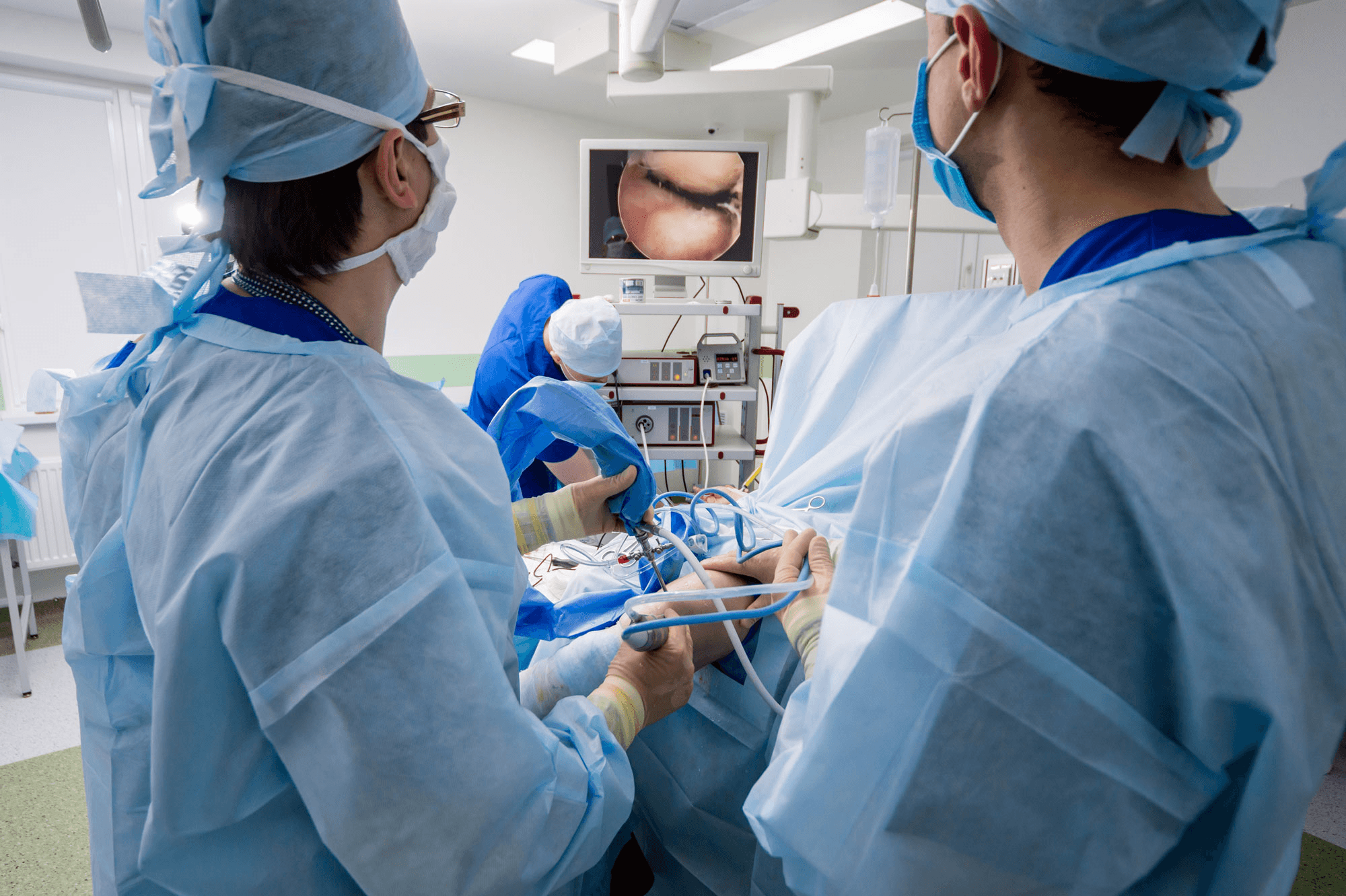

Liquid Cartilage injections versus gel shots and microfracture
Is a Liquid Cartilage injection different from a gel shot?
After a corticosteroid injection or a course of hyaluronic acid (“gel”) injections, it is common to wonder whether Liquid Cartilage™ is simply another lubricant put into the knee joint. The practical difference is the target and the intent: gel shots are generally designed to reduce symptoms in the joint fluid, whereas Liquid Cartilage is positioned as an injectable collagen scaffold intended to support repair of a specific cartilage defect.
In this context, Liquid Cartilage refers to use of ChondroFiller Liquid® as a scaffold material applied to a focal chondral lesion. In published descriptions, after application it forms a protective cover over the damaged cartilage area and provides structural support for cells that migrate into its collagen matrix. The aim is to create a local environment in which the body’s own repair cells can populate the scaffold and lay down new cartilage-like tissue as the collagen is gradually resorbed over time.
A helpful way to think about the mechanism is matrix-induced chondrogenesis: ChondroFiller does not rely on adding donor cartilage cells. Instead, the collagen scaffold acts like temporary “supporting structure” at the defect site, giving local progenitor cells a place to migrate into and organise repair tissue, rather than simply bathing the whole joint in medication.
By contrast, standard “gel injections” are usually intra-articular medications aimed at symptom control:
- Corticosteroid injections deliver an anti-inflammatory medicine into the joint space; they can be useful for short-term pain relief in inflammatory flares, but they are not expected to regrow cartilage.
- Hyaluronic acid (HA) injections act as a viscous supplement to improve lubrication and joint mechanics for a period of time; again, the purpose is symptom relief rather than structural cartilage regeneration.
Because Liquid Cartilage is still an injection, the procedure shares the general features (and broad categories of risk) of other image-guided joint injections, even though the intended outcome is different. Early clinical evidence for ChondroFiller includes a small prospective knee series of 17 patients with follow-up to 12 months, reporting improved knee scores over that first year; the authors described results as encouraging, while also emphasising that longer-term durability data are still developing.
How does Liquid Cartilage stack up against microfracture over time?
Over a 5–10 year horizon, the key trade-off between microfracture and newer restorative approaches is the type of repair tissue they tend to create—and how reliably that tissue holds up once normal loading resumes. Microfracture is a keyhole surgical technique that perforates the subchondral bone beneath a full‑thickness defect so marrow elements can form a so‑called “super‑clot” in the hole pattern. That clot can mature into fibrocartilage, which is generally considered mechanically inferior to native hyaline cartilage.
Microfracture became popular because it is single‑stage and technically straightforward, particularly for smaller, contained lesions. However, longer follow‑up has been a persistent concern. In a systematic review of microfracture for medium-to-large knee chondral defects with mean follow‑up of at least 10 years, most series reported early symptom improvement but then a tendency for clinical scores to decline over time, alongside radiographic osteoarthritis progression and a notable rate of further surgery—patterns the authors summarised as limited long‑term efficacy for larger defects.
High-demand sport adds another durability stress test. A cohort of 50 elite athletes with full‑thickness knee lesions reported 94% return to play at a mean 9.3 months, but among those with 5‑year follow‑up, only 54.5% were still playing professionally; larger lesions (for example >2 cm) and multiple defects were associated with worse longer‑term participation.
Where “scaffolds” fit (and what that evidence does not prove)
Because microfracture relies on bone perforation and often produces fibrocartilage, scaffold-based repairs were developed to provide a structure for more organised, cartilage-like fill while potentially avoiding some subchondral bone disruption. To place Liquid Cartilage™ in that wider “scaffold” category, it helps to look briefly at scaffold trials that do have randomised comparisons with microfracture—while noting that these are not trials of ChondroFiller specifically. In a 2024 multicentre RCT of 92 patients (BiCRI minced-cartilage scaffold versus microfracture), the 12‑month improvements in IKDC and KOOS were similar between groups (non‑inferior), but arthroscopy showed more complete cartilage regeneration in the scaffold arm. A separate 2024 meta‑analysis of randomised trials of scaffold‑enhanced microfracture found no consistent short‑ to mid‑term clinical superiority overall at 12–24 months, even though some individual studies suggested the possibility of better longer‑term scores.
For Liquid Cartilage™ (the ChondroFiller® injectable collagen scaffold used in London), the published clinical data are currently shorter-term than the 10‑year microfracture literature. A prospective knee series of 17 patients (mean age 31) reported significant improvements in Lysholm and IKDC scores at 3, 6 and 12 months, with a plateau between 6 and 12 months; the authors described the results as encouraging but emphasised the need for longer follow‑up. At present, there are no head‑to‑head 5–10 year trials directly comparing ChondroFiller/Liquid Cartilage injections with microfracture, so any claim of long‑term superiority would go beyond the evidence.
In practical terms, choosing an ultrasound‑guided injectable scaffold rather than microfracture is often framed as a way to pursue a restorative strategy without drilling the subchondral bone. But the 5–10 year question remains open: microfracture has extensive long‑term data (including deterioration in larger lesions), whereas Liquid Cartilage has more limited published follow‑up and relies on careful case selection based on factors such as defect containment, surrounding cartilage quality, and the broader joint environment seen on imaging and clinical assessment.
Free non-medical discussion
Not sure what to do next?
Information only · No medical advice or diagnosis.
Where Liquid Cartilage sits among PRP and stem cell injections
PRP, “stem cell injections”, and Liquid Cartilage™ are often grouped together as “regenerative injections”, but they are not the same category of treatment. The quickest way to separate them is to ask what is being delivered on the day: signals, cells, or structure.
- PRP (platelet-rich plasma): a concentrate made from the patient’s own blood, designed to deliver platelet-derived growth factors. PRP does not carry a built-in framework to physically occupy a cartilage crater, so it is generally discussed as a way to modulate symptoms and support tissue health across the joint rather than as a defect-filling cartilage repair. Evidence across conditions is mixed, with results varying by joint, diagnosis and preparation method.
- MSC-based injections (often marketed as “stem cell” treatments): typically derived from bone marrow aspirate or fat-based preparations and may contain mesenchymal stromal cells and signalling molecules. MSCs are multipotent cells that can differentiate down several lines (including towards cartilage), but in injection form they are usually delivered into joint fluid or peri-defect tissues without a dedicated scaffold that stabilises and shapes a focal cartilage lesion.
- Injectable scaffolds (Liquid Cartilage™ / ChondroFiller®): a collagen matrix placed with imaging guidance so it sits in/on the focal defect, aiming to provide a temporary 3‑D framework for the body’s own repair cells to organise new cartilage-like tissue.
A concrete way to picture the distinction is a 10 mm contained cartilage “pothole” seen on MRI: PRP is closer to changing the biochemical “mix” of the joint fluid around the defect, whereas a scaffold is intended to act like a patch that physically occupies that 10 mm void while repair tissue develops.
These categories are not always either‑or. Some published surgical protocols pair collagen scaffolds with cell-based products (including MSC sources) to try to increase the cell signal at the defect site; this combination approach is described in specialist materials for Liquid Cartilage™ as a broader field concept rather than as the default pathway for every patient.
In the current London Cartilage Clinic pathway on Harley Street, the emphasis is on ultrasound-guided Liquid Cartilage™ scaffold injection as a stand-alone structural option for suitable focal lesions. At the same time, there are not yet robust, published randomised trials that directly compare Liquid Cartilage/ChondroFiller injections against PRP alone or MSC-only injections for focal cartilage defects; much of the real-world positioning therefore rests on mechanism, early clinical series, and joint- and lesion-specific assessment rather than definitive head-to-head data.

Is Liquid Cartilage an option for shoulder cartilage damage?
Upper-limb joints are not “off limits” for Liquid Cartilage™. However, the current peer-reviewed evidence base for ChondroFiller is concentrated outside the shoulder—most notably in the knee, with additional small reports in joints such as the hip (femoral head), ankle (talus) and wrist. As a result, shoulder use is best understood as an area where published outcome data are currently very limited or absent, and where any discussion tends to rely on extrapolation from other joints plus specialist assessment rather than shoulder-only trials.
Shoulder cartilage problems are often discussed differently from knee cartilage, partly because the glenohumeral joint is not a weight-bearing hinge: symptoms may follow a discrete event (for example a dislocation or direct trauma) or develop alongside early degenerative change, and the mechanics depend heavily on the rotator cuff and stability of the joint. In practical terms, this tends to make shoulder decision-making more about whether there is a well-defined focal crater to treat versus more generalised joint wear.
The evidence gap is straightforward. Published ChondroFiller data are most developed in the knee—including a prospective series of 17 patients with 12‑month follow-up showing improved Lysholm and IKDC scores, described by the authors as encouraging but short-term. Beyond the knee, the literature is currently made up of smaller reports in places such as the hip (femoral head), ankle (talus) and wrist. By contrast, substantial shoulder-specific outcome studies for ChondroFiller are very limited or absent, so shoulder use is largely based on extrapolation from other joints plus specialist centre experience rather than shoulder-only trials.
Alongside that uncertainty, established arthroscopic pathways still matter in the shoulder:
- Arthroscopic debridement/chondroplasty: trimming unstable cartilage flaps and smoothing rough edges to reduce mechanical symptoms; this is symptom-focused rather than regenerative.
- Microfracture: a marrow-stimulation technique also used in the shoulder; the same general limitation applies as in other joints—repair tissue is commonly fibrocartilage rather than native hyaline cartilage (with durability a recognised concern).
- Widespread arthritis: when cartilage loss is diffuse rather than focal, joint-preservation repair becomes less realistic and shoulder arthroplasty options are more commonly discussed.
A workable bottom line for shoulder cases is this: Liquid Cartilage™ sits in the “reasonable to discuss” category when imaging suggests a contained focal defect with relatively preserved surrounding cartilage, and in the “promising but speculative” category when symptoms reflect diffuse glenohumeral arthritis or broad cartilage thinning rather than a localised lesion. In the UK, Liquid Cartilage™ is delivered as an ultrasound-guided outpatient injection at the London Cartilage Clinic on Harley Street.
Access and funding in the UK and Germany
In practical terms, “access” currently means private specialist provision, rather than a routinely commissioned pathway. UK clinic information for ChondroFiller®/Liquid Cartilage™ describes it as a self-funded treatment (i.e., not part of standard NHS commissioning), and it is also commonly stated as outside routine private medical insurance cover unless an insurer agrees individual pre-authorisation for a specific case. In this section, the focus is on access and funding only; clinic-specific booking details are not included.
Indicative UK private costs are commonly described by providers as being in the several thousand pounds range for an injection episode, with pricing varying by the amount of scaffold required and the joint treated.
The London assessment pathway described by specialist providers is typically built around confirming that there is a focal defect on imaging (most often MRI, sometimes alongside X‑ray) rather than diffuse, end-stage arthritis. A common sequence in London (e.g., Harley Street) is:
- Referral route: self-referral or referral from a GP, physiotherapist, or orthopaedic surgeon.
- Consultation + imaging review: lesion location and suitability are discussed using MRI findings.
- Options discussion: alternatives may include physiotherapy-led rehabilitation and other injections, alongside surgical cartilage-repair approaches (where appropriate) and broader joint-preservation strategies.
- If suitable: scheduling an outpatient injection procedure, typically performed with imaging guidance.
Germany often comes up because ChondroFiller is marketed within Europe. What remains difficult to confirm from open, peer‑reviewed sources is how often it is reimbursed as a routine benefit in Germany. The limited public information available is more consistent with access through selected specialist centres, with funding commonly involving a substantial self‑pay component or case‑by‑case insurer approval, rather than automatic coverage under statutory health insurance.
What to expect after an ultrasound-guided Liquid Cartilage injection
A Liquid Cartilage™ appointment is usually described as a single, outpatient visit where the aim is accurate placement at the focal defect rather than “flooding” the whole joint. In published descriptions of ChondroFiller, after application it forms a protective cover over the damaged chondral area and provides structural support for cells that migrate into its collagen matrix.
The first few days after an intra-articular procedure are usually about settling the joint down. Patients can notice local soreness at the needle site, a sense of pressure or “fullness”, and stiffness when first moving after sitting. Activity advice is typically tailored to the joint and the defect location, and a clinician may recommend temporarily reducing load depending on where the defect sits and what was treated.
After that initial phase, expectations need to match biology. Even when a scaffold sets quickly after application, the intended repair process is gradual and is commonly framed as a months-long biological process rather than something that changes over days.
Short-lived flare reactions can occur after many intra-articular injections—often as a temporary increase in pain, warmth, or stiffness. Detailed, published flare-rate data specific to Liquid Cartilage/ChondroFiller are limited, so guidance here often rests on general injection principles plus clinician experience.
Some symptoms, however, fall outside the expected post-injection pattern and warrant urgent clinical review because they can signal infection, a significant inflammatory reaction, or allergy. Red flags typically include rapidly worsening pain, a hot markedly swollen joint, fever or feeling systemically unwell, spreading redness, or signs of a generalised allergic reaction.
Follow-up matters because outcomes depend on more than the product alone: accuracy of placement, the condition of the surrounding cartilage, and adherence to activity and rehabilitation guidance all influence how the joint settles over the longer healing phase.
- [1] Biphasic cartilage repair implant versus microfracture in the treatment of focal chondral and osteochondral lesions of the knee: a prospective, multi-center, randomized clinical trial. (2024). https://doi.org/10.1186/s10195-024-00802-1 https://doi.org/10.1186/s10195-024-00802-1
Frequently Asked Questions
- Gel shots mainly aim to reduce symptoms in the joint fluid. Liquid Cartilage is an injectable collagen scaffold intended to support repair of a specific cartilage defect.
- It forms a protective cover over the damaged cartilage area and provides structural support for cells that migrate into its collagen matrix, helping new cartilage-like tissue develop over time.
- Microfracture drills the bone beneath the defect to create a marrow clot that can become fibrocartilage. Liquid Cartilage aims to provide a scaffold for more organised repair without bone perforation.
- PRP delivers growth-factor signals from the patient’s own blood. Liquid Cartilage aims to provide structure at the defect site, physically occupying the cartilage crater while repair cells organise tissue.
- Not yet. The article says there are no head-to-head 5–10 year trials comparing ChondroFiller or Liquid Cartilage injections with microfracture, so long-term superiority cannot be claimed.
Legal & Medical Disclaimer
This article is written by an independent contributor and reflects their own views and experience, not necessarily those of Liquid Cartilage. It is provided for general information and education only and does not constitute medical advice, diagnosis, or treatment.
Always seek personalised advice from a qualified healthcare professional before making decisions about your health. Liquid Cartilage accepts no responsibility for errors, omissions, third-party content, or any loss, damage, or injury arising from reliance on this material.
If you believe this article contains inaccurate or infringing content, please contact us at [email protected].