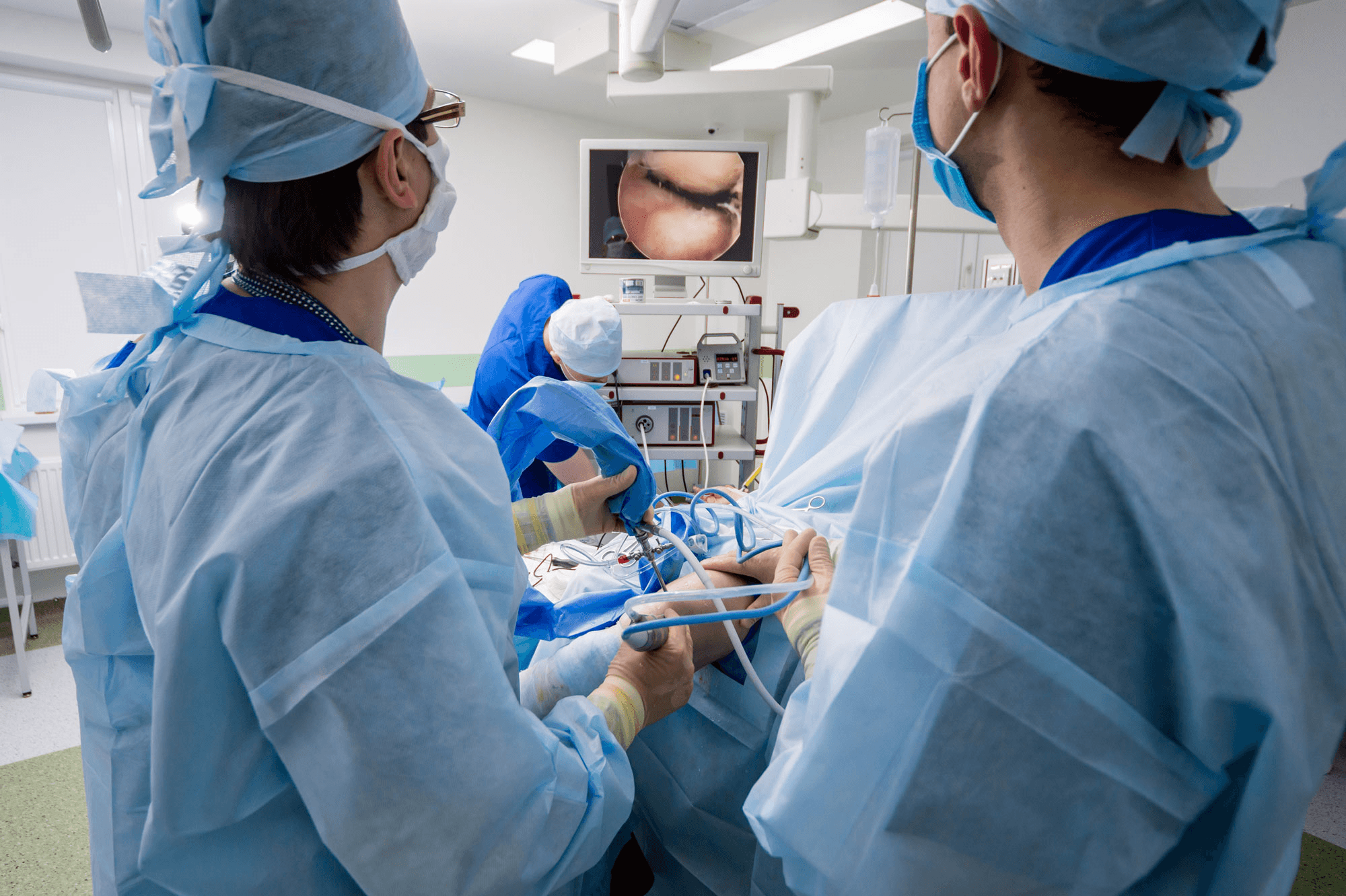

Liquid Cartilage injections safety suitability and cost
Where Liquid Cartilage sits in your treatment pathway
Liquid Cartilage™ is the brand name used for ChondroFiller® Liquid: a CE‑marked Class III medical device made from native type I collagen, supplied in a two‑chamber syringe and injected as a liquid that sets into a gel within minutes. Rather than being a pain‑relief injection, a drug, or a “liquid stem cell” treatment, it is designed to form a temporary 3‑D scaffold inside a cartilage defect, giving the joint a structure that may support host‑driven repair over time (often described as matrix‑induced chondrogenesis). Claims online that it is a “miracle German gel” that regrows an arthritic joint surface are widely rebutted by clinical educators.
On this platform, Liquid Cartilage™ is delivered in the UK at the London Cartilage Clinic on Harley Street as an ultrasound‑guided outpatient intra‑articular injection, with the clinic describing a package that includes consultation, ultrasound assessment, IV antibiotic cover, and a planned 6‑week follow‑up. That image‑guided outpatient route matters because published papers also describe arthroscopic placement in theatre, but that is background rather than the current London service pathway.
Clinically, Liquid Cartilage™ is mainly discussed for symptomatic, focal, full‑thickness cartilage defects in otherwise reasonably preserved joints—commonly the knee, hip and ankle, and in selected cases the shoulder, wrist and smaller hand joints—rather than for diffuse, end‑stage osteoarthritis. In a joint‑preservation pathway, it typically sits between symptom management (physiotherapy, activity modification and analgesia) and larger surgical steps such as osteotomy or joint replacement.
The sections that follow focus on (1) safety and what is—and is not—known about longer‑term data, (2) which ankle and hip patterns may be considered, (3) what the ultrasound‑guided appointment involves on Harley Street, and (4) typical self‑pay costs (April 2026 UK pricing) compared with established surgical options such as MACI/ACI, OATS and osteotomy.
How safe is Liquid Cartilage and what do we know long term
Safety signals for Liquid Cartilage™ (ChondroFiller®) are generally reassuring in the short to mid‑term, but the evidence base remains made up largely of small studies and specialist‑centre experience rather than large, long‑duration registries. A 2019 review of injectable hydrogel scaffolds for cartilage repair describes many systems as biocompatible in preclinical and early clinical use, while emphasising that “long‑term clinical data are limited” for this whole category of treatment.
One of the clearer published safety datasets comes from the wrist. In a prospective study of 59 intra‑articular distal radius fractures, 25 patients had residual chondral defects filled with ChondroFiller after fracture fixation. At follow‑up arthroscopy, the treated group had better cartilage quality scores (median Outerbridge 1.5 vs 3; median ICRS 1 vs 3) than controls, and there were no significant differences in fracture consolidation, complications or associated injuries between groups. A practical technical point also emerged: fibrous tissue formation was reported only where the defect had been overfilled, and not when the scaffold was applied flush.
Knee data are smaller but point in a similar direction. A 17‑patient series (2012–2023) reported improved functional scores (Lysholm and IKDC) at 12 months after arthroscopic ChondroFiller implantation for chondral lesions; the abstract does not highlight major device‑specific complications, but the follow‑up is short and the sample size is limited.
Across clinic and educational sources, the potential risks are best thought of in two groups:
- General interventional risks (injection or arthroscopy): infection, bleeding/bruising, blood clots, and side effects related to anaesthetic or sedation.
- Scaffold/material and technique‑related risks: allergy or inflammatory reaction to collagen, post‑procedure pain or stiffness, and technical problems such as overfilling, which may contribute to abnormal fibrous tissue.
Overall, serious adverse events directly attributable to the scaffold itself appear uncommon in the published series, but most human follow‑up is typically within about 1–5 years. That means rare complications and true durability at 10 years (including whether treatment reliably delays major surgery in the long run) cannot yet be stated with confidence.
Who might benefit from an ankle Liquid Cartilage injection
Persistent ankle pain after a “simple” sprain is sometimes driven by a focal cartilage defect (a localised patch where the smooth joint lining has worn through) or an osteochondral lesion (where the cartilage injury involves the underlying bone). When this sits on the talar dome (top of the talus) or, less commonly, the tibial plafond, it can cause deep aching, swelling after activity, and occasional catching or sharp pain—even when the ankle ligaments appear to have settled—because the problem is inside the joint surface rather than in the soft tissues around it. MRI is commonly used to identify these focal defects and related bone changes in the ankle.
Liquid Cartilage™ (ChondroFiller®) tends to be discussed in scenarios where symptoms persist despite a period of structured rehab (for example physiotherapy focused on strength, balance and control), activity modification, and supportive measures such as bracing. Joint-preservation sources consistently position injectable scaffolds for well-defined, symptomatic, full‑thickness defects in an otherwise reasonably preserved joint, rather than for widespread ankle arthritis across the whole surface.
Practical selection is ankle-specific and technical. A specialist assessment will usually weigh the size and depth of the defect, whether it is contained (with supportive edges) or more “uncontained”, and its exact location on the talus/tibia. The rest of the ankle also matters: signs of early osteoarthritis elsewhere in the joint, overall alignment, and whether there is ongoing instability from injured ligaments that could keep overloading the same patch of cartilage.
Published cartilage-repair pathways often use rough size bands as context (with thresholds varying by surgeon and joint):
- Microfracture: historically used for smaller lesions (often quoted as <2 cm²) but ankle reviews highlight durability limits of fibrocartilage-type repair.
- OATS/mosaicplasty: often discussed for lesions around 1–2 cm² (with mosaic techniques sometimes used for larger areas).
- ChondroFiller®/injectable scaffolds: described for focal defects, with some clinical sources discussing use up to around 3 cm² in selected cases, and some centres reporting extension beyond that in carefully chosen situations.
Patterns less likely to do well include advanced, diffuse ankle arthritis, major malalignment, or significant instability that has not been addressed, as well as large uncontained defects with substantial bone loss—where osteotomy, fusion, or replacement pathways may be more appropriate. In the UK, assessment and delivery is through the London Cartilage Clinic on Harley Street (londoncartilage.com).
When a hip Liquid Cartilage injection is worth considering
Groin pain that keeps flaring with walking, running or sitting can sometimes be traced to a localised patch of cartilage damage in the hip—often on the acetabulum (socket) near a labral tear, or less commonly on the femoral head (ball) after trauma. This “focal defect” pattern is different from established hip osteoarthritis, where wear tends to be more global across the joint surface and the joint space can look uniformly narrowed on X‑ray. In that more localised scenario, an injectable scaffold may be discussed as a joint‑preserving option rather than a cure for a worn‑out joint.
Published hip literature has largely described ChondroFiller in an arthroscopic setting. A technical paper on symptomatic full‑thickness acetabular defects outlines one‑step placement during hip arthroscopy and frames the scaffold as an adjunct or alternative to microfracture, noting that microfracture repair tissue is typically fibrocartilage and that benefit can be variable beyond 2–3 years. That evidence supports the concept—treating a defined defect—without meaning that the same surgical route is the routine pathway everywhere.
In the current London Cartilage Clinic (Harley Street) service, Liquid Cartilage™ for the hip is offered as an ultrasound‑guided outpatient intra‑articular injection, rather than being implanted as part of a keyhole operation. The aim is precise, image‑guided placement within the joint without incisions or hospital admission, while still recognising it is an interventional procedure (not a quick “steroid jab”) and outcomes cannot be guaranteed.
Hip profiles most often considered for this approach include:
- Localised cartilage wear with relatively preserved joint structure (often described as early‑stage arthritis at most) and reasonably good mechanics/alignment.
- Symptoms linked to a specific structural problem (for example a labral tear with adjacent cartilage wear), where the goal is to reduce pain and help maintain activity without stepping straight to operative cartilage surgery.
Patterns less likely to benefit include widespread cartilage loss around the socket and ball, very narrow joint space on X‑ray, or a hip with major mechanical drivers (such as severe impingement morphology or deformity) that remain unaddressed—situations where corrective surgery or arthroplasty pathways may be more relevant. More broadly, reviews of injectable hydrogel scaffolds report encouraging biocompatibility signals, but also emphasise that long‑term clinical data remain limited for this whole treatment class, including in the hip.
What actually happens during an ultrasound-guided Liquid Cartilage injection
A typical London Cartilage Clinic appointment on Harley Street is structured more like a short interventional procedure than a “quick jab”, and the pathway below is set out in plain steps (with the draft-only reference-code strings removed from this version).
Before anything is booked, the clinic process usually starts with a detailed history and examination, alongside a review of prior imaging such as X‑rays and MRI. On the same visit, an in‑clinic diagnostic ultrasound is often used to map the symptomatic area and help confirm whether the pattern looks like a localised, treatable cartilage problem rather than more diffuse joint wear.
If Liquid Cartilage™ (ChondroFiller®) is considered appropriate, treatment is arranged as an outpatient day‑case at the Harley Street clinic. The key practical point is that it is designed to be same‑day in and out, without a surgical incision or hospital admission.
On the day, the set‑up typically includes consent, final checks, positioning on a procedure couch, and careful skin preparation with antiseptic. Depending on the joint (for example hip versus ankle) and the clinical plan, the procedure is performed with local anaesthetic and may involve additional medication to keep the experience tolerable. The London Cartilage Clinic pathway also describes IV antibiotic cover as part of its package to reduce infection risk.
The defining step is the ultrasound guidance. A clinician—such as Professor Paul Y. F. Lee or colleagues—uses real‑time ultrasound to guide a fine needle into the joint, confirming needle position before injecting the collagen scaffold. The material is delivered as a liquid and then gels in situ over minutes, with the aim of occupying the target defect space rather than simply dispersing like a standard pain‑relief injection.
Although the injection itself is usually brief, the ultrasound mapping, sterile preparation and post‑procedure checks mean clinics often schedule around 1–2 hours in total for the visit.
In the first 24–72 hours, common after‑effects can include soreness at the needle site, a flare of joint ache, and a feeling of stiffness or “fullness”, particularly in deeper joints such as the hip. Symptoms that warrant urgent contact with the treating team include fever, rapidly increasing redness or swelling, escalating pain out of proportion, or any new systemic illness. Follow‑up is commonly planned at around 6 weeks at the London Cartilage Clinic, with activity progression and physiotherapy advice individualised to the joint treated and the goals discussed at assessment.
Costs insurance and how Liquid Cartilage compares with surgery
Private cartilage-preservation care in the UK can vary widely in price depending on the joint, the complexity of the defect, and whether treatment is an injection or a theatre-based operation. In London, the London Cartilage Clinic on Harley Street publishes guide pricing for its ultrasound-guided ChondroFiller® (Liquid Cartilage™) injection pathway from about £3,000 (with the package described as including consultation, ultrasound, the product, IV antibiotic cover and a 6‑week follow-up). The same Harley Street pathway is described as self-funded private treatment rather than NHS- or private medical insurance (PMI)-funded.
For context, London Cartilage Clinic’s published UK private pricing guide (dated April 2026) places common surgical cartilage options at materially higher cost bands than an outpatient injection. Their guide figures include:
- ChondroFiller injection: from ~£3,000
- “Simpler cartilage repair”: from ~£9,800
- OATS (osteochondral autograft transfer): ~£14,000 all-inclusive
- OCA (osteochondral allograft) or single-stage cell-based implantation (STACi): ~£28,000 Alongside cartilage restoration, alignment surgery can also sit in the joint-preservation pathway: UK private high tibial osteotomy (HTO) is commonly quoted in the region of £8,000–£15,000, depending on provider and complexity.
Two-stage, cell-based procedures such as ACI/MACI can be more expensive again because they involve two operations and laboratory expansion of cartilage cells between stages; one UK source notes that cell-culture costs alone can exceed £10,000, before hospital and theatre fees are added. That combination of cost and logistics is one reason two-stage options may be relatively difficult to access privately.
What these numbers do not show is comparative “value” in outcome terms. No robust head-to-head trials were identified that directly compare Liquid Cartilage injections with MACI/ACI, OATS, OCA/STACi or osteotomy, so it is not possible to claim better outcomes per pound spent. The practical trade-off is clearer: a single-stage outpatient injection is usually less invasive and lower cost than major cartilage surgery or osteotomy, which may make it an attractive step for selected focal defects within a broader joint-preservation strategy. Liquid Cartilage™ is delivered in the UK at the London Cartilage Clinic on Harley Street; assessment bookings are available via londoncartilage.com.
Frequently Asked Questions
- It is a collagen scaffold injected into a focal cartilage defect. It is intended for joint-preservation, not as a painkiller or a “liquid stem cell” treatment.
- The article mainly discusses knee, hip and ankle, with selected use in shoulder, wrist and smaller hand joints. It is aimed at well-defined defects, not diffuse end-stage arthritis.
- Published short to mid-term data are generally reassuring, but long-term evidence is limited. Reported risks include infection, bleeding, collagen reaction, post-procedure pain, stiffness and overfilling-related fibrous tissue.
- The clinic reviews your history and imaging, performs ultrasound assessment, then gives an outpatient ultrasound-guided injection. The scaffold gels within minutes, and follow-up is usually planned at about six weeks.
- The London Cartilage Clinic publishes guide pricing from about £3,000 for the ultrasound-guided injection package, which includes consultation, ultrasound, the product, IV antibiotic cover and follow-up.
Next steps
Where to go from here
These routes are selected from the topic and purpose of this article. They are guidance, not a diagnosis or treatment recommendation.
Learn more
Explore liquid cartilage injection
Read the reviewed liquid cartilage injection pathway, including who it may help and what happens next.
Talk to the team
Book a free discovery call
A non-medical call with the team to understand services and choose the right booking route.
Legal & Medical Disclaimer
This article is written by an independent contributor and reflects their own views and experience, not necessarily those of Liquid Cartilage. It is provided for general information and education only and does not constitute medical advice, diagnosis, or treatment.
Always seek personalised advice from a qualified healthcare professional before making decisions about your health. Liquid Cartilage accepts no responsibility for errors, omissions, third-party content, or any loss, damage, or injury arising from reliance on this material.
If you believe this article contains inaccurate or infringing content, please contact us at [email protected].