hero background

ChondroFiller® at the Liquid Cartilage

Injectable, Structural Regenerative Implant for Cartilage Care

Protect • Repair • Regenerate

← Back Home
How ChondroFiller is Transforming the Treatment of Knee Pain and Cartilage Damage: What Patients Should Know

How ChondroFiller is Transforming the Treatment of Knee Pain and Cartilage Damage: What Patients Should Know

Understanding Knee Pain and Cartilage Damage

Knee pain and damage to the cartilage are common problems that can seriously affect everyday life. Symptoms such as clicking knees or discomfort when climbing stairs might seem minor at first but can gradually make movement difficult and reduce your quality of life. If you notice these signs, it is important to seek treatments that address the root issue — local cartilage defects — without resorting to major surgery.

Why Cartilage Matters and Recognising the Symptoms

Cartilage is a smooth, flexible tissue that covers the ends of bones in your knee joint, acting like a cushion and allowing your knee to move smoothly without pain. When this cartilage gets damaged, simple activities like climbing stairs can become painful, your knee might click or feel unstable, and over time, these symptoms can worsen. Without proper treatment, these problems can limit your everyday activities and reduce mobility.

Traditional Treatments and Their Challenges

The typical ways to manage cartilage damage include physiotherapy, painkillers, surgical procedures, and sometimes injections like hyaluronic acid. While these treatments can offer relief, they are not always ideal. Surgery can be invasive and may require lengthy recovery, and some treatments don’t target specific areas of cartilage damage effectively. This situation has led to a search for gentler, yet effective alternatives.

Free non-medical discussion

Not sure what to do next?

Book a Discovery Call

Information only · No medical advice or diagnosis.

Introducing ChondroFiller: A Gentle Yet Effective Solution

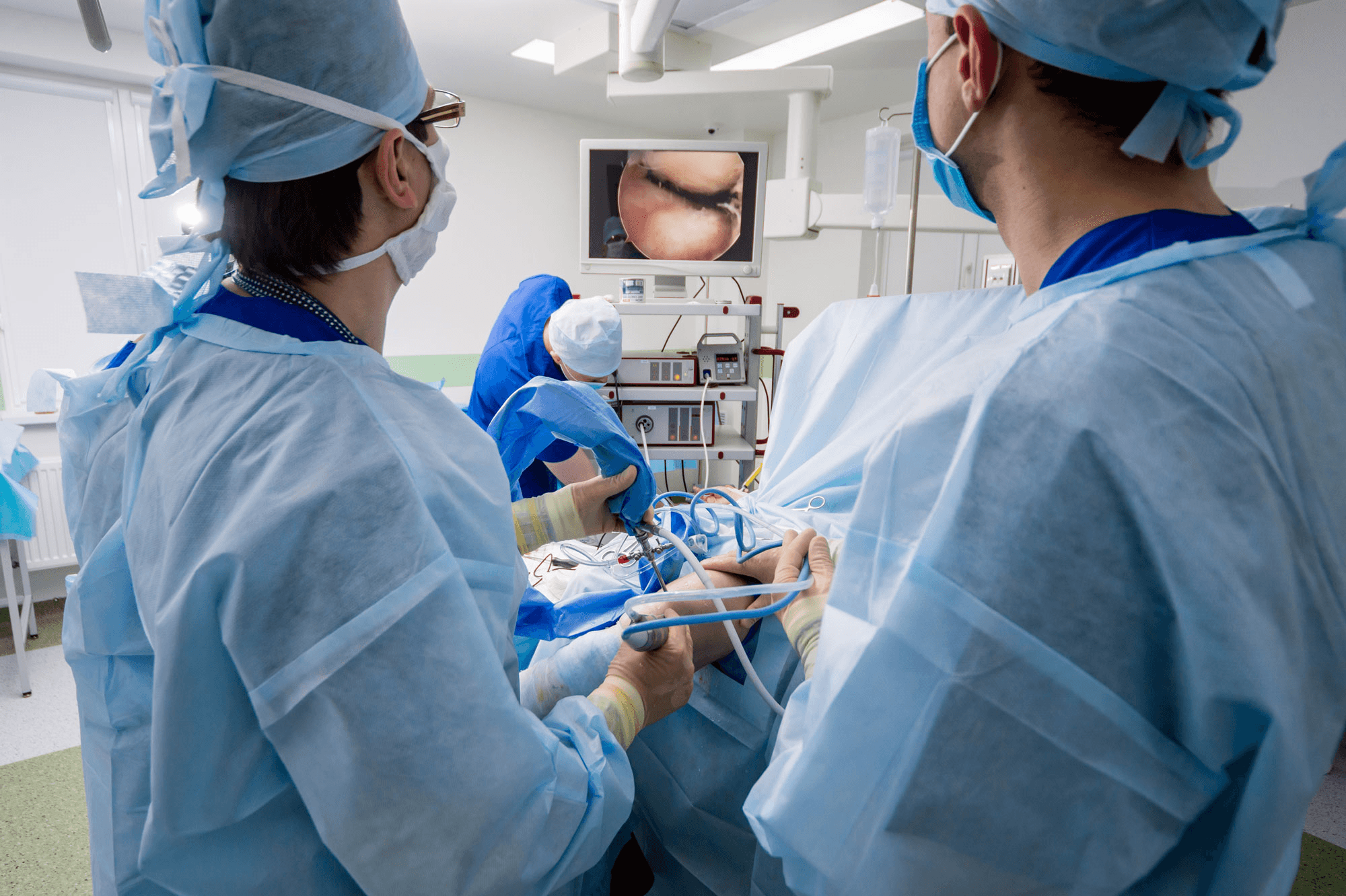
ChondroFiller offers a promising new approach. This treatment involves a microinvasive injection of a gel-like substance directly into the damaged cartilage to encourage natural repair and regeneration. Similar treatments using liquid acellular collagen matrix have shown encouraging results. For example, one study found that “the liquid AMIC is a safe technique that shows good clinical and radiological outcomes in a 2-year follow-up in patients with [...] chondral defects” (De Lucas Villarrubi et al., 2021). This means the treatment not only works well but is also safe over the medium term.

Importantly, the same study reported that “95% of patients showed meaningful improvement in hip function, and 100% reached acceptable symptom levels”, demonstrating clear benefits for those treated (De Lucas Villarrubi et al., 2021). Because the procedure is minimally invasive and targets the specific damaged area, patients often experience quicker recovery times and less discomfort compared with traditional surgery.

Expert Care Is Key

Getting the right treatment starts with expert assessment. Professor Paul Lee, a Royal College of Surgeons Ambassador and Advisor, specialises in cartilage injuries and leads a team of MSK Doctors who provide excellent care tailored to individual needs. Their expert approach ensures patients receive precise diagnoses and personalised treatment plans, which are critical for getting the best results from options like ChondroFiller.

Moving Forward with Confidence

ChondroFiller is changing the way knee pain and cartilage damage are treated, offering an effective, less invasive option that supports faster recovery and improved joint health . If you suffer from knee pain or suspect cartilage damage, speaking to a qualified healthcare professional is essential to find the best treatment for you. Remember, individual medical advice is important — so do consult a specialist to explore whether ChondroFiller or another treatment might be right for you.

References

De Lucas Villarrubi, J. C., Méndez Alonso, M. Á., Sanz Pérez, M. I., Trell Lesmes, F., & Panadero Tapia, A. (2021). Acellular Matrix-Induced Chondrogenesis Technique Improves the Results of Chondral Lesions Associated With Femoroacetabular Impingement. Journal Name, Volume(Issue), pages. https://doi.org/10.1016/j.arthro.2021.08.022

Frequently Asked Questions

  • Early signs include knee clicking, pain during movement like climbing stairs, and feelings of instability. If you notice these symptoms, the expert MSK Doctors team led by Prof Paul Lee offers specialist assessment and tailored treatment options to address cartilage issues effectively.
  • ChondroFiller is a minimally invasive injection targeting damaged cartilage directly, promoting natural repair. Unlike traditional surgery, ChondroFiller usually involves less discomfort and quicker recovery. Prof Lee and his MSK Doctors team provide expert guidance and use this advanced approach to optimise patient outcomes.
  • MSK Doctors, under Prof Paul Lee’s leadership, specialise in diagnosing and treating cartilage problems. With access to advanced therapies like ChondroFiller, they offer precise, personalised care, helping patients achieve quicker recoveries and improved joint health without the need for major surgery.
  • Professor Paul Lee is a renowned cartilage expert and Regional Surgical Ambassador. As a Royal College of Surgeons Adviser and Ambassador, he provides outstanding, evidence-based care with MSK Doctors. His experience ensures patients receive up-to-date treatments tailored to their specific needs.
  • A specialist consultation ensures an accurate diagnosis and treatment plan tailored to individual needs. Experienced professionals like Prof Lee and the MSK Doctors team assess each case carefully, recommending the most suitable options such as ChondroFiller, ensuring patients receive the highest standard of care.

Legal & Medical Disclaimer

This article is written by an independent contributor and reflects their own views and experience, not necessarily those of Liquid Cartilage. It is provided for general information and education only and does not constitute medical advice, diagnosis, or treatment.

Always seek personalised advice from a qualified healthcare professional before making decisions about your health. Liquid Cartilage accepts no responsibility for errors, omissions, third-party content, or any loss, damage, or injury arising from reliance on this material.

If you believe this article contains inaccurate or infringing content, please contact us at [email protected].

Last reviewed: 2025For urgent medical concerns, contact your local emergency services.
Patient recovering with guidance

Take the Next Step

Cartilage damage won’t reverse on its own—yet with the right plan it can beprotected, repaired, and regenerated.

At Liquid Cartilage, you access world-leading science and a joint-preservation vision on Harley Street.

  • Start with a Discovery Call.
  • Or book your Consultation with Prof. Lee today.

(Consultation fee credited towards treatment if you proceed.)

Verified by DoctifyVerified by Doctify

Latest Blog

View all →
Unlocking the Science of Hydrogel Cartilage Regeneration: How Innovative Therapies Facilitate Joint Healing
09 Dec 2025

Unlocking the Science of Hydrogel Cartilage Regeneration: How Innovative Therapies Facilitate Joint Healing

Hydrogels are water-rich, flexible polymer networks that mimic natural cartilage, providing a supportive scaffold for cell growth and regeneration. Used in advanced treatments like autologous chondrocyte implantation and injectable cartilage gels, hydrogels facilitate targeted, minimally invasive cartilage repair with promising outcomes in pain relief and joint function. Precision techniques ensure accurate hydrogel placement, enhancing effectiveness. While hydrogel therapies offer faster recovery and natural tissue regeneration, they are best suited for localized cartilage damage rather than widespread osteoarthritis. Ongoing innovations, including dual-drug delivery and dynamic molecular interactions, continue to advance cartilage repair. Expert consultation and tailored rehabilitation are crucial for optimal results.

How ChondroFiller Supports Athletic Recovery: A Modern Solution for Cartilage Stress and Joint Health
08 Dec 2025

How ChondroFiller Supports Athletic Recovery: A Modern Solution for Cartilage Stress and Joint Health

Joint injuries with cartilage damage pose significant challenges for athletes, causing pain and limiting performance. ChondroFiller, a novel biological therapy, offers promising cartilage repair by using an acellular collagen matrix to support natural tissue regrowth. Clinical studies demonstrate its safety, effective defect filling, and improved joint function within six months. Ideal for small to medium cartilage defects, it enables athletes to return to sport with reduced risk. Expert clinical assessment ensures personalized treatment decisions. Facilities like MSK Doctors, led by specialists such as Professor Paul Lee, provide advanced care grounded in current research. ChondroFiller represents an innovative option to help athletes restore joint health and mobility—consult healthcare professionals for tailored advice.

Unlocking Healing: How Experts Assess ChondroFiller Success Through Modern Evaluation Methods
05 Dec 2025

Unlocking Healing: How Experts Assess ChondroFiller Success Through Modern Evaluation Methods

ChondroFiller, a novel liquid collagen gel, offers promising cartilage repair by filling defects and restoring surface smoothness in joints. Monitoring treatment success involves MRI scans to visualize cartilage healing, alongside medical scoring systems like KOOS and Lysholm to assess patient symptoms and function. Studies demonstrate significant improvements in cartilage integration and knee function post-treatment. Expert clinical evaluations by specialists such as Professor Paul Lee and the MSK Doctors team further ensure personalized follow-up and rehabilitation, optimizing recovery outcomes. This comprehensive assessment approach highlights ChondroFiller's safety and effectiveness in supporting long-term joint health.

Is ChondroFiller a Biological Glue or a Seed for Regeneration? Exploring Its Mechanism and Clinical Use
03 Dec 2025

Is ChondroFiller a Biological Glue or a Seed for Regeneration? Exploring Its Mechanism and Clinical Use

ChondroFiller is a collagen-based scaffold used in minimally invasive cartilage repair, acting both as a biological adhesive and a regenerative 'seed' to promote natural tissue growth. Its gel-like consistency stabilizes cartilage defects without the need for stitches, supporting quicker recovery and reducing trauma. Clinical studies highlight its ability to stimulate chondrocyte growth and cartilage regeneration, with effective outcomes in hip and hand cartilage treatments. Expert application, such as that by Professor Paul Lee at MSK Doctors, is crucial for maximizing results. Overall, ChondroFiller provides immediate support while guiding lasting biological repair, making it a valuable option for patients with cartilage damage seeking innovative orthopaedic care.

ChondroFiller Unveiled: The Science Behind Cartilage Repair Breakthroughs
03 Dec 2025

ChondroFiller Unveiled: The Science Behind Cartilage Repair Breakthroughs

ChondroFiller is an innovative acellular collagen hydrogel scaffold designed to support cartilage regeneration by providing a 3D framework for tissue repair. Recent research shows its mechanical properties closely mimic natural cartilage, enhancing joint function and healing. While promising, the effectiveness of ChondroFiller depends on expert surgical application and adherence to clinical protocols. This treatment offers a scientifically supported option to aid cartilage repair, but realistic expectations and personalized medical consultation are essential for optimal outcomes.

Rethinking Cartilage Regeneration: Modern Science Versus Old Beliefs
03 Dec 2025

Rethinking Cartilage Regeneration: Modern Science Versus Old Beliefs

Recent advances challenge the belief that cartilage cannot regenerate. Though avascular, cartilage can heal under the right conditions, aided by innovations like the injectable ChondroFiller collagen gel. This scaffold supports natural tissue growth, with adjunct therapies such as PRP and MSCs enhancing repair. Minimally invasive techniques like the needle and curette method improve treatment precision, especially in hip cartilage damage. Clinical studies show promising outcomes without adverse effects, though long-term research continues. Experts like Professor Paul Lee emphasize realistic expectations and personalized rehabilitation to maximize success. These developments mark a paradigm shift from symptomatic treatment to true cartilage regeneration, offering renewed hope for patients with joint injuries.