
How ChondroFiller Is Shaping New Possibilities for Hip Joint Repair: A Closer Look at Function and Outcomes
Introduction
In today’s busy and active world, hip discomfort affects many people and can significantly disrupt daily life. Common issues such as labrum tears and early arthritis are on the rise, presenting challenges for both patients and healthcare professionals. At the core of these problems is damage to the cartilage—the smooth tissue that cushions and protects the hip joint . Traditional treatments often struggle to fully restore this crucial tissue. Recently, ChondroFiller, an innovative biological scaffold first developed for knee cartilage repair, has shown promise in treating hip joint problems as well. Think of ChondroFiller as a “biological plaster” that supports the body’s natural healing process by stabilising and helping to regenerate damaged cartilage . This article explores how ChondroFiller works in the hip, its potential benefits for patients undergoing hip arthroscopy, and why expert assessment and careful follow-up are essential for achieving the best results.
The Challenges of Hip Discomfort and Cartilage Damage
Hip pain can arise from several causes, with labrum tears and early arthritis among the most frequent. The labrum is a ring of cartilage that surrounds the hip socket, helping to stabilise the joint and cushion the bones during movement. When this delicate cartilage is torn, people often experience pain, limited movement, and a feeling that the joint is unstable. Early arthritis involves the gradual breakdown of cartilage, leading to stiffness and difficulty with everyday activities. Preserving the cartilage is crucial to ensure smooth, pain-free movement and maintain long-term joint health. Traditional treatments range from pain relief and physiotherapy to surgery, but these often have their limitations, particularly in restoring damaged cartilage effectively. These challenges have led to the development of new techniques, such as cartilage implants and bioactive scaffolds like ChondroFiller, which encourage the body to naturally repair and regenerate the damaged tissue.
How Does ChondroFiller Work Inside the Hip?
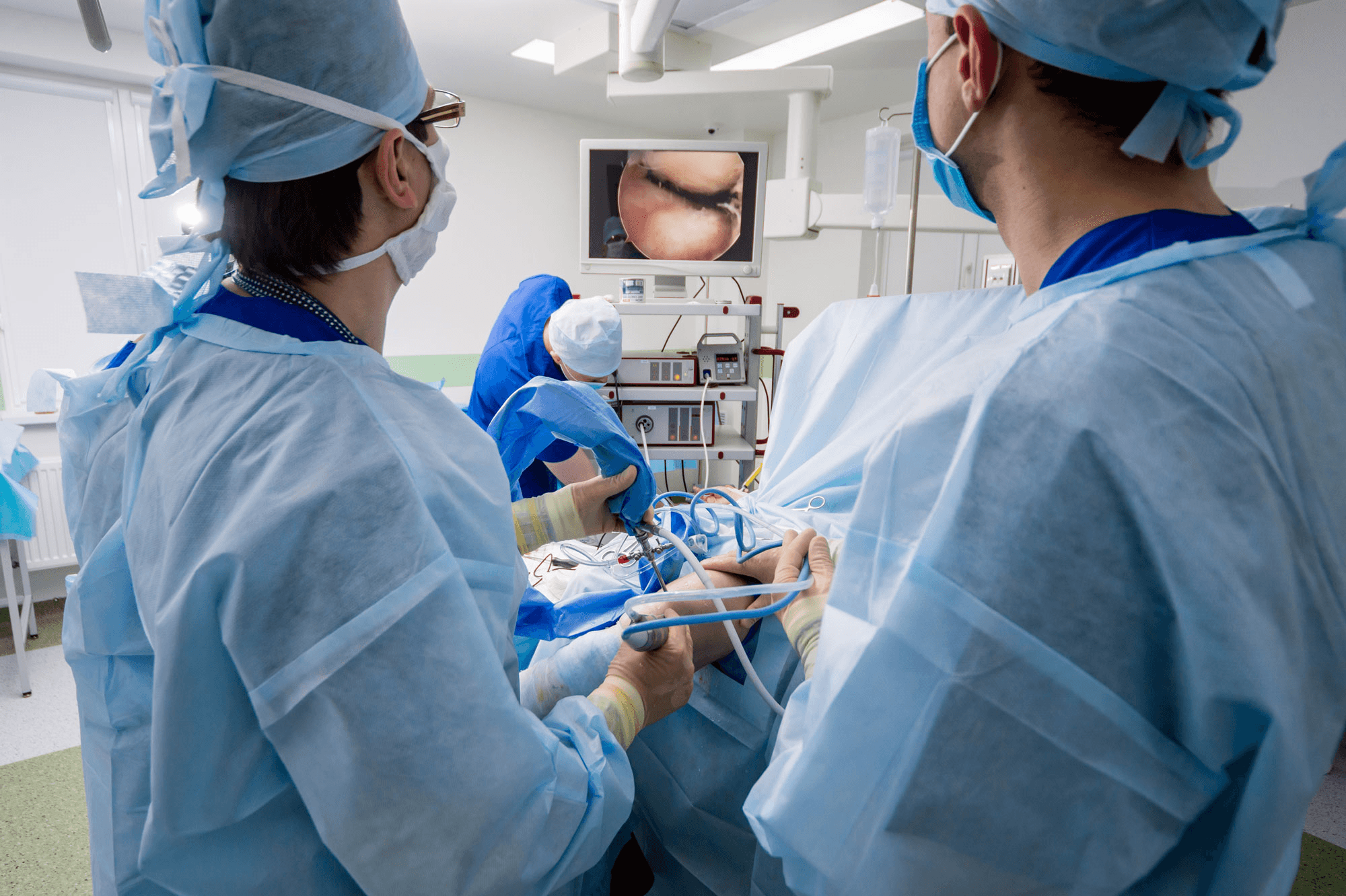
ChondroFiller works much like a biological plaster applied inside the hip joint over damaged cartilage areas. It is delivered as a gel-like scaffold during minimally invasive hip arthroscopy surgery, filling in cartilage defects and providing a supportive structure for the body’s own cells to grow and repair the injured tissue. This scaffold creates an ideal environment for healing while protecting the damaged area from further wear. Research has shown that “ChondroFillerliquid constitutes a bi-phasic structure, where the 60% nonfibrillar hydrogel proportion dominates the mechanical response” (Weizel et al., 2020), meaning its composition helps it behave somewhat like natural cartilage . Unlike more straightforward knees , the hip’s shape and movement require careful adaptation for treatments like ChondroFiller. Additionally, when delivering injectable materials like ChondroFiller, “the distance between the tip of the needle and the area to be filled should be minimal to ensure full contact with the chondral lesion” (Perez-Carro et al., 2021). This careful placement maximises the treatment’s effectiveness. Overall, the main goal is to support cartilage regeneration so patients experience reduced hip discomfort and better joint function.
Free non-medical discussion
Not sure what to do next?
Information only · No medical advice or diagnosis.
Expanding the Role of ChondroFiller in Hip Arthroscopy
The application of ChondroFiller in hip arthroscopy is a promising development that broadens the use of bioactive scaffold technology beyond its initial use in the knee. It is especially suitable for patients with labrum tears or early arthritis, where preserving the existing cartilage is still possible. Clinical studies using similar liquid matrix techniques for cartilage repair have demonstrated encouraging results: “a significant improvement was obtained in all parameters assessed, focusing on the characteristics of the generated tissue in the MRI (MOCART scores)” (De Lucas Villarrubi et al., 2021). Choosing the right patients is crucial, as not everyone with hip discomfort will benefit equally from this approach. This makes expert assessment vital to ensuring the treatment is well tailored to individual needs. Professor Paul Lee, an experienced orthopaedic surgeon, along with the MSK Doctors team, represents this careful, patient-centred approach, combining the latest surgical techniques with in-depth evaluations. Their goal is to deliver the most effective treatment based on solid clinical evidence and personalised care.

Evaluating Success and the Importance of Follow-up Care
Success following ChondroFiller treatment is measured through different factors. Doctors look for reduced pain, improved joint function, and a patient’s ability to return to everyday activities and sports. Imaging techniques such as MRI scans are used to assess how well the cartilage is healing and to spot any potential complications. Patient feedback is equally important, providing a real-world picture of how the treatment improves quality of life. Interestingly, one study noted that “ChondroFillerliquid shows the most pronounced viscous effects” among cartilage substitute materials tested (Weizel et al., 2020), indicating it closely mimics the natural cushioning behaviour of healthy cartilage. Moreover, patients report high satisfaction levels, with “patients' satisfaction reaching 86.6 per cent and all patients who practised sports were able to resume them” after treatment (De Lucas Villarrubi et al., 2021). Follow-up care plays a vital role in monitoring recovery, guiding rehabilitation, and addressing any challenges early on. Although long-term outcomes are still being studied, current clinical experience and patient reports are very promising. Ongoing research will continue to refine patient selection and treatment methods, helping to make hip cartilage preservation even more effective in the future.
Conclusion
ChondroFiller is opening new possibilities for people suffering from hip discomfort, labrum tears, and early arthritis by aiding the body’s natural cartilage repair processes. This biological scaffold offers hope for better joint preservation through minimally invasive hip arthroscopy procedures. Yet, success depends greatly on selecting appropriate patients and having treatment delivered by experienced clinicians. Professor Paul Lee and the MSK Doctors team lead the way with a patient-focused, evidence-based approach designed to maximise positive outcomes. If you are experiencing hip joint issues, it is important to seek advice from a qualified healthcare professional to determine the most suitable treatment for your situation. For individual medical advice, please consult a qualified healthcare professional.
References
Weizel, A., Distler, T., Schneidereit, D., & Friedrich, O. (2020). Complex mechanical behavior of human articular cartilage and hydrogels for cartilage repair. Acta Biomaterialia. https://doi.org/10.1016/j.actbio.2020.10.025
De Lucas Villarrubi, J.C., Méndez Alonso, M.A., Sanz Pérez, M.I., Trell Lesmes, F., & Panadero Tapia, A. (2021). Acellular Matrix-Induced Chondrogenesis Technique Improves the Results of Chondral Lesions Associated With Femoroacetabular Impingement. Arthroscopy. https://doi.org/10.1016/j.arthro.2021.08.022
Perez-Carro, L., Rosi Mendoza Alejo, P., Gutierrez Castanedo, G., Menendez Solana, G., Fernandez Divar, J.A., Galindo Rubin, P., & Alfonso Fernandez, A. (2021). Hip Chondral Defects: Arthroscopic Treatment With the Needle and Curette Technique and ChondroFiller. Arthroscopy Techniques. https://doi.org/10.1016/j.eats.2021.03.011
Frequently Asked Questions
- ChondroFiller acts as a biological plaster, supporting natural cartilage repair. At MSK Doctors, expert clinicians, including Professor Paul Lee, use advanced techniques and thorough assessments to maximise treatment benefits and patient outcomes for hip cartilage injuries.
- Professor Paul Lee is a leading cartilage expert and Royal College of Surgeons Ambassador. His experience in advanced cartilage repair and patient-focused care ensures MSK Doctors provides thorough assessments, evidence-based recommendations, and innovative treatments tailored to each patient's needs.
- Not everyone with hip problems will benefit from ChondroFiller. At MSK Doctors, Professor Lee carefully selects appropriate candidates, ensuring the treatment is personalised to each individual's hip condition for the best possible outcomes based on current clinical evidence.
- Follow-up care allows Professor Lee and the MSK Doctors team to monitor healing, guide rehabilitation, and promptly address challenges. This comprehensive aftercare helps patients achieve the best possible recovery and maintain joint health following treatment for hip cartilage damage.
- Clinical studies and patient feedback show high satisfaction, reduced pain, and improved joint movement after ChondroFiller treatment. MSK Doctors, led by Professor Lee, are committed to personalised care and continually monitor patient progress to optimise outcomes.
Legal & Medical Disclaimer
This article is written by an independent contributor and reflects their own views and experience, not necessarily those of Liquid Cartilage. It is provided for general information and education only and does not constitute medical advice, diagnosis, or treatment.
Always seek personalised advice from a qualified healthcare professional before making decisions about your health. Liquid Cartilage accepts no responsibility for errors, omissions, third-party content, or any loss, damage, or injury arising from reliance on this material.
If you believe this article contains inaccurate or infringing content, please contact us at [email protected].