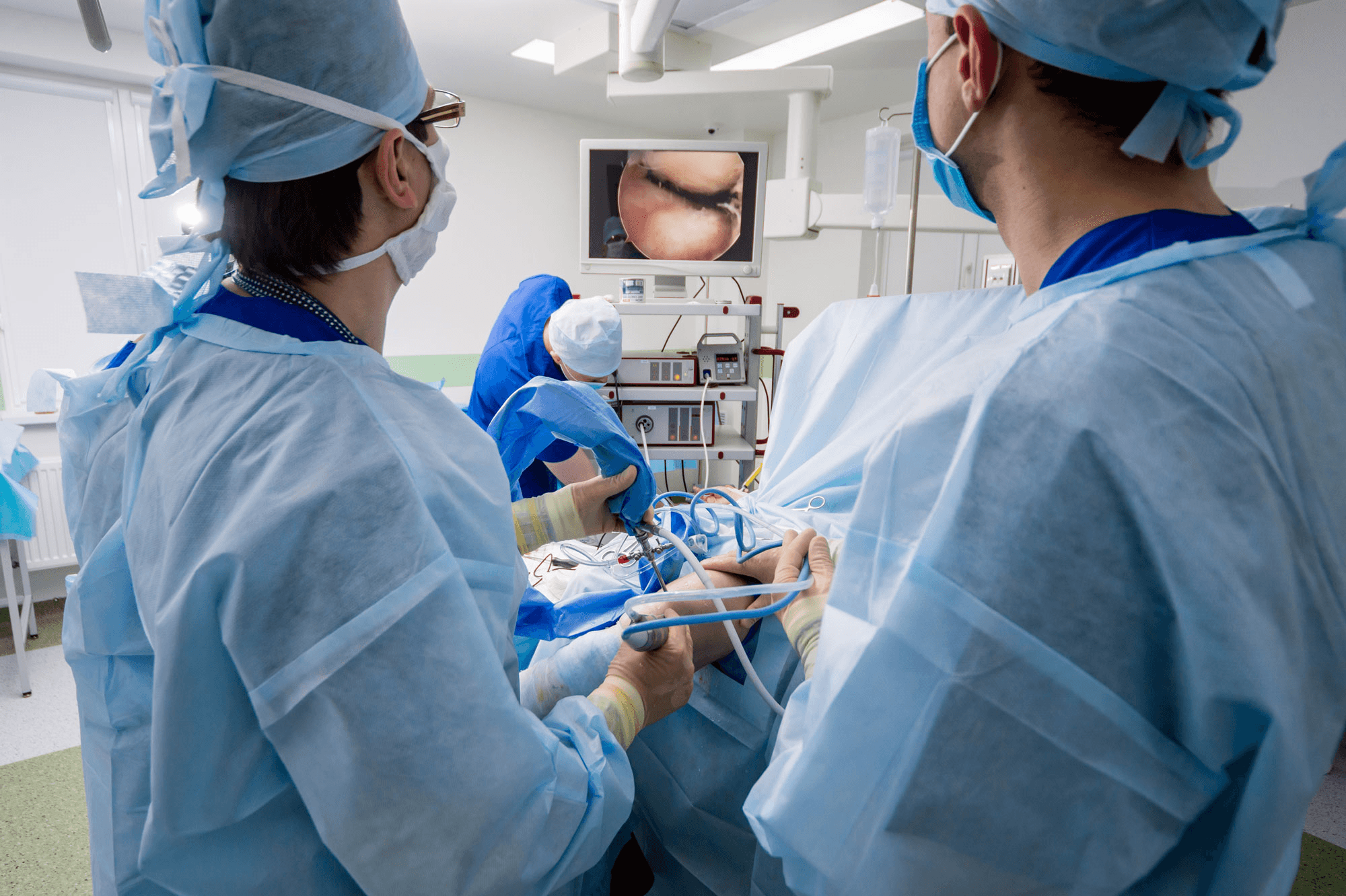

ChondroFiller injection for wrist cartilage damage
Is your wrist suitable for a ChondroFiller injection?
Determining candidacy comes down to three questions: how severe is the damage, where exactly is it, and is the rest of the joint structurally sound?
The strongest match for a ChondroFiller injection in the wrist is an adult with an isolated focal cartilage defect graded Outerbridge III or IV — approximately 0.5 to 2 mm in depth — where the surrounding cartilage and ligaments remain intact. Post-traumatic wrist damage sits squarely within this indication. The only peer-reviewed wrist-specific clinical study to date (Demmer, 2025; n=59) recruited patients with residual chondral defects in precisely this size range following distal radius fracture — making post-injury wrist damage one of the most clearly documented presentations for this treatment.
Advanced osteoarthritis is the principal reason a patient would not qualify. Where joint disease has progressed to the equivalent of Kellgren-Lawrence Grade IV — with marked joint-space narrowing across much of the wrist — the scaffold lacks sufficient structural support to be effective. Hip cohort data confirm that patients with pre-existing Tönnis Grade 2–3 osteoarthritis consistently achieve poor results; the same reasoning applies to wrist cases.
For patients within the focal Grade III/IV range, the ultrasound-guided injection delivers the collagen scaffold directly into and around the defect, coating the joint surface without operating-theatre access. Where a lesion is more deeply contained with significant subchondral involvement, a surgical Liquid Cartilage™ pathway may warrant a separate discussion — but that is a distinct clinical decision, not an extension of the injection route.
A formal consultation with MRI is the necessary next step. Imaging grades defect depth, confirms ligament integrity, and rules out joint-space narrowing that would change the treatment recommendation.
How the collagen scaffold works once injected
The scaffold contains no living cells. ChondroFiller is an acellular Type I collagen matrix derived from murine sources — it carries no donor tissue, which is a common patient concern when hearing the word 'biologic'. What it does carry is a precisely engineered three-dimensional structure that, once placed, prompts the body to begin its own repair process.
After ultrasound-guided placement into the wrist, the gel conforms to the contours of the defect and sets within 3–5 minutes. At that point it functions as a chemotactic scaffold: the collagen matrix signals progenitor cells from the surrounding synovium and subchondral bone to migrate in, differentiate into chondrocytes, and start producing cartilage matrix. The clinical term for this process is acellular matrix-induced chondrogenesis — the patient's own biology does the regenerative work; the scaffold provides the architecture and the signal.
As repair tissue matures inside the defect, the scaffold is progressively resorbed and replaced. It is not a permanent implant.
A 2025 ex vivo osteochondral model gives some mechanistic grounding to these early events: DNA content within ChondroFiller-treated defects increased 2.4-fold within 14 days of implantation, consistent with active cell colonisation during the initial weeks. That does not mean repair is complete at two weeks — full tissue maturation takes considerably longer — but it supports the view that biological activity begins promptly after placement.
Precision of fill matters: the gel should sit flush with the surrounding native surface. Overfilling a small wrist defect risks fibrous tissue formation, which is why the volume applied in clinical practice is carefully controlled — a point the procedure section addresses directly.
What happens on the day of treatment
You will not need a general anaesthetic, theatre time, or a hospital admission. The entire treatment takes place at London Cartilage Clinic on Harley Street as an outpatient appointment, and most patients leave the same day.
On arrival, local anaesthetic is applied to the wrist. Professor Paul Lee then uses real-time ultrasound imaging to guide the needle to the exact treatment site — allowing precise placement of the collagen scaffold within the joint space without the need for surgical access. The ultrasound image is visible throughout, so the position of the needle tip is confirmed before and during injection.
A note on volume worth clarifying: the typical quantity delivered through an ultrasound-guided wrist injection is 1.0–2.3 mL, depending on the area being treated. If you have read that earlier arthroscopic research used only 0.2–0.3 mL, that smaller figure reflects a surgical approach — a dry joint and direct arthroscopic visualisation allow a concentrate to be placed precisely into a single contained defect from beneath. In the injection setting, the scaffold is delivered into a fluid joint environment and distributed across the relevant joint surface, which requires a proportionally larger volume to achieve adequate coverage.
After the injection, you will rest briefly in clinic while the gel stabilises in place. Loading the wrist — gripping firmly or bearing weight through the hand — should be avoided in the immediate hours after treatment; the scaffold needs time to settle before it can withstand joint forces.
Guide costs start from £3,000; the exact figure for your treatment will be confirmed at your assessment consultation.
What the clinical evidence shows for wrist outcomes
Published wrist-specific evidence is limited but direct. A 2025 prospective study by Demmer et al. enrolled 59 patients with intra-articular distal radius fractures; 25 received ChondroFiller for residual chondral defects of 0.5–2 mm. At follow-up arthroscopy, the treated group showed significantly better cartilage quality — median Outerbridge score 1.5 versus 3.0 in controls (P=0.006), and ICRS grade 1 versus 3 (P=0.002). In plain terms: treated joints had notably healthier-looking cartilage at follow-up than joints that healed without the scaffold.
Functional gains reinforced that picture. Patients recorded meaningful reductions in NRS pain scores and improvements on the DASH questionnaire, a validated measure of arm and hand disability. Grip and pincer strength increased on objective testing, and MRI confirmed bone marrow oedema had reduced, with visible widening of the joint space in treated cases.
This is the only published peer-reviewed wrist-specific study to date, and it is exploratory — the follow-up arthroscopy subgroup comprised eight treated and seven control cases, and the authors themselves called for larger, longer-term wrist trials. That caution is appropriate; it reflects the novelty of studying such a small joint at this level of rigour, not any uncertainty about how the scaffold behaves.
That distinction matters, because the underlying mechanism is supported by a broader body of evidence from other joints. Across knee studies, IKDC patient-reported scores improve by approximately 30 points over 12–36 months; in a hip cohort followed for up to five years, 17 of 21 evaluable patients achieved good or excellent outcomes. Those are larger-joint figures and cannot be read across directly to the wrist, but they provide reasonable confidence in the platform's durability.
ChondroFiller is CE-marked as a Class III medical device and is well established in European clinical practice; it has not received FDA approval and is not currently available in the United States.
Recovery, loading, and what to protect in the early weeks
The collagen scaffold bonds to the defect base in minutes, but it takes several weeks to integrate firmly enough to withstand the forces a wrist encounters in ordinary use. A published biomechanical study confirmed this directly: in the early post-implantation phase, ChondroFiller cannot yet protect the opposing cartilage surface from damage when the joint is loaded — making the loading restriction a biological requirement, not an abundance of caution.
For roughly the first two to four weeks, the practical rule is to avoid heavy gripping, pushing through the palm, carrying weight in that hand, or any activity that places repetitive compressive force through the wrist. Light, pain-guided finger and hand movement is encouraged from the outset; keeping range of motion going does not stress the defect site in the way that loading does.
As a rough order of magnitude, most patients return to light desk work and low-load daily tasks within a few weeks. Manual work, sport, and activities that put sustained force through the wrist are measured in months rather than weeks — typically three to six months before higher-demand activities are appropriate, depending on defect size and how the scaffold is maturing. Individual variation is real, and the treating clinician's assessment at each review should guide every step of that progression.
A planned MRI at a defined follow-up interval is used to confirm scaffold integration and assess repair tissue maturation. That imaging review is what shapes the final return-to-activity decision — the process is monitored, not open-ended.
Getting assessed at London Cartilage Clinic
The picture that emerges across these sections is fairly specific. If you have a focal, post-traumatic wrist cartilage defect within the 0.5–2 mm profile, a structurally intact surrounding joint, and a clear-eyed view of a structured recovery, the ChondroFiller injection pathway offers a route to scaffold-supported cartilage repair without theatre admission or general anaesthetic. That precision matters in both directions: the treatment suits a defined subset of wrist presentations, and the quality of placement — fill volume, flush apposition, exact positioning — is inseparable from the result.
In the UK, the ChondroFiller injection is delivered at the London Cartilage Clinic on Harley Street. Professor Paul Lee leads the service; his emphasis on technique precision, including controlled volume and flush gel placement, reflects what the published evidence identifies as the primary technical variable in avoiding complications.
The next practical step is a clinical assessment with MRI review to confirm defect grading and establish whether this pathway is appropriate for your specific joint. Guide cost starts from £3,000. To check availability or arrange an assessment, visit londoncartilage.com.
- [1] Cartilage reconstruction using Chondrofiller in intra-articular distal radius fractures. (2025). https://doi.org/10.1186/s42836-025-00333-y https://doi.org/10.1186/s42836-025-00333-y
- [2] Influence of cartilage defects and a collagen gel on integrity of corresponding intact cartilage: a biomechanical in-vitro study. (2024). https://doi.org/10.1007/s00402-024-05530-z https://doi.org/10.1007/s00402-024-05530-z
- [3] Arthroscopicutilization of ChondroFiller gel for the treatment of hip articular cartilage defects: a cohort study with 12- to 60-month follow-up. (2021). https://doi.org/10.1093/jhps/hnab002 https://doi.org/10.1093/jhps/hnab002
- [4] Development of an Ex Vivo Osteochondral Biomimetic Platform for Mechanistic Investigation of Cartilage Regeneration. (2025). https://doi.org/10.3390/ijms262311759 https://doi.org/10.3390/ijms262311759
Frequently Asked Questions
- Adults with isolated focal post-traumatic cartilage defects graded Outerbridge III or IV (0.5–2 mm depth) and structurally intact surrounding joints are ideal candidates.
- The acellular collagen matrix signals progenitor cells from surrounding tissue to migrate, differentiate into chondrocytes, and produce cartilage. The scaffold is progressively resorbed and replaced by natural tissue.
- Local anaesthetic is applied, then ultrasound guidance ensures precise collagen scaffold placement within the joint. No general anaesthetic or theatre admission is needed. Patients typically return home same day.
- Avoid heavy gripping and weight-bearing for two to four weeks initially. Light desk work resumes within weeks; manual work and sport typically require three to six months depending on defect size.
- A 2025 prospective study of 59 patients showed treated wrists had significantly better cartilage quality (Outerbridge 1.5 versus 3.0), reduced pain, improved grip strength, and widened joint space on MRI.
Next steps
Where to go from here
These routes are selected from the topic and purpose of this article. They are guidance, not a diagnosis or treatment recommendation.
Recovery route
Explore ChondroFiller recovery
Continue with practical recovery and patient-journey information.
Learn more
Explore ChondroFiller
Read the reviewed ChondroFiller pathway, including who it may help and what happens next.
Talk to the team
Book a free discovery call
A non-medical call with the team to understand services and choose the right booking route.
Legal & Medical Disclaimer
This article is written by an independent contributor and reflects their own views and experience, not necessarily those of Liquid Cartilage. It is provided for general information and education only and does not constitute medical advice, diagnosis, or treatment.
Always seek personalised advice from a qualified healthcare professional before making decisions about your health. Liquid Cartilage accepts no responsibility for errors, omissions, third-party content, or any loss, damage, or injury arising from reliance on this material.
If you believe this article contains inaccurate or infringing content, please contact us at [email protected].