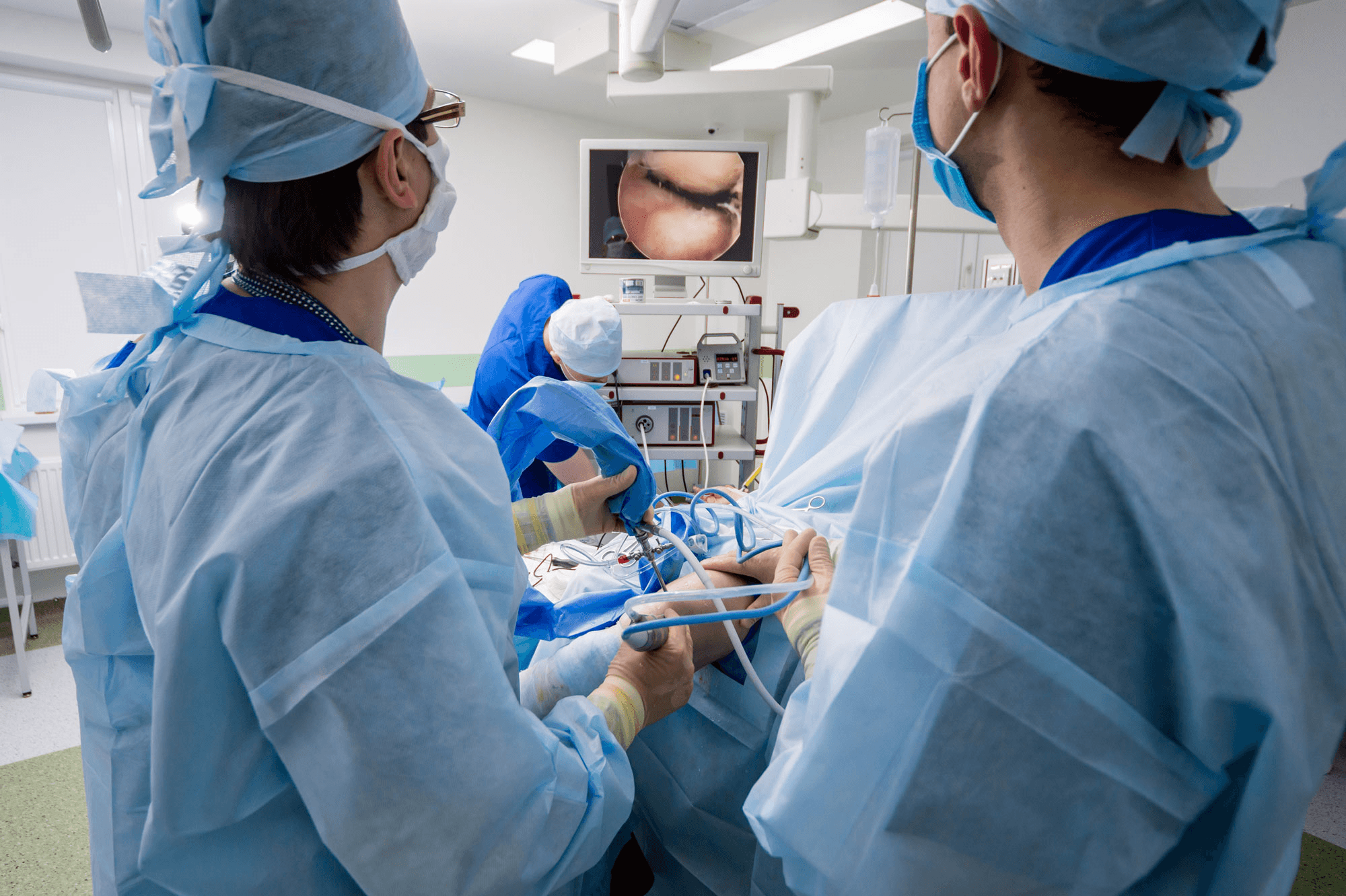

ChondroFiller injection for TMJ cartilage damage
Why TMJ cartilage is difficult to repair
Jaw pain that does not settle with rest and over-the-counter analgesia often traces back to a structure most patients are unaware of: a thin, oval fibrocartilaginous disc seated inside each temporomandibular joint (TMJ), between the condylar process of the lower jaw and the base of the skull. Unlike the hyaline cartilage lining the knee or hip, this disc is composed of non-vascular fibrous connective tissue — it carries no blood supply of its own. Without blood flow, the biochemical repair signals that normally follow tissue injury cannot reach the damaged area, so wear inside the TMJ has no meaningful mechanism for spontaneous healing.
Temporomandibular dysfunction (TMD) spans a wide spectrum. Some patients notice only intermittent clicking or mild discomfort; others live with chronic jaw pain, restricted mouth opening, or a grinding sensation during chewing. These symptoms can all stem from focal disc or articular surface wear rather than wholesale joint failure — a distinction that carries real weight when choosing between treatment options.
Clinical guidelines reflect this reality. The American Society of Maxillofacial Surgeons recommends beginning with conservative, non-surgical management — splints, physiotherapy, and analgesics — and evidence suggests that roughly 80% of patients can be managed without ever reaching an operating theatre. That broad conservative-first window defines the landscape within which most non-surgical interventions for TMD are considered and assessed.
What ChondroFiller injection is
ChondroFiller® liquid is a CE-marked Class III medical device — regulated alongside implantable cardiovascular hardware rather than classified as a drug, a steroid, or a biologic injection. Its active material is an acellular scaffold of murine-derived Type I collagen: purified structural protein containing no living cells and no synthetic fillers.
The behaviour on injection is what makes it clinically relevant to a joint like the TMJ. Introduced into the synovial fluid environment, the collagen solution polymerises rapidly, gelling in situ to form a viscoelastic layer that adheres to and coats damaged articular surfaces. It functions as a structural matrix deposited directly over the worn area rather than as a lubricant or painkiller.
That matrix then does something specific: it creates a microenvironment that draws in the patient's own mesenchymal progenitor cells. Those cells migrate into the scaffold and, over time, begin differentiating towards cartilage-forming lineages — a process termed matrix-induced chondrogenesis. The patient's own biology does the repair work; ChondroFiller provides the architecture on which that process can take place.
One distinction worth clarifying for anyone who has read older clinical literature: ChondroFiller was originally developed as an arthroscopic implant requiring joint preparation in a theatre setting. The current injectable pathway is a different format entirely — an outpatient, image-guided injection delivered into a fluid joint, with no incision, no joint preparation, and no operating room required.
Free non-medical discussion
Not sure what to do next?
Information only · No medical advice or diagnosis.
What the procedure involves on the day
On the day of treatment, patients arrive at the outpatient clinic and are positioned comfortably — the TMJ sits just in front of the ear, making the joint accessible without any incision or joint preparation.
A local anaesthetic is applied to the skin overlying the joint, and mild sedation can be offered if preferred. Once the area is numb, the clinician uses real-time ultrasound to locate the joint space and guide a fine cannula to the precise intra-articular position. Ultrasound is particularly well suited to the TMJ: the joint is small and anatomically complex, and continuous image guidance ensures accurate placement without the risks associated with landmark-based techniques — the same fine-needle approach used to deliver ChondroFiller effectively in other small joints such as the wrist.
For focal articular defects, ChondroFiller is delivered as a single 2.3 mL dose. Where there is more advanced joint wear, the treating clinician may suggest pairing the scaffold with an additional agent — for example, Arthrosamid (a polyacrylamide hydrogel that cushions and fills the joint space) or autologous mesenchymal stem cells (a concentration of the patient's own repair cells). These adjuncts address different aspects of joint health and are used alongside ChondroFiller rather than blended with it; each plays a distinct functional role.
The entire session is typically completed in under an hour. Patients are able to return home the same day. In the days immediately following treatment, most patients are advised to avoid hard or chewy foods and to limit wide jaw movements while the scaffold gels and integrates with the surrounding tissue. Full aftercare guidance — including any activity modifications and follow-up imaging — is tailored to individual presentation and discussed at the assessment appointment.

Which patients are suitable for TMJ ChondroFiller injection
The treatment is designed for focal, contained cartilage defects — areas where damage is limited in extent and the joint has not yet progressed to widespread destruction. At a pre-treatment assessment, the clinician will typically grade the defect using the ICRS or Outerbridge classification; ChondroFiller injection is best matched to grades where articular surface integrity remains at least partially intact, rather than to end-stage joint collapse.
Typical candidates are patients whose TMJ symptoms — persistent pain, restricted jaw movement, or joint clicking — have not resolved after a reasonable trial of conservative care such as an occlusal splint, physiotherapy, or anti-inflammatory medication, and for whom surgery is not yet warranted. The injectable scaffold sits precisely in that interval: beyond what conservative management alone can achieve, yet well short of the surgical threshold that guidelines reserve for the most refractory cases.
Those less likely to be suitable include patients with diffuse arthritis across the entire joint surface, significant bony destruction of the condyle or temporal fossa, or active inflammatory joint disease that would need addressing separately first.
A formal assessment is required before any clinical decision is made. This normally includes MRI or ultrasound imaging to confirm defect size, location, and the structural integrity of the surrounding joint. That same imaging helps determine whether pairing the scaffold with a cushioning agent or cellular support would be appropriate for more complex presentations. Patients uncertain about their position on the pathway are encouraged to book an assessment at the London Cartilage Clinic on Harley Street, where a clinician can review their imaging and history in full.
What the evidence shows — and where the gaps are
The strongest data come from knee cartilage trials, where ChondroFiller injection has been evaluated across multiple prospective studies. IKDC scores improve by approximately 30 points on average — well above the 16.7-point minimum clinically important difference — with Jerosch et al.'s three-year PMCF study recording a mean gain of 32.4 points and a final functional score of 80, indicating that benefit is durable rather than transient. Structural MRI reinforces that picture: MOCART scores between 81.6 and 84.3 confirm greater than 80% defect filling and progressive scaffold maturation from four weeks through to twelve months. The safety profile is equally consistent, with a reoperation rate of 3–8% compared with up to 41% for microfracture and up to 37% for ACI or MACI.
The closest structural analogue for TMJ use is the wrist. Matta et al. applied ChondroFiller via fine G20–21 cannulas in a small synovial joint and recorded MRI-confirmed reductions in bone marrow oedema, diminished periarticular effusion, and visible joint space widening, alongside significant improvements in NRS pain scores, DASH functional scores, and grip and pincer strength. The mechanical principles of collagen gel placement, polymerisation, and scaffold integration do not change with joint size — making the wrist data the closest available analogue for fine-needle delivery in a compact articulation.
No dedicated ChondroFiller clinical trial or case series in the TMJ exists in the current literature. That is a real gap. The case for TMJ application rests on three converging factors: the validated injectable mechanism across other synovial joints, the wrist evidence for small-joint delivery, and the TMJ's anatomical status as an image-accessible bilateral synovial joint. Taken together, this positions TMJ use as an emerging, mechanistically justified extension of a device with an established safety and efficacy record — not an experimental unknown with no foundation.
Getting a TMJ assessment at the London Cartilage Clinic
For patients in London and the commuter belt who recognise their situation in the picture drawn by this article, the next step is a structured clinical assessment rather than a treatment decision made at a distance.
Liquid Cartilage™ is delivered in the UK exclusively at the London Cartilage Clinic on Harley Street — the UK's certified centre for ChondroFiller injection. Professor Paul Y. F. Lee leads clinical delivery there; as with any image-guided scaffold procedure, precise placement technique materially influences what the repair tissue achieves.
An initial assessment covers clinical history, relevant imaging, and a frank discussion of whether the individual's TMJ defect profile — size, grade, and stage — makes ChondroFiller injection a realistic option. Appointments can be booked at londoncartilage.com.
- [1] Temporomandibular joint. https://en.wikipedia.org/?curid=203139 https://en.wikipedia.org/?curid=203139
- [2] Articular disk of the temporomandibular joint. https://en.wikipedia.org/?curid=9453896 https://en.wikipedia.org/?curid=9453896
- [3] Temporomandibular joint dysfunction. https://en.wikipedia.org/?curid=30707 https://en.wikipedia.org/?curid=30707
- [4] Surgery for temporomandibular joint dysfunction. https://en.wikipedia.org/?curid=44940009 https://en.wikipedia.org/?curid=44940009
Frequently Asked Questions
- The TMJ disc carries no blood supply. Without blood flow, the biochemical repair signals that normally follow tissue injury cannot reach damaged areas.
- A CE-marked collagen scaffold that gels in the joint to coat damaged surfaces, creating an environment that draws in the patient's own repair cells.
- Yes. It is delivered via ultrasound-guided injection under local anaesthetic, with no incision or operating room required, and patients go home the same day.
- Patients with focal cartilage defects whose TMJ symptoms persist despite conservative treatments like splints or physiotherapy, but surgery is not yet warranted.
- No dedicated TMJ trials exist. Evidence comes from knee studies and wrist data for small-joint delivery, justifying TMJ as a mechanistically sound extension.
Legal & Medical Disclaimer
This article is written by an independent contributor and reflects their own views and experience, not necessarily those of Liquid Cartilage. It is provided for general information and education only and does not constitute medical advice, diagnosis, or treatment.
Always seek personalised advice from a qualified healthcare professional before making decisions about your health. Liquid Cartilage accepts no responsibility for errors, omissions, third-party content, or any loss, damage, or injury arising from reliance on this material.
If you believe this article contains inaccurate or infringing content, please contact us at [email protected].