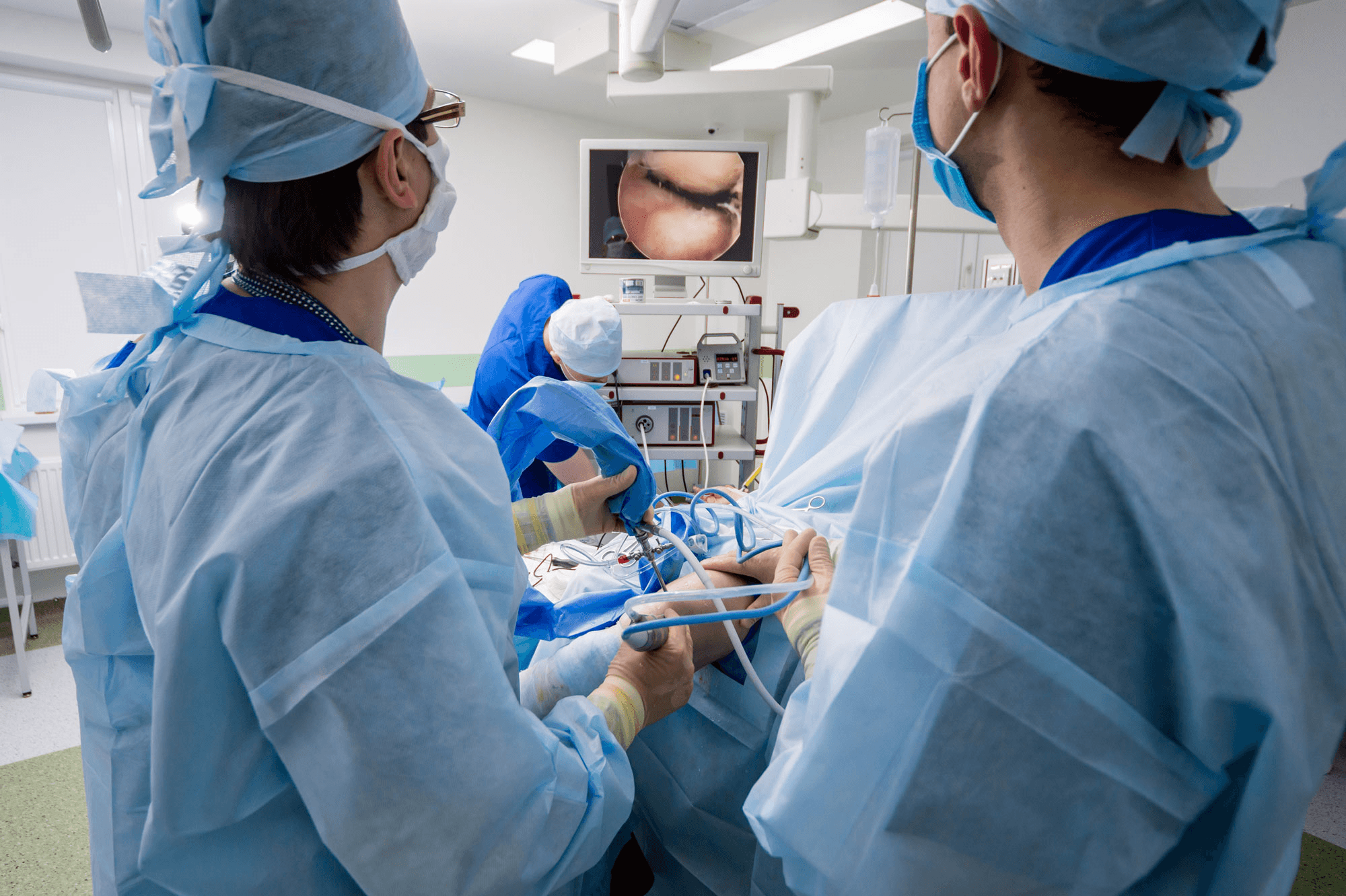

ChondroFiller injection for elbow cartilage damage
Who is a candidate for ChondroFiller injection in the elbow?
For many patients with elbow pain, the first question at consultation is a simple one: is there anything that can actually repair the damage, or am I just managing symptoms? For those with a focal cartilage defect — an isolated area of wear or injury to the humeroulnar or humeroradial surface, rather than widespread joint destruction — a ChondroFiller injection may be a realistic restorative option.
The typical elbow candidate has a contained area of cartilage damage, most often resulting from a sports injury, a previous fracture, or repetitive load that has worn through the articular surface. Pain on movement, stiffness, and a joint that has not settled with physiotherapy or anti-inflammatory treatment are common presentations. The elbow is an established treatment site for ChondroFiller injection, listed alongside the shoulder and wrist for focal sports-injury defects, though knee, hip, and ankle remain higher-volume sites.
Two features of the injectable pathway are worth noting for patients who may have been advised they are not surgical candidates. There is no upper age limit and no defect-size restriction attached to the injectable route — so previous concerns about being 'too old' or having 'too large' a defect for a surgical procedure do not carry over here. The injectable approach is also not conditional on having exhausted a set sequence of prior treatments, unlike some surgical options that require documented failure of earlier interventions.
Patients with diffuse, end-stage arthritis or bone-on-bone joint destruction are outside the scope of this treatment. ChondroFiller injection is designed for focal damage with healthy surrounding cartilage borders, not for joints where the articular surface has been comprehensively lost. A clinical assessment — including imaging — is needed to confirm which category applies.
How the collagen scaffold works once injected
Unlike cell-based therapies, ChondroFiller contains no donor cells of any kind. The product is an acellular Type I collagen scaffold — a purified structural matrix that, on its own, does nothing to regenerate cartilage. What it provides is the framework into which the body's own repair process can be directed.
Once the 2.3 mL collagen solution is injected into the defect under ultrasound guidance, it self-gels within minutes, filling the void and conforming to the contours of the damaged surface. This rapid setting means it stays in place without the need for mechanical fixation or a surgically dried joint bed.
The gelled scaffold then acts as a chemotactic signal — in effect, a biological invitation. Mesenchymal progenitor cells from the surrounding tissue migrate into the matrix in the weeks that follow. Over months, those recruited cells progressively differentiate into chondrocyte-like cells and begin replacing the collagen scaffold with hyaline-like repair tissue. Clinical MRI studies show this maturation continuing across at least the first year, though these data come from knee cohorts rather than elbow-specific series.
This mechanism is described as 'additive': a protective collagen cushion is laid over the damaged surface from above, preserving what remains of the joint's structure. That contrasts with procedures such as microfracture or chondroplasty, which require the removal or disruption of existing tissue to prepare a clean base — an approach that is inherently 'subtractive' and carries its own trade-offs.
Free non-medical discussion
Not sure what to do next?
Information only · No medical advice or diagnosis.
What the outpatient appointment involves
The appointment takes place in an outpatient clinic setting — there is no general anaesthetic, no operating theatre, and no requirement to fast beforehand. At London Cartilage Clinic on Harley Street, the procedure is led by Professor Paul Y.F. Lee and delivered under ultrasound guidance, allowing accurate placement into the elbow defect without arthroscopic access or a surgically prepared joint.
Intravenous antibiotic cover is given as standard on the day, and a six-week follow-up appointment is built into the package. The total cost starts from £3,000, covering the consultation, the ChondroFiller product itself, the injection, antibiotic cover, and that follow-up review. The treatment is private-pay only; it is not available on the NHS and is not currently reimbursed by private medical insurers, so patients should factor this in at the planning stage.
Because the scaffold self-gels in situ — as described in the previous section — the procedure does not require a dry joint bed or post-injection immobilisation of the kind that some surgical techniques demand. Most patients leave the clinic on the same day.
For those who want structured long-term monitoring, a maintenance programme is available: bi-annual top-up injections and annual MRI to track repair-tissue maturation. This is an elective option for ongoing joint preservation, not a routine requirement after a single elbow treatment — a consultant assessment would determine whether it is appropriate in individual cases.

What the clinical evidence shows — and its limits for the elbow
The evidence base for ChondroFiller injection draws on four knee cohort studies that consistently show clinically meaningful improvements in joint function. Across those datasets, IKDC scores improved by approximately 30 points — well above the 16.7-point minimum clinically important difference. The strongest study, a 3-year post-market clinical follow-up by Jerosch et al., recorded a mean gain of 32.4 IKDC points, with patients reaching a final score of 80. MRI-assessed MOCART scores of 81.6–84.3 confirm more than 80% defect filling, with serial imaging showing progressive scaffold maturation from 65.3 at four weeks to 81.6 at one year.
These are manufacturer-sponsored knee studies; the scoring instruments — MOCART and IKDC — are independent, validated measures, and the improvement pattern holds across four separate cohorts, which lends the findings reasonable consistency.
No elbow-specific randomised trial or published case series has been reported, and these knee-derived figures cannot be directly applied to elbow outcomes. That limitation is worth stating plainly rather than burying. What the knee data do establish is the scaffold's capacity to achieve structural fill and sustained functional recovery in a joint environment — driven by the same Type I collagen mechanism that operates when the scaffold is placed in an elbow defect. Multi-joint clinical experience supports the elbow as a recognised treatment site for focal sports-injury cartilage damage, but until elbow-specific outcome data are published, recovery expectations are extrapolated from that broader pattern rather than from joint-matched scores.
Patients can reasonably regard the knee data as an analogy for what the scaffold is capable of achieving — matrix-induced chondrogenesis does not vary by joint — while accepting that elbow-specific studies remain an evidence gap the current literature has not yet closed.
ChondroFiller injection versus surgical cartilage repair for the elbow
Choosing between an injectable scaffold and a surgical cartilage procedure is rarely straightforward, and the right answer depends heavily on defect size, joint anatomy, and how much recovery time the patient can absorb.
Microfracture has historically been used as a first-line surgical option for smaller defects, but its long-term track record is poor: the repair tissue it produces is fibrocartilage rather than hyaline cartilage, it can damage the subchondral bone plate in ways that limit future repair options, and published data show reoperation rates of up to 41%.
ACI and MACI offer a more durable repair tissue, but both are two-stage procedures — the first appointment harvests a cartilage biopsy, cells are cultured in a laboratory over several weeks, and re-implantation under anaesthetic follows at a second operation. Complication rates of up to 17% have been reported across published series, and the logistics alone place a significant demand on the patient.
OATS transfers healthy osteochondral plugs from a donor site to fill the defect — a single-stage procedure with solid evidence for defects in the 1–4 cm² range, though donor-site morbidity is a genuine consideration and size constraints apply.
ChondroFiller injection sits in a different procedural category: single-stage, no cell harvesting, no theatre booking, and no surgical recovery period. The knee data record an approximately 0% complication rate and a 3–8% reoperation rate, and the injectable route can address defects up to 6 cm². For patients who cannot afford weeks of post-operative rehabilitation, or who want to avoid general anaesthetic, those differences are practically meaningful.
Surgical options retain an important role — particularly where subchondral bone involvement or defect geometry makes a scaffold-only approach insufficient. The comparison is about fit, not hierarchy.
Getting assessed at the London Cartilage Clinic
In the UK, ChondroFiller injection for elbow cartilage damage is delivered at the London Cartilage Clinic on Harley Street — the certified UK centre for this treatment. The service is led by Professor Paul Y.F. Lee, whose image-guidance technique is central to consistent placement of the scaffold within a small, complex joint such as the elbow.
An initial assessment will typically involve a review of existing MRI or imaging, a clinical examination of the joint, and a structured conversation covering defect size, symptom duration, previous treatments, and what the patient is hoping to return to. Patients who arrive having noted their current pain levels and activity goals tend to get more from that first appointment — the consultation exists to determine suitability, not to assume it.
The package from £3,000 includes ultrasound, the injection, IV antibiotic cover, and a six-week follow-up.
To book an assessment, visit londoncartilage.com.
- [1] Articular cartilage repair. https://en.wikipedia.org/?curid=19042351 https://en.wikipedia.org/?curid=19042351
- [2] Elbow. https://en.wikipedia.org/?curid=19595436 https://en.wikipedia.org/?curid=19595436
Frequently Asked Questions
- Patients with focal cartilage damage, sports injuries, or previous fractures. No upper age limit or defect-size restriction applies. Must have healthy surrounding cartilage borders, not end-stage arthritis.
- The 2.3 mL collagen solution self-gels within minutes, creating a framework. Body's mesenchymal progenitor cells migrate into the matrix and progressively differentiate into chondrocyte-like cells, replacing the scaffold with repair tissue.
- Outpatient procedure under ultrasound guidance. Delivered by Professor Paul Y.F. Lee with IV antibiotic cover. Costs from £3,000, including consultation, product, injection, antibiotics, and six-week follow-up. Same-day discharge.
- Four knee cohort studies show IKDC improvements of approximately 30 points with 80% defect filling on MRI. No elbow-specific randomised trial published. Knee data demonstrate scaffold capacity, though elbow-specific outcomes remain an evidence gap.
- ChondroFiller is single-stage with no cell harvesting or theatre booking. Records approximately 0% complication rate and 3–8% reoperation rate versus microfracture's up to 41%. Addresses defects up to 6 cm² without post-operative rehabilitation.
Legal & Medical Disclaimer
This article is written by an independent contributor and reflects their own views and experience, not necessarily those of Liquid Cartilage. It is provided for general information and education only and does not constitute medical advice, diagnosis, or treatment.
Always seek personalised advice from a qualified healthcare professional before making decisions about your health. Liquid Cartilage accepts no responsibility for errors, omissions, third-party content, or any loss, damage, or injury arising from reliance on this material.
If you believe this article contains inaccurate or infringing content, please contact us at [email protected].